Samuel Eto’o’s Explosive Refereeing Allegations in Cameroon
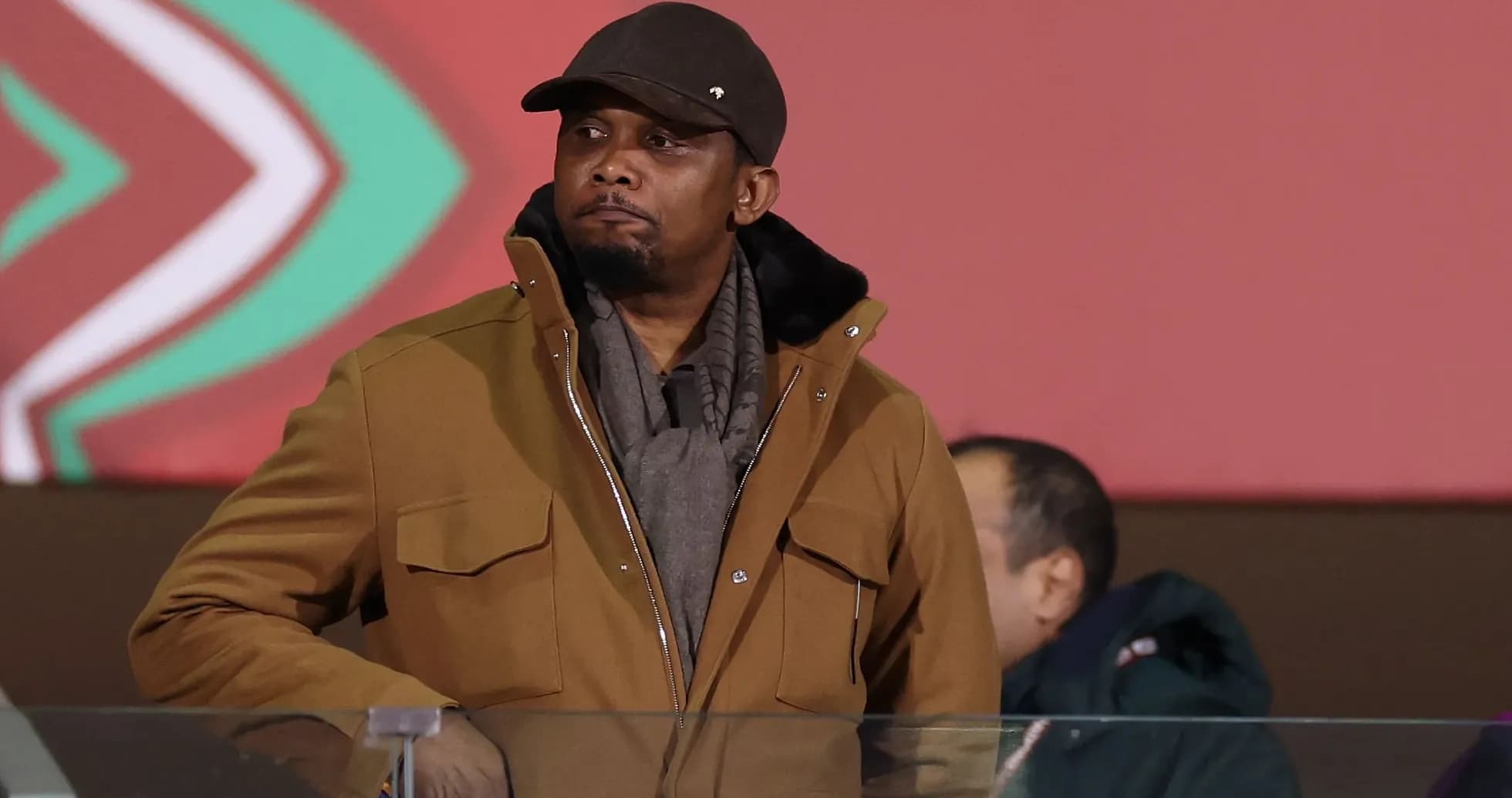
Samuel Eto’o has never been one to tiptoe around a fight. This time, the president of the Cameroon Football Federation has set off a storm around the country’s refereeing establishment, firing serious – and so far unsubstantiated – accusations at a former international referee and army officer.
The charge? Acting against the interests of Cameroon and Morocco in past African competitions by trying to influence international matches.
Eto’o’s warning shot
The setting was ceremonial, the message anything but.
Speaking at a graduation ceremony for a new intake of Cameroonian referees, Eto’o used the platform to issue a stark warning about “certain individuals” the young officials might encounter during their careers. Then he went further.
He spoke of a “former referee and army officer” whom he accused of having played “negative roles” against Cameroon. His comments, relayed by Cameroonian broadcaster CFOOT, went beyond domestic matters. Eto’o claimed the same person had “tried to influence Morocco in favour of another country” and had “repeated the same thing when the Cameroon Lionesses were taking part in the most recent edition of the Women’s Africa Cup of Nations”.
No name. No dates. No matches. No proof presented.
He did not explain what “influencing Morocco” meant in practice, how this supposed attempt was carried out, or which country allegedly stood to gain. The accusations hung in the air, heavy but vague.
That vagueness did not stop the football public from joining the dots.
Spotlight falls on Alioum Sidi
Eto’o’s description – a former international referee, an army officer, now a powerful figure in the refereeing world – immediately sparked speculation that he was referring to Alioum Sidi.
Sidi, a former FIFA referee and Cameroonian army officer, currently serves as president of the Association of Cameroonian Football Referees. On paper, he fits the profile Eto’o painted, even if the federation chief never actually uttered his name.
Sidi did not wait for clarification. He treated the remarks as a direct attack.
Sidi hits back and demands proof
In a sharply worded statement, Alioum Sidi rejected the accusations outright. He dismissed “any accusation, insinuation or interpretation” suggesting he had ever tried to influence a match in favour of another country or acted against Cameroon's interests.
Then he pushed the ball straight back into Eto’o’s court.
Sidi called on the federation president to clearly spell out the facts behind the claims and to provide “objective evidence” to support them. Without that, he warned, the matter would not remain in the court of public opinion.
He made it clear he is ready to escalate. If Eto’o cannot substantiate his words, Sidi said he will turn to the judicial authorities and the relevant bodies to defend his honour, reputation and integrity.
In a country where football is woven into national identity, this is more than a personal spat. It is a clash between two powerful institutions: the federation and the referees’ association, embodied by two men who know the game’s corridors of power inside out.
CAS dispute looms in the background
Sidi believes Eto’o’s outburst did not come from nowhere.
He pointed to an ongoing legal battle between the Association of Cameroonian Football Referees and the Cameroon Football Federation, currently before the Court of Arbitration for Sport (CAS). The dispute, which pits his organisation directly against Eto’o’s federation, forms the tense backdrop to this latest flare-up.
In Sidi’s view, that conflict is central. He suggested the CAS case may be linked to what he described as “the federation president losing his composure” – a pointed swipe at Eto’o’s temperament and leadership.
So the story is no longer just about one speech and one unnamed referee. It now stretches from a graduation hall in Cameroon to the legal benches of CAS, with accusations of match influence, questions of integrity, and the credibility of refereeing in the region all dragged into the spotlight.
Eto’o has fired his shot. Sidi has drawn his line. The next move may not come on a pitch, but in a courtroom.