Fantasy Basketball Forward Risers and Sleepers for 2026-27
The forward pool in Yahoo’s High Score game looks different this year. LeBron James is out of Los Angeles. Giannis Antetokounmpo is out of Milwaukee. Rotations have been torn up, rebuilt and, in a few places, left wide open.
That’s where fantasy managers make their money.
This 2026-27 forward class is loaded with players stepping into bigger roles, and the scoring system — where only your best game of the week counts and defensive stats carry real weight — tilts the board even more. Minutes, usage, stocks and ceiling nights matter. A lot.
Here are the forwards whose situations just broke in their favor.
Forward Risers
Naz Reid, Charlotte Hornets
Naz Reid has been waiting for this.
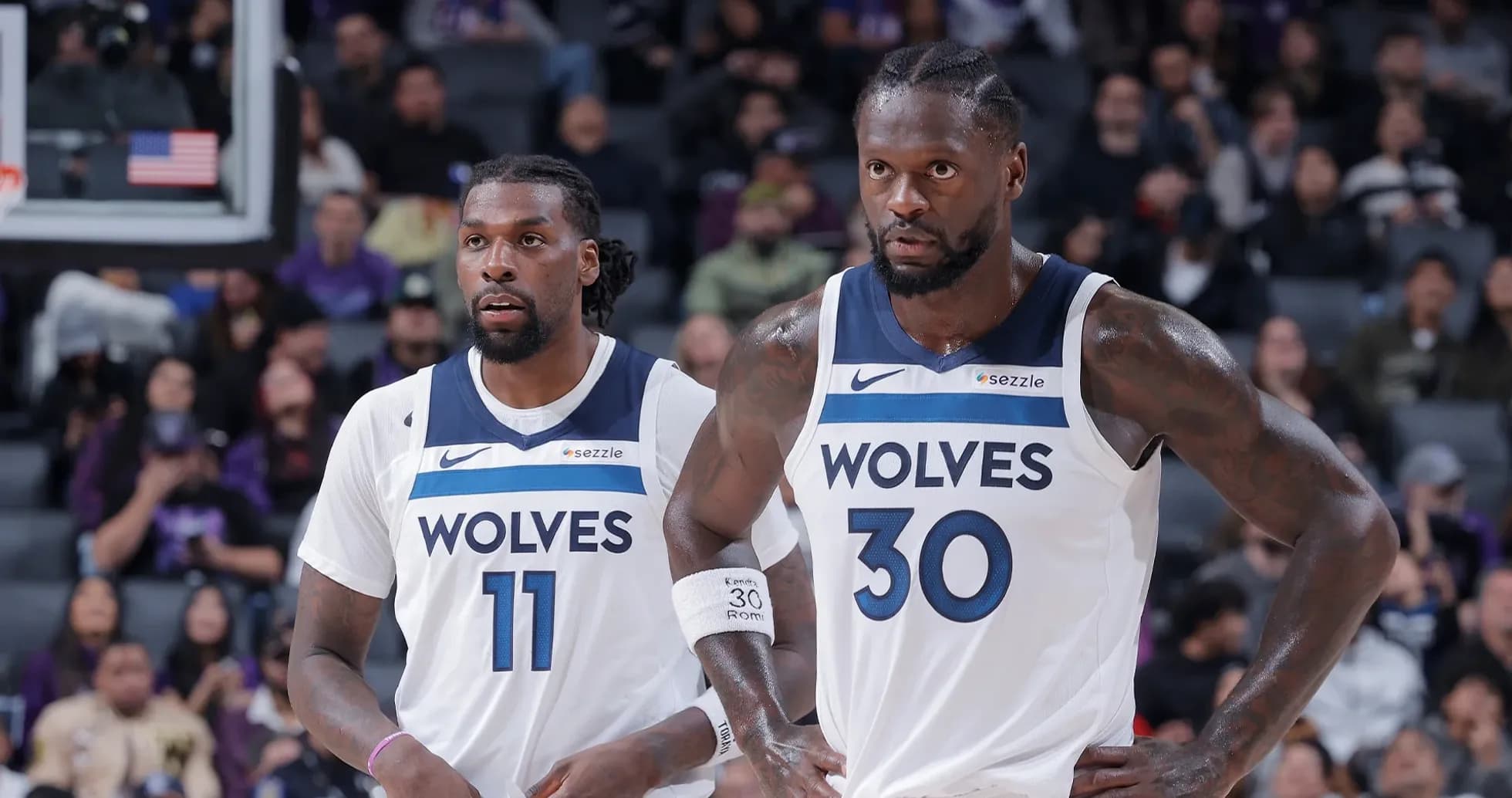
He earned his payday in Minnesota, but with Rudy Gobert anchoring the paint and Julius Randle soaking up possessions, Reid lived in the shadows of the rotation. He has never cleared 28 minutes per game in any season, sitting at 26 last year while putting up 13.6 points, 6.2 rebounds and 2.2 assists.
Charlotte changes the script.
The Hornets went hunting for size, lost Miles Bridges, and suddenly there’s a vacuum of shots and minutes in the frontcourt. Reid walks straight into it with a clear runway to 30-plus minutes for the first time in his career and a bump in responsibility to match.
His track record as a starter already hints at what that looks like: 15.5 points, 7.1 rebounds, 2.0 assists, 1.8 threes, 1.1 steals and 1.2 blocks across 77 games. In Yahoo’s High Score format, that profile lands around 33.5 points per outing before you even adjust for a larger role in Charlotte.
The key? Those steals and blocks. This game rewards forwards who fill every defensive column, and Reid’s stretch-big nights — when the threes are falling on top of the stocks — can climb into the 40s. At an ADP of 65, he’s being drafted as a solid piece. His situation screams something more.
Julius Randle, Brooklyn Nets
Minnesota didn’t just clear room for Reid. It sent Julius Randle to a team that actually needs him to be Julius Randle again.
Brooklyn is building around Michael Porter Jr. and rookie guard Mikel Brown Jr., and that leaves a familiar role open for Randle: primary engine, high-usage hub, nightly double-double threat.
We’ve seen this movie. In 2022-23 with the Knicks, Randle averaged 25.1 points, 10 rebounds and 4.1 assists on a 29.5% usage rate. In Minnesota, he never touched that number, stuck under 26.5% as part of a crowded offense. In High Score terms, that Knicks line translates to roughly 43 points per game before steals and blocks even enter the equation.
That’s the profile that breaks weekly matchups. When your format only counts the best game of the week, a forward who can realistically throw up 30-15-6 on any given night is a cheat code. Brooklyn will live with the rough shooting stretches if it means unlocking that ceiling. Fantasy managers should, too.
Andrew Wiggins, Miami Heat
Miami changed everything the moment it landed Antetokounmpo. Tyler Herro and a chunk of the Heat’s young core went to Milwaukee, and the new blueprint in South Beach is simple: Giannis and Bam Adebayo at the center of everything, Davion Mitchell to organize, Tim Hardaway Jr. and Klay Thompson to space.
That leaves Andrew Wiggins in a sweet spot — the third scorer, the connector, the wing who cleans up the gaps.
Even in a smaller role last season, on just 19.4% usage, Wiggins quietly produced 15.4 points, 4.8 rebounds, 2.7 assists, 1.1 steals and 1.0 blocks. That’s about 32 High Score points per game. Before last year, he’d cleared 20.9% usage in every season, and at 24.5% two years ago he averaged 18 points per night.
The steals and blocks don’t shout for attention, but in this format they matter as much as the scoring. On a Giannis-led team that will generate transition chances and scramble opposing offenses, Wiggins’ activity on both ends gives him room to outstrip his ADP of 110. He won’t be the headline act in Miami. He doesn’t need to be to win you weeks.
Forward Sleepers
Jaime Jaquez Jr., Milwaukee Bucks
Jaime Jaquez Jr. has already lived a small career arc in three seasons: promising rookie, sophomore dip, then a sharp rebound last year.
That rebound matters. Over 28 minutes a game, Jaquez delivered 15.4 points, 5.0 rebounds and 4.7 assists while shooting 50.7% from the field, a big jump from 46.1%. That all-around game made him central to the package Milwaukee accepted for Giannis, and it’s easy to see why.
The Bucks are starting over.
Tyler Herro arrives as the leading scorer. Ryan Rollins joins him in the backcourt. Kevin Porter Jr., Kyle Kuzma and Myles Turner give the rotation some veteran structure, with young pieces Brayden Burries and Nate Ament waiting in the wings. What they need is a stabilizer who can play through traffic, make the extra pass and keep the offense moving.
That’s Jaquez.
His 4.7 assists alone are worth 9.4 High Score points per night. He doesn’t rely on heavy three-point volume, which costs him nothing in this scoring system, and he has a clear path to heavy minutes on a team that will lean on his versatility. A bump to career-highs in points, rebounds and assists is firmly on the table. If it happens, he’ll look badly underdrafted.
Collin Murray-Boyles, Toronto Raptors
On paper, Collin Murray-Boyles sits behind Jakob Poeltl. In reality, the door is already cracked open.
Poeltl is locked in through 2029-30 on more than $27.3 million annually, so he’ll start. But he played only 46 games last season and has failed to top 57 in any of his three full campaigns in Toronto. Every time he sat, Murray-Boyles stepped forward.
Across 22 starts as a rookie, Murray-Boyles averaged 9.1 points, 5.7 rebounds, 2.7 assists, 1.1 steals and 1.2 blocks. That’s roughly 27 High Score points per game, with about a quarter of that haul coming purely from steals and blocks.
Now layer in opportunity. Sandro Mamukelashvili and his 22 minutes per night are gone to the Lakers, freeing up more frontcourt time. Toronto needs energy and defensive playmaking. Murray-Boyles brings both, with a stat profile built for this format: a little bit of everything, plus real juice in the stocks.
At an ADP of 122, he’s the kind of late-round pick that can quietly become a weekly staple once Poeltl inevitably misses time.
Sandro Mamukelashvili, Los Angeles Lakers
Sandro Mamukelashvili arrived in Toronto as a fringe rotation big. He left as a proven contributor.
Before last season, he had never averaged more than 15.3 minutes per game. The Raptors handed him 22 minutes a night across 80 games, and he responded with 11.2 points and 4.9 rebounds while shooting 38.9% from three and 52.3% overall. Efficient, confident, reliable.
The Lakers saw exactly what they needed.
With James gone, Los Angeles needed size, shooting and someone who could slide into power forward minutes without clogging the floor. They committed four years and $52 million to Mamukelashvili, a clear sign they expect more than a bit-part role. He’ll compete with Jake LaRavia, but another career high in playing time is a realistic expectation.
There is one wrinkle in High Score: three-point shooting doesn’t get its own bonus. Mamukelashvili’s fantasy value will rest on the rebounds and defensive stats that accompany his expanded role. If the minutes climb, those numbers follow.
At an ADP of 114, that bet is worth making in the later rounds. The Lakers have a hole at the four. Mamukelashvili has already shown he can fill it.