Top Fantasy Centers to Target This Season
In most fantasy drafts this fall, the center conversation starts and ends with Nikola Jokić and Victor Wembanyama. For almost everyone else, that’s a fantasy. You’re not getting them.
So the real game begins in the middle and late rounds, where managers have to sift through trades, new roles and hidden upside to find the next difference-maker at the five. In Yahoo’s High Score format — where only a player’s best game of the week counts — volatility becomes a weapon, not a weakness.
Here are six big men who can tilt a matchup without costing you a premium pick.
Center Risers
Kel’el Ware, Milwaukee Bucks
Kel’el Ware is the kind of upside swing that wins leagues.
The shooting leap alone jumps off the page. He climbed from 31.5% to 39.5% from three last season, and he did it while carving out just 22 minutes per night in Miami. Even in that limited run, he posted 11.1 points, 9 rebounds, 0.8 steals, 1.1 blocks and 1.2 threes per game — a near double-double with real defensive juice and perimeter range.
Give him a real workload and the picture changes quickly. In the 10 games where he cracked 30 minutes, Ware averaged 18.1 points, 14 rebounds, 1.1 steals, 3.3 blocks and 1.8 threes. Those are not role-player numbers. That’s “why didn’t I draft this guy sooner?” production.
With Bam Adebayo locked in as Miami’s anchor, Ware became part of the blockbuster that sent Giannis Antetokounmpo to the Heat. In Milwaukee, he walks into a franchise easing into a new era. Myles Turner still sits ahead of him to open the season, but this is not a static depth chart. The Bucks are recalibrating, and Ware is a central piece of that plan.
Expect something around 25 minutes early, with a clear path to more as the year wears on.
In High Score leagues, those spike nights are the whole pitch. A 14-rebound, 3-block line is roughly 23 fantasy points before you even count his scoring. When Ware hits one of those 30-minute, 3-block, 14-board explosions, his ceiling in this draft range is as high as anyone’s — and the format shrugs off the quieter nights.
Mitchell Robinson, Boston Celtics
Mitchell Robinson quietly played a pivotal role in New York’s title run, backing up Karl-Anthony Towns and giving the Knicks 60 games — his highest total since 2021-22. The minutes weren’t huge at 19.6 per night, but the impact remained familiar: 5.7 points, 8.8 rebounds, 1.2 blocks and a ridiculous 72.3% from the field.
Boston saw enough to pry him away on a three-year deal. Neemias Queta gave the Celtics useful minutes last season and Nikola Vučević arrived later, but the mix never fully clicked. That misfit frontcourt opens a lane for Robinson to grab a meaningful role.
No one should pencil him in for 30 minutes. His injury history won’t allow that kind of optimism. But 25 minutes? That’s firmly in play and more than enough for him to matter.
In High Score formats, Robinson is almost purpose-built. His free-throw woes vanish because the category doesn’t exist. What’s left is a specialist whose best games are pure gold. A 16-rebound, three-block outing — well within his range — lands around 25 fantasy points without a single made jumper. You’re drafting him for those demolition nights on the glass and at the rim, and this format pays you exactly when they arrive.
Nic Claxton, Chicago Bulls
Chicago’s decision to move Vučević at last year’s deadline signaled a reset at center. This summer, the Bulls doubled down by bringing in Nic Claxton from Brooklyn to be the next long-term anchor.
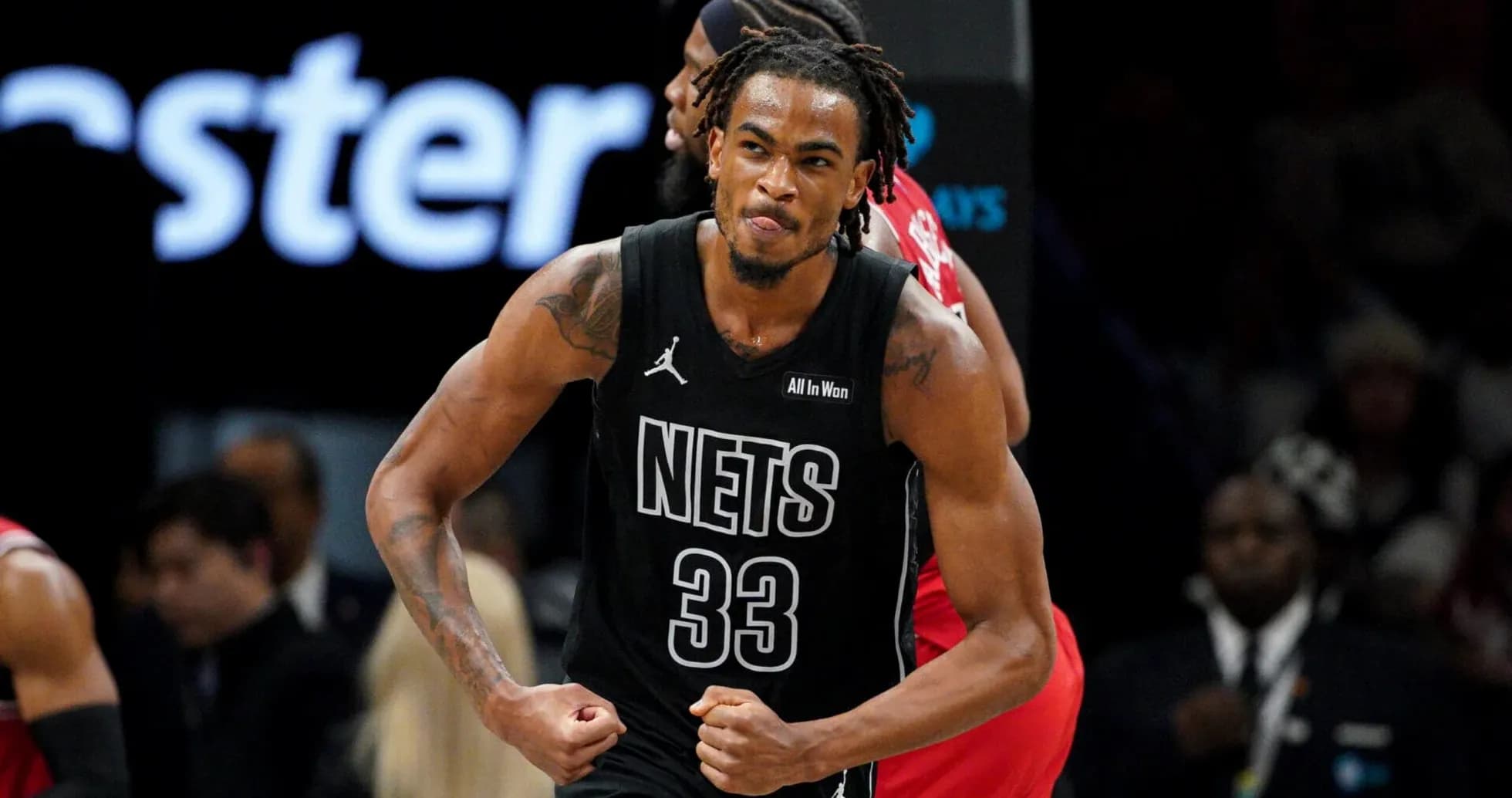
On a young Nets team last season, Claxton’s raw numbers dipped to 11.7 points, 6.9 rebounds, 3.7 assists and 1.1 blocks. The scoring and boards eased off, but that assist bump stands out. It hints at a big who can facilitate, not just finish.
It wasn’t long ago that Claxton posted back-to-back campaigns with at least 11.8 points, 9.2 rebounds and 2.1 blocks. Those seasons showed the full outline: rim protection, efficient scoring, strong rebounding.
Now he steps into a Chicago group that’s rebuilding but not empty. Caleb Wilson, Matas Buzelis and Josh Giddey give the Bulls a young core with structure. Giddey, one of the league’s most creative passers, should unlock Claxton as a lob and short-roll threat.
Under High Score rules, Claxton might be the most complete scorer of this bunch. He brings blocks and boards, but he also adds assists to the mix. A 10-point, 10-rebound, 3-assist line with two blocks translates to roughly 32 fantasy points — the kind of all-around contribution that can anchor your center spot in any given week.
Center Sleepers
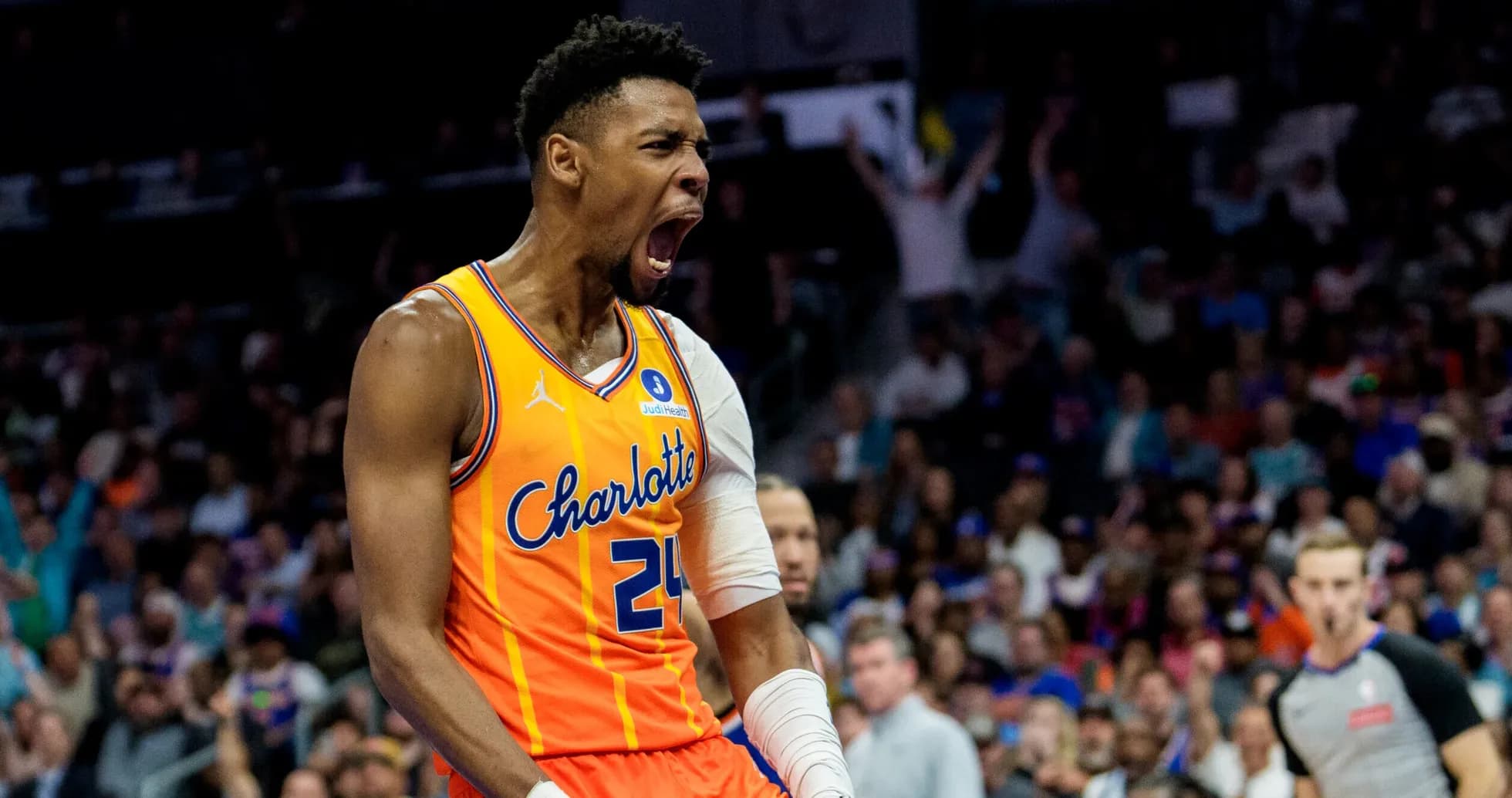
Hannes Steinbach, Charlotte Hornets
Moussa Diabaté fought his way into Charlotte’s starting lineup last season with relentless energy and rebounding. He shot 63.1% from the field and grabbed his opportunity, but his role tilted away from scoring. A 7.9-point average on just an 11.2% usage rate tells the story: he did the dirty work and left the shots to others.
The Hornets didn’t stand pat. They traded for Naz Reid, who should split time between power forward and center, especially with Miles Bridges moving on. Then they added Hannes Steinbach in the draft, a big with a more polished offensive game.
At Washington last season, Steinbach averaged 18.5 points, 11.8 rebounds and 1.2 blocks. That’s a double-double machine with legitimate scoring chops, not just a putback specialist. The path to immediate minutes isn’t wide open, but it isn’t closed either.
In High Score leagues, a 10-man roster makes stashing a rookie expensive. Steinbach is more of a “watch closely” name than a must-draft. If injuries or rotations crack the door, his rebounding profile and scoring touch can translate quickly. The moment he starts seeing real minutes, he becomes fantasy-relevant in a hurry.
Day’Ron Sharpe, Brooklyn Nets
Brooklyn turned the page at center when it moved Claxton, and the most obvious beneficiary is already on the roster. Day’Ron Sharpe is the leading candidate to inherit those minutes.
He started just seven games last season, but the split between his roles was stark: 28 minutes per game as a starter versus 18 off the bench. In those starts, he delivered 11.1 points, 7.9 rebounds, 3.6 assists and 1 block. That’s a fully functional fantasy line, especially for someone going in the late rounds.
The Nets did bring in Julius Randle and drafted Mikel Brown Jr., with Moritz Wagner adding depth. Randle can slide to the five in smaller looks, but Sharpe remains the natural choice to soak up the bulk of traditional center minutes.
In High Score scoring, that starter line clears 30 fantasy points. That’s top-30 production at the position from a player you can scoop up after most managers have checked out. He doesn’t need to post those numbers every night. He just has to hit that level once a week.
Khaman Maluach, Phoenix Suns
Khaman Maluach arrived in Phoenix with plenty of buzz after going 10th overall out of Duke in the 2025 Draft. His rookie season never really got off the ground: 46 games, 8.9 minutes per night, mostly learning on the fly.
Mark Williams returns as the nominal starter on a fresh three-year contract, with Oso Ighodaro also in the mix after covering minutes last season. On paper, that’s a crowded rotation.
Reality is messier. Williams has battled injuries for much of his career and underwent surgery to repair a torn labrum in his left shoulder. That procedure could sideline him for a significant stretch. If those minutes become available, someone has to claim them.
Maluach owns the highest long-term ceiling of the backups. The short-term goal is simple: win the chunk of playing time that opens if Williams is out. If he does, the combination of length, athleticism and shot-blocking potential becomes very interesting in this format.
Right now, he’s going undrafted in most leagues, and that’s perfectly reasonable with only 10 roster spots in High Score. He belongs on your waiver watchlist, not your bench. But if Phoenix’s frontcourt starts to thin as expected with Williams’ injury, Maluach is the first name you pounce on.
In a season where the top two centers feel untouchable, it’s these kinds of swings — Ware’s breakout, Robinson’s glass-crashing spikes, Claxton’s all-around line, and the right rookie or late bloomer — that will decide who actually wins.