Ferrari's New Engine Shines at Monza Practice
Monza Fridays are rarely quiet. This one is loaded.
Italy has an Italian championship leader in Kimi Antonelli heading into its home grand prix for the first time in more than 70 years. He does so with a grid penalty hanging over him. On the other side of the Mercedes garage, George Russell smells opportunity. Across the pitlane, Ferrari rolls out a new engine at the temple of speed with the Tifosi desperate for any sign their outside title hopes are more than a romantic notion.
Practice days don’t hand out points. They do reveal fault lines. And at Monza, they were stark.
Ferrari’s new heart finds its voice
Ferrari’s second ADUO upgrade has dominated the paddock chatter all week. On Friday, it finally had a stopwatch to answer to.
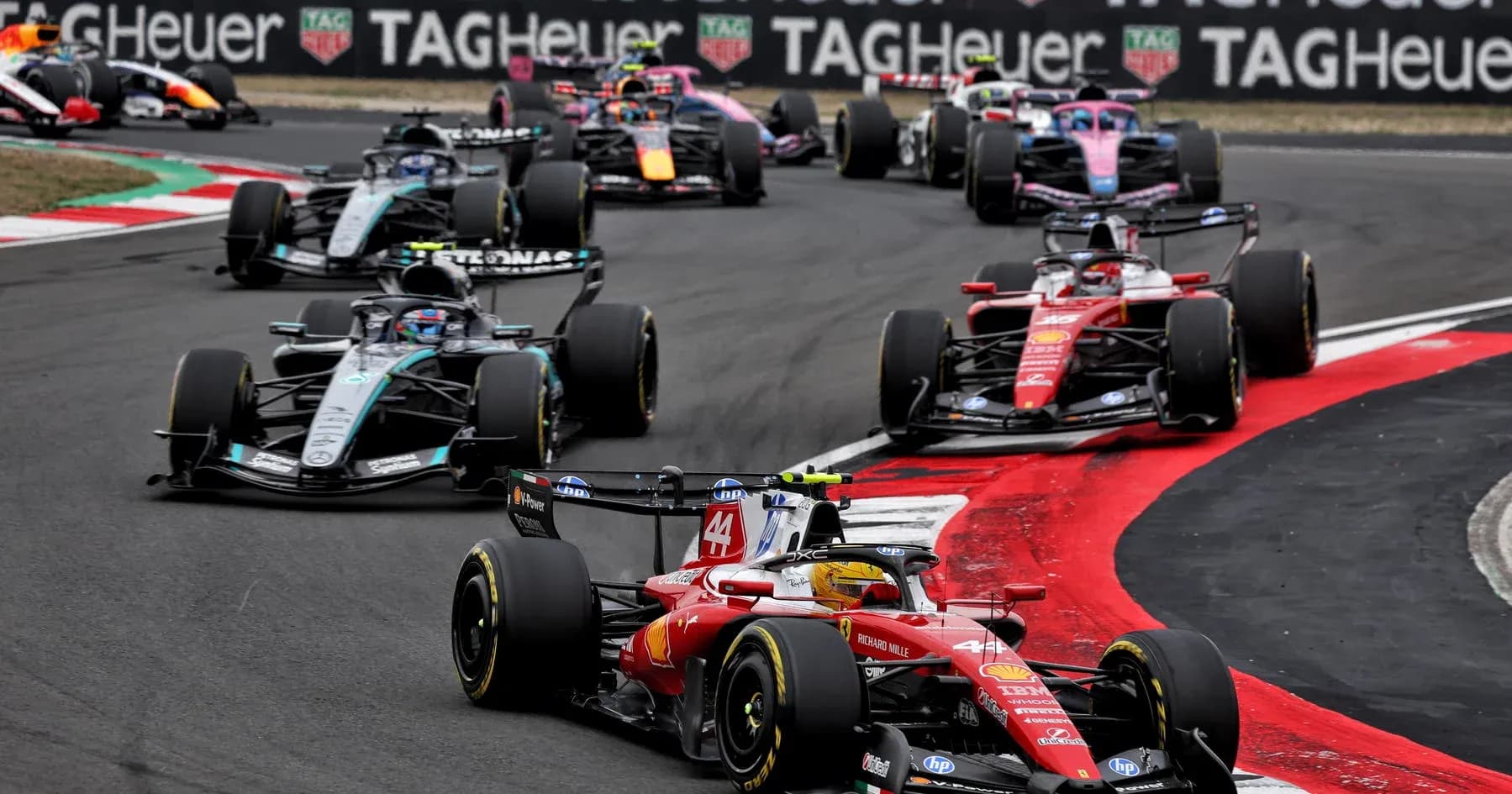
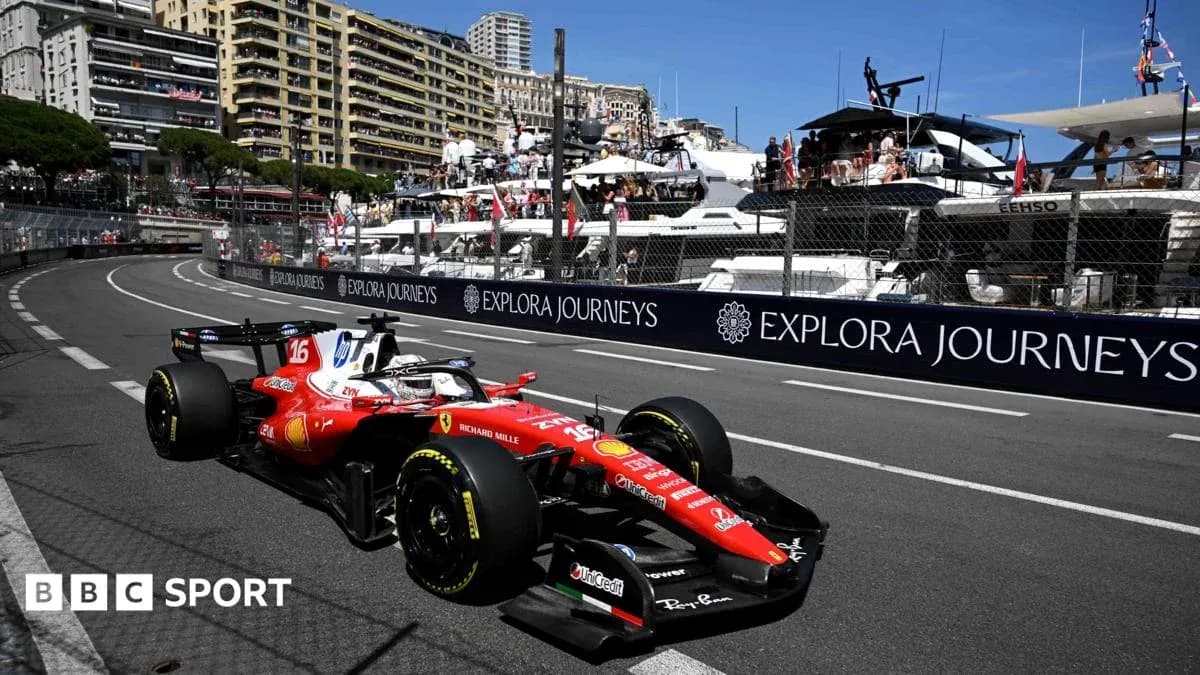
Charles Leclerc put the new engine straight into the sharp end, second fastest in FP2 and just 0.120s off Russell’s benchmark. More telling than the headline time was how he did it: on soft Pirellis, with long-run pace that kept him in the conversation with Mercedes and the rapid Red Bull of Liam Lawson.
Strip away the noise and one truth remains: Monza exposes power. This is the track that has highlighted Ferrari’s deficit more brutally than any wind-tunnel graph. The new unit was never billed as a silver bullet. The aim was simple – narrow the gap, not erase it.
Early signs suggest it has done exactly that.
Yes, it’s still only Friday. Yes, Leclerc’s lap came on a softer compound than the Mercedes pair and Lawson. But for a team that has spent too many Italian Grands Prix explaining why straight lines hurt so much, this was a different kind of debrief. Both drivers are running the upgrade, both look competitive, and the car no longer seems to gasp on the straights.
For the Tifosi, that’s not hype. That’s hope.
Honda’s new engine hits a harsh reality
Fernando Alonso had circled Monza as the true exam for Honda’s latest power unit. Zandvoort, with its twists and changing grip, could flatter or disguise. Monza does neither. It simply asks: how fast are you in a straight line?
The answer on Friday was brutal.
Alonso and Lance Stroll ended up near the bottom of the timesheets, bracketing the Cadillacs and sitting more than a second off the next-slowest car once Esteban Ocon’s compromised Haas running is discounted. For a package that was supposed to show progress, this was a sobering snapshot.
Honda’s trackside general manager and chief engineer Shintaro Orihara had warned it would be “challenging for [the] power unit side” and urged realism. He got it. Monza exposed the engine, just as feared, and left Aston Martin and Honda staring at a deficit that looks far larger here than any slide deck would have suggested.
On a day when straight-line speed was king, Honda’s latest step looked like a stumble.
Russell pounces as Mercedes flexes
On Thursday, Russell played it cool.
He talked about opportunity, not favouritism. About the last tenth in qualifying being the difference between the podium and the chasing pack. About uncertainty over who would emerge as the team to beat.
Twenty-four hours later, he set the pace.
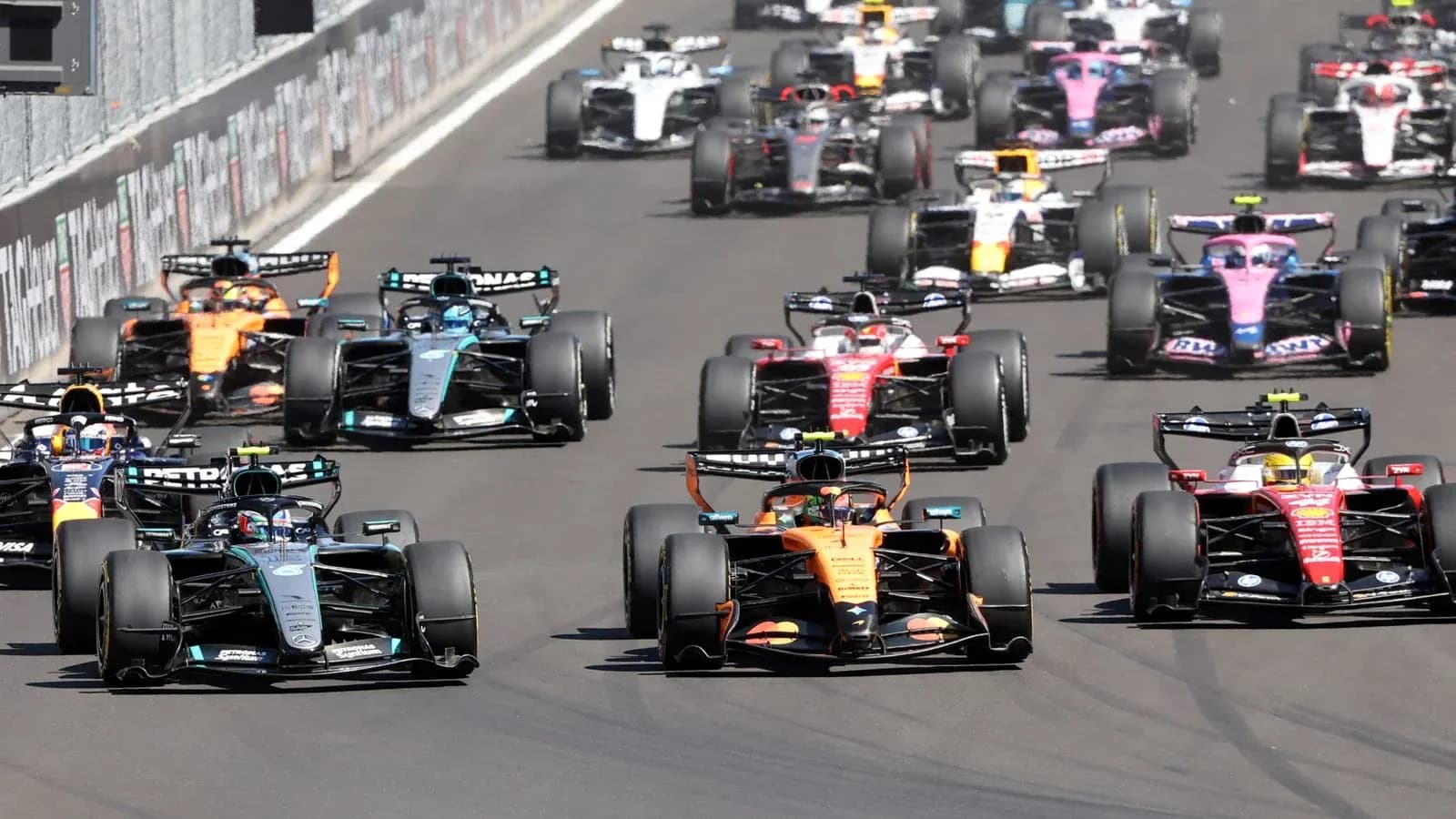
After trailing Ferrari by three tenths in FP1, Russell turned the tables in FP2, topping the session and edging Leclerc by that 0.120s margin. On a circuit that rewards low drag and efficiency, the Mercedes package looked at home, its strengths sharpened by the layout and its weaknesses less exposed.
Russell’s position is even stronger when you factor in the bigger picture. His main title rival is his own team-mate, Antonelli, who will carry a grid penalty into qualifying. Come Q3, the Briton can expect a tow, strategic help, and a clear run at pole while Antonelli plays the team game.
There is a caveat. Russell’s engine is into the weary stage of its life, while Ferrari’s ADUO 2 unit is fresh and clearly delivering. But in terms of weekend momentum, the Mercedes driver has planted a flag. On a day when others searched for balance, he looked like a man who knew exactly what his car would give him.
Red Bull’s rough ride continues
Not long ago, Max Verstappen’s new Red Bull deal arrived with a wave of optimism. Future plans aligned, expectations set, a long-term project framed as a climb back to the top.
The reality of the last few weeks has been far less glossy.
Since that pre-Zandvoort announcement, the Dutch sprint brought only sixth, the Dutch GP ended in the barriers, and Monza’s FP2 delivered a stream of complaints from the four-time world champion. No downforce. No grip in slow corners. Brakes misbehaving. The car “jumping” on the front axle.
The stopwatch backed up the frustration. Red Bull ended the day mired in the midfield, ninth and 12th, a long way from the days when Verstappen could toy with the field and still land on pole.
This is a different era. The car no longer gives him a platform to dominate. His talent has already salvaged standout results this season; now it may be needed just to drag Red Bull out of the pack and into clear air.
At Monza, that sounds like an ask bordering on the heroic.
Bearman lights up Haas’s big gamble
Haas has been waiting a long time for this upgrade. When it finally arrived, it landed almost entirely on one car.
Ollie Bearman got the full package: new bodywork, the fresh Ferrari engine, the works. Ocon did not. The stopwatch told you who cashed in.
Bearman finished FP2 in eighth, only 0.8s off Russell’s best and a mere 0.02s behind Racing Bulls rookie Arvid Lindblad. For a team stuck in a six-race run without points, that felt like a jolt of electricity through the garage.
The Briton spoke of more downforce, more confidence, a car that finally let him lean on it through the corners. He did add a note of caution: qualifying at Monza is a slipstream lottery, and the upgraded Haas is a touch draggier than some rivals. Straight-line speed games on Saturday could shuffle the order.
Even so, the underlying step is clear.
Haas head of car engineering Hoagy Nidd didn’t play it down. “It’s a huge upgrade. We’ve updated all of the chassis. It’s all of the bodywork rearwards of the cockpit pretty much.” For once, the on-track picture matched the engineering ambition.
Friday at Monza might just be Haas’s best day of the season. The question now is whether it breaks that run of point-less Sundays.
Ocon left on the wrong side of the split
The flip side of Bearman’s surge was always going to be Ocon’s frustration.
He has the new bodywork but not the new Ferrari engine, thanks to the quirks of F1’s homologation rules. On a track where power is everything, that is a brutal handicap to carry into direct comparison with a team-mate running the full package.
The gap told its own story. Ocon ended FP2 more than a second adrift of Bearman, stuck down in 18th. Nidd was quick to stress that the engine alone does not explain the chasm, pointing to a less-than-ideal programme and the fact Ocon never really got the clean laps he needed.
Traffic bit hard on his push runs, a Monza classic. But context doesn’t erase the optics. One Haas looks transformed; the other looks marooned.
For Ocon, the task on Saturday is clear: survive the slipstream chaos, find a tow, and hope the stopwatch is kinder when it finally counts.
Practice days don’t decide championships. They do set the tone. On a charged Friday at Monza, Mercedes looked sharp, Ferrari’s new engine finally punched back, Honda took a hit, Red Bull wrestled a difficult car, and Haas discovered a version of itself it has been chasing all year.
If this is only the prelude, qualifying could turn the Italian Grand Prix into a pivotal chapter in this season’s fight.