Football Media Melodrama: Nightmares and Myths
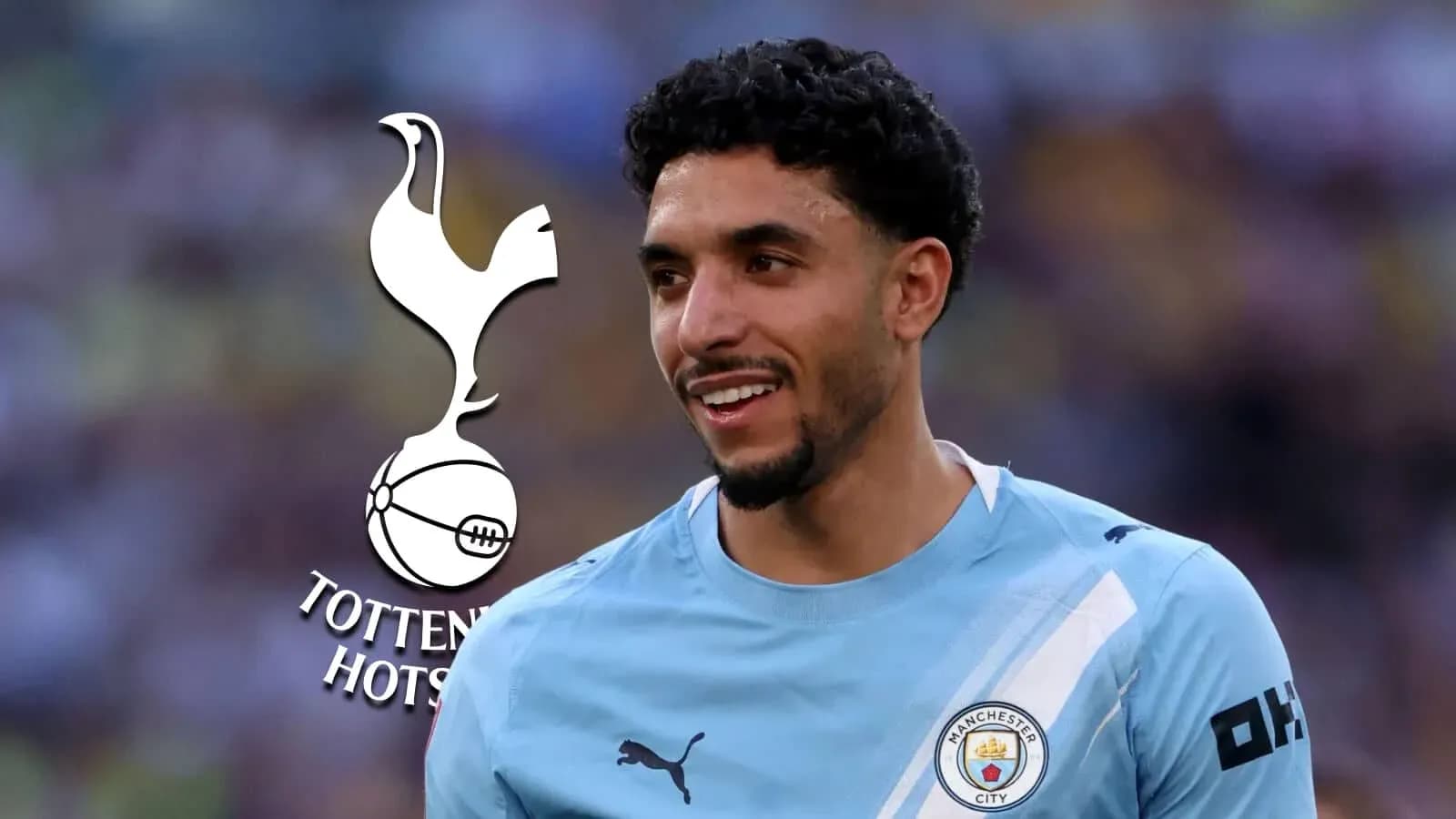
Omar Marmoush has barely packed his bags for London and already, we’re told, he’s suffered an “immediate Tottenham blow”. The kind of melodramatic setback, apparently, that Carlos Baleba somehow scaled on his way to Manchester United.
It’s nonsense. All of it. But that’s the currency of a certain corner of the football media right now: hysteria dressed as insight.
Nightmare draws everywhere
Take the Champions League draw. Within minutes of the balls being pulled, the headlines rolled in like a storm.
- “Arsenal’s Champions League draw in full as Gunners handed nightmare fixtures.”
- “Man City handed nightmare Champions League draw with Arsenal also given tricky fixtures as Man United face old foes on return to competition – and Jose’s back at the Bridge!”
- “Champions League group phase predicted by supercomputer with Man Utd having a nightmare after horror draw.”
Nightmares. Horror. Tricky. You’d think someone had slipped Bayern, Real Madrid and peak Barcelona into the same schedule for every English club.
The reality? The competition is stacked now. There are fewer soft touches, fewer dead rubbers. If you’re in the Champions League, you’re going to face serious opponents. That’s the point of the thing.
United’s “horror” that isn’t
That “nightmare after horror draw” for Manchester United is a perfect example of how language has lost all proportion.
We’re told United have been “tipped to agonisingly miss out on the top eight” of the new league phase. The number-crunchers at Football Ranked have them finishing ninth.
Ninth.
In this apocalyptic vision, United end up as the highest-ranked seeded team in the knockout play-off round, facing the lowest-ranked unseeded side. A home second leg. A clear route into the last 16.
This, apparently, “doesn’t bear thinking about”.
The only horror here is what’s been done to the word.
Liverpool’s stealth myth
Jeremy Cross, in the Daily Mirror, makes a fair overarching point: Liverpool, once the benchmark of smart recruitment, now look just as muddled as Manchester United in the market.
But then the mythology kicks in.
“In that same period, Liverpool conducted their own business with ruthless stealth. Big targets were kept under the radar, until a deal was so close to being completed it would be made public.
“This happened with the likes of Virgil Van Dijk, Alexis Mac Allister, Alisson and Luis Diaz, to name but a few.”
It sounds good. It just isn’t true.
Liverpool’s move for Virgil van Dijk was so “under the radar” that Southampton reported them to the Premier League for an illegal approach. Liverpool ended up issuing a public apology and backing off before returning later to do the deal properly.
Ruthless? Yes. Stealthy? Not exactly.
The Barcola “desperation” spin
Then comes the transfer window panic.
“Negotiations are taking place with PSG about a deal for Bradley Barcola, with a deal likely to come close to the fee paid to Newcastle for Isak.
“Under normal circumstances, such a move would leave supporters feeling overwhelmed excitement.
The problem is, Liverpool have turned to Barcola in desperation less than a week before the transfer window closes, having pulled out of the bidding for Brighton’s Yankuba Minteh.”
It’s framed as a late, frantic lunge. But Liverpool haven’t suddenly “turned” to Barcola. They’ve been chasing him all summer. When you’re talking about a £120m deal with PSG, you don’t stroll in on a Monday and have it wrapped up by Friday lunchtime.
These negotiations are long, messy, and public. Cross should know that better than most; his coverage of Elliot Anderson’s move tied itself into so many knots it could have done with a VAR check of its own.
Shirt numbers and “immediate blows”
The obsession with drama doesn’t stop at transfers. It even extends to shirt numbers.
- “Bradley Barcola set to wear bizarre unused shirt number at Liverpool.”
- “Bradley Barcola can wear dream shirt number at Liverpool after PSG transfer agreement reached.”
The same situation, two completely different emotional states. For one outlet, the number is “bizarre”. For another, it’s his “dream”. In reality, it’s a digit on a shirt.
Which brings us back to Omar Marmoush and his supposed “immediate Tottenham blow” after a “£60m transfer breakthrough” involving Manchester City.
The blow? He might not get to wear No 7.
“Moving to Tottenham will give Marmoush the opportunity to play more regularly, having only made eight Premier League starts for City last season. However, he won’t have everything his own way when he arrives in the capital.
“That’s because he will need to pick a different shirt number, with his preferred No 7 already occupied by Xavi Simons.”
This is presented as a genuine obstacle. As if a professional footballer might reconsider his move because he can’t keep the same number he wore elsewhere. As if the real sacrifice here isn’t leaving a title-chasing squad, but surrendering a seven.
He could, of course, insist on returning to Manchester City, barely play, but keep his precious digit. That’s the implied logic.
Ronaldo, United and the market
Samuel Luckhurst is on solid ground when he points out that Manchester United still haven’t sold a single first-team player this summer. For a club trying to reboot under new leadership, that’s a glaring failure. Elite clubs move players on. United cling to them.
But the way he closes the argument jars.
“Even one of the greatest, Cristiano Ronaldo, was burnt by his association with United.
“When Ronaldo effectively filed for divorce with his November 2022 interview with the sycophantic Piers Morgan, Morgan said: ‘If it was just about money, you’d be in Saudi Arabia.’
“Saudi was the only place to offer Ronaldo a home. Even he did not have shoppers flocking to United’s stall.”
The implication is that if even Ronaldo couldn’t attract bidders, something about United’s “stall” is uniquely toxic.
That’s not what happened.
Clubs didn’t queue up for Ronaldo because he had shown himself to be a 37-year-old, wildly expensive, self-absorbed forward who walked out on his team and torched his manager on television. His wages were enormous, his output declining, his behaviour volatile. The market made a rational decision.
Of course United couldn’t find a buyer for him. That failure says more about Ronaldo’s profile at that stage than it does about United’s ability to sell Joshua Zirkzee or anyone else.
The pattern is the same across all of this. Perfectly reasonable football stories get inflated into melodrama. Every draw is a nightmare. Every negotiation is a crisis. Every shirt number is a saga. Every transfer failure is an existential indictment.
The game doesn’t need the volume turned up that high. The real questions are loud enough on their own.