Gasly Loses Monaco Podium as FIA Upholds Pitlane Penalties
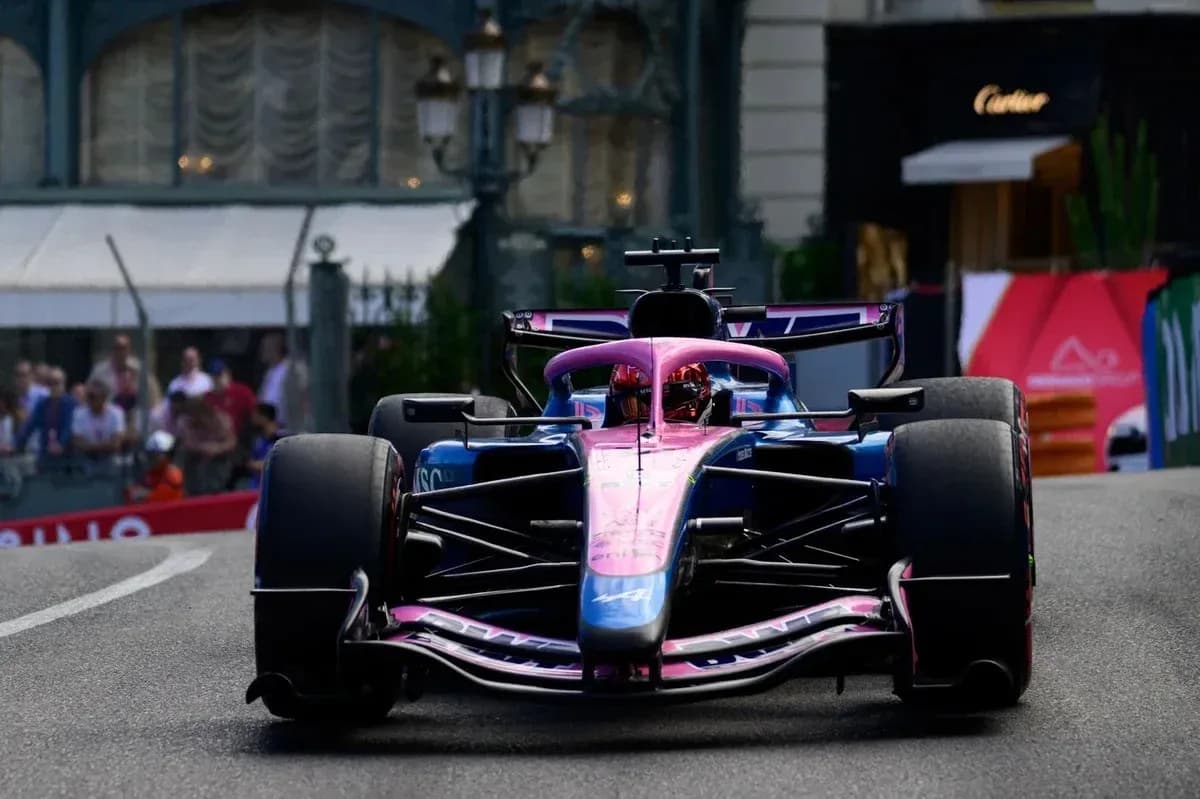
Pierre Gasly’s Monaco fairytale has been ripped up for a second time. The Alpine driver has lost his Grand Prix podium after the FIA’s International Court of Appeal ruled that his pitlane speeding penalties must stand, dropping him from third to seventh in the final classification.
The decision restores the original sanctions handed out in the principality and reshuffles the order again. Isack Hadjar, who had already celebrated third place on the day, now officially inherits the final spot on the podium. Gasly, who briefly had his trophy back after a successful right of review in June, sees it taken away once more.
A 77-centimetre controversy
The whole saga stems from a tiny measurement error with huge consequences.
Several drivers were flagged for pitlane speeding in Monaco after being clocked between the first two timing loops. It later emerged that the spacing between those loops was wrong by 77cm, an anomaly that contributed to an unusually high number of penalties.
Oscar Piastri, George Russell and others served their five‑second penalties during the race. Russell’s situation was even messier: Mercedes served his sanction incorrectly, triggering a drive-through that destroyed his afternoon.
Gasly’s case was different. His two five‑second penalties were added to his race time after the chequered flag, demoting him from third to seventh. Because the punishment came post-race, Alpine could request a right of review, arguing that the flawed pitlane measurement invalidated the data used to penalise their driver.
On 12 June, the stewards accepted Alpine’s arguments and overturned Gasly’s penalties. The Frenchman was reinstated to third, Alpine celebrated a Monaco podium, and those who had served their penalties on track – like Piastri and Hadjar – were left with no way back.
That is where the real fight began.
McLaren and Red Bull push back
McLaren and Red Bull were never going to let that stand without a challenge.
Their drivers had taken the pain during the race, dropping from third and fourth to fourth and fifth as the penalties were served. There was no opportunity for them to appeal a time addition after the flag, because their punishments had already been executed in real time.
Both teams lodged appeals with the International Court of Appeal, backed by Racing Bulls – whose drivers also lost positions in the classification – and by Motorsport UK.
On Friday, the Court sided with them.
It ruled that the original penalties for pitlane speeding remain valid. Gasly’s sanctions are reinstated, and with them the original finishing order: Gasly back to seventh, Hadjar back to third, and the rest of the Monaco result realigned.
Alpine fails to prove its case
The Court’s reasoning cut straight to the core of Alpine’s argument.
Alpine claimed that because the timing loops were incorrectly spaced, Gasly’s speed calculation was unreliable and the penalty illegitimate. The team maintained that Car #10 never exceeded the pitlane speed limit at any point.
The ICA was not convinced.
In its findings, it said Alpine could not prove with certainty that Gasly had actually travelled a longer distance in the pitlane than the system measured. His shorter time between the two loops, the Court argued, could be down to “a shorter path, greater speed, or a combination of both.”
Without clear proof that the distance error directly exonerated Gasly, the Court refused to wipe out the penalties.
It did, however, address the awkward imbalance between drivers who had their penalties cancelled and those who did not. The ICA stated that the fact some drivers had already served their sanctions “cannot be an obstacle to the cancellation of an illegitimate sanction, because those penalties were served at the discretion and choice of the team.”
In other words, teams chose when and how to take their penalties. That strategic choice could not, in the Court’s view, be used to block the annulment of another driver’s punishment if it was found to be wrong.
To then preserve “sporting fairness” by keeping a penalty the Court considered illegitimate, it added, would itself be inconsistent with sporting fairness.
Alpine “disappointed and frustrated”
Alpine’s reaction was immediate and emotional.
In a team statement, it said it “expresses its disappointment and frustration with the outcome reached by the FIA International Court of Appeal relating to the result of the 2026 Monaco Grand Prix.”
The team doubled down on its stance that Gasly had done nothing wrong: “While we disagree with the decision, and still fully maintain that Car #10 did not exceed the Pit Lane speed limit at any point during the race, the team acknowledges the decision of the judging panel from the recent hearing in Paris.”
The tone was defiant, but also resigned. Alpine insisted it felt “unjustly punished” yet stressed that its focus now lies on performance and a tight Championship battle rather than courtroom drama.
“This outcome will not deter the team's efforts and motivation in achieving its objectives by the end of the season,” the statement concluded.
For Gasly, it is a brutal twist. A career-highlight Monaco podium, celebrated, lost, restored and now stripped again – all over a disputed stretch of pitlane and 77 centimetres of measurement error.
FIA stands by stewards but promises review
The FIA, for its part, moved to protect the credibility of its stewards while accepting that its systems and processes must be examined.
The ICA decision upholds the appeals of McLaren F1 Team and Red Bull Racing against the decisions of the stewards contained in document 99 of the Monaco Grand Prix, effectively overturning those decisions,” the federation said.
It confirmed that it is “reviewing the methodology and operation of the current Formula 1 timing system and the related regulatory matters.” The right of review and appeal procedures will also come under scrutiny.
The governing body underlined its support for the stewarding process and the “independence and objectivity” of the panels that police global motorsport. It stressed that stewards work in a very different environment to the Court, which has the benefit of extended legal counsel, fuller argument, and broader evidence.
According to the FIA, its stewards are already engaged in “continuous improvement,” and every ICA ruling is studied to refine their work.
The message is clear: the system will be examined, the technology checked, the procedures tightened. But the stewards, in the FIA’s eyes, remain central and trusted.
For now, the Monaco story is closed in the eyes of the law. The timing loops stay, the penalties stand, and the record books will show Pierre Gasly seventh, Isack Hadjar third.
The bigger question lingers over something no court can fully control: when the margins are this fine and the stakes this high, how many more races will be decided not by the kerbs and walls, but by the courtroom?