George Russell's Strategic Engine Penalty in Formula 1
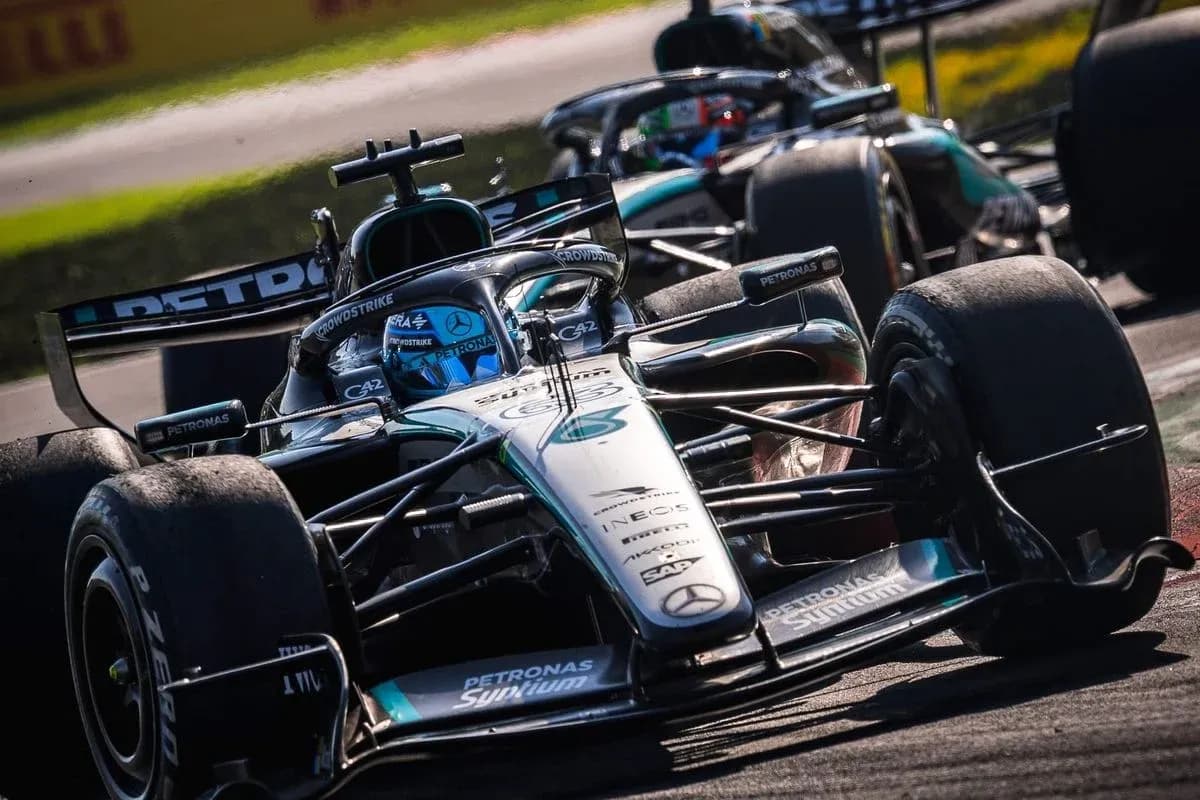
George Russell is playing the long game with his Formula 1 engine penalty – and Mercedes is betting big that the wait will be worth it.
Instead of taking his grid drop at one of the next races, as many expected, Russell will hold off until Mercedes’ upgraded ADUO-spec power unit is ready. That could mean no change until the United States Grand Prix and the start of the Austin–Mexico–Brazil triple-header.
In a season where reliability has already boxed Mercedes into a corner, timing is everything.
Penalty now, or power later?
Early reliability issues have pushed both Russell and team-mate Kimi Antonelli beyond their in-season power unit allocation. Antonelli bit the bullet at Monza, taking fresh components and starting 19th on the grid.
He still won.
That result made the obvious case for Russell to follow suit at Baku. Long straights, overtaking chances, damage limitation. On paper, perfect.
But Mercedes has ripped up that script. The team wants Russell’s penalty to land on the same weekend as its ADUO-upgraded engine – a step that is expected to feature, among other elements, an improved turbo.
The logic is brutal but simple: take the hit once, not twice.
Russell spelt it out at the Spanish Grand Prix. The plan, he said, was always to pair his engine penalty with the ADUO upgrade. If he’d taken a fresh unit at Monza, he’d have faced another grid drop later when the new spec arrived. “It makes zero sense for me,” he said.
Boxed in by the rules
The problem lies in the detail of the component limits.
Russell has already maxed out his internal combustion engine, turbo, energy store (battery), and control electronics for the season. Any fresh element in the coming races would automatically trigger penalties. If he then switched again to the ADUO-enhanced parts, he’d be hit a second time.
That is exactly what Mercedes wants to avoid.
The ADUO system – Additional Development and Upgrade Opportunities – has given the team extra room to improve its power unit mid-season. It’s a lifeline, but also a complication. The upgrade has to be timed so that the performance gain justifies the strategic pain.
Initially, the new spec was pencilled in for the next run of flyaways: Azerbaijan, Malaysia, Singapore. Now, the internal target has drifted. The word in the paddock is that the United States, Mexico, and Brazil stretch, starting in Austin on October 23-25, is the more realistic launch window.
Antonelli’s head start – and his wiggle room
Antonelli, leading the championship, already took a partial refresh at the Italian Grand Prix. Mercedes changed his internal combustion engine, battery, and control electronics, but stopped short of a full power unit overhaul.
That restraint now gives him flexibility.
He can still bolt on a new turbo, MGU-K, exhaust, and ancillaries without incurring further penalties. When the ADUO-spec power unit arrives, he’ll be able to access the improved hardware with far less disruption than Russell.
When Mercedes finally rolls out the upgrade, both works drivers will get it. Customer teams will also have access, but only via a single unit per team at the first event, as required by the regulations.
So Russell waits. He carries a fully spent allocation, knowing that any misstep could cost him two weekends instead of one. Mercedes waits with him, gambling that the ADUO package will land on time, deliver real performance, and turn a painful penalty into the launch point for a stronger run-in.
The question now is not whether Russell will fall to the back of the grid at some stage.
It’s whether, when he does, the car underneath him will finally be worth the sacrifice.