Iraola’s Liverpool: From Bournemouth to Premier League Resilience
Twelve months ago, Liverpool opened their Premier League title defence with five straight wins. Arne Slot’s side swept past Bournemouth on the opening night and looked every inch a champion machine rolling on.
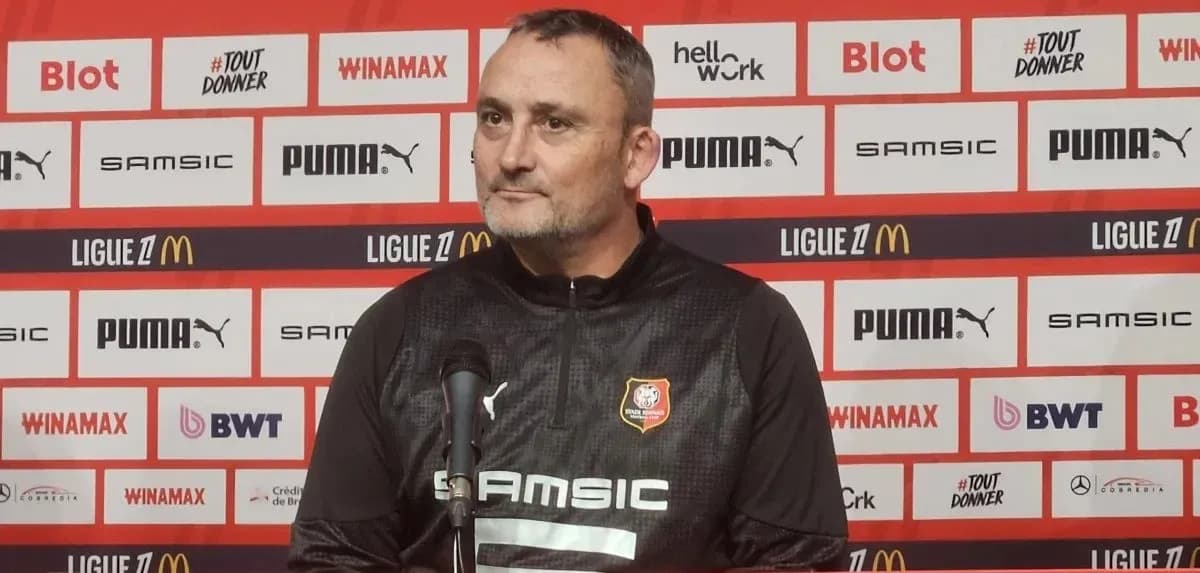
No one in that stadium was imagining this: Andoni Iraola in the away dugout at the Vitality a year later, returning as Liverpool head coach, six points down on last season’s pace and still trying to bend a giant club to his ideas.
Football flips quickly. This is Iraola’s reality now.
From home dressing room to away corridor
For three years, Bournemouth was his base. His voice in the home dressing room, his fingerprints on the training ground. On Sunday he walks back into the same stadium and turns left, not right, into the smaller away changing room.
Even that room has changed. Bournemouth have had to renovate it to meet Europa League regulations, a small upgrade that will make the experience more comfortable than it used to be. Symbolic, in a way. The club he left has grown, the club he joined expects to dominate.
Under Iraola, Liverpool remain unbeaten. That matters. But the numbers are unforgiving: six points worse off than at this stage under Slot, a team that has traded early-season swagger for a more cautious, grinding edge.
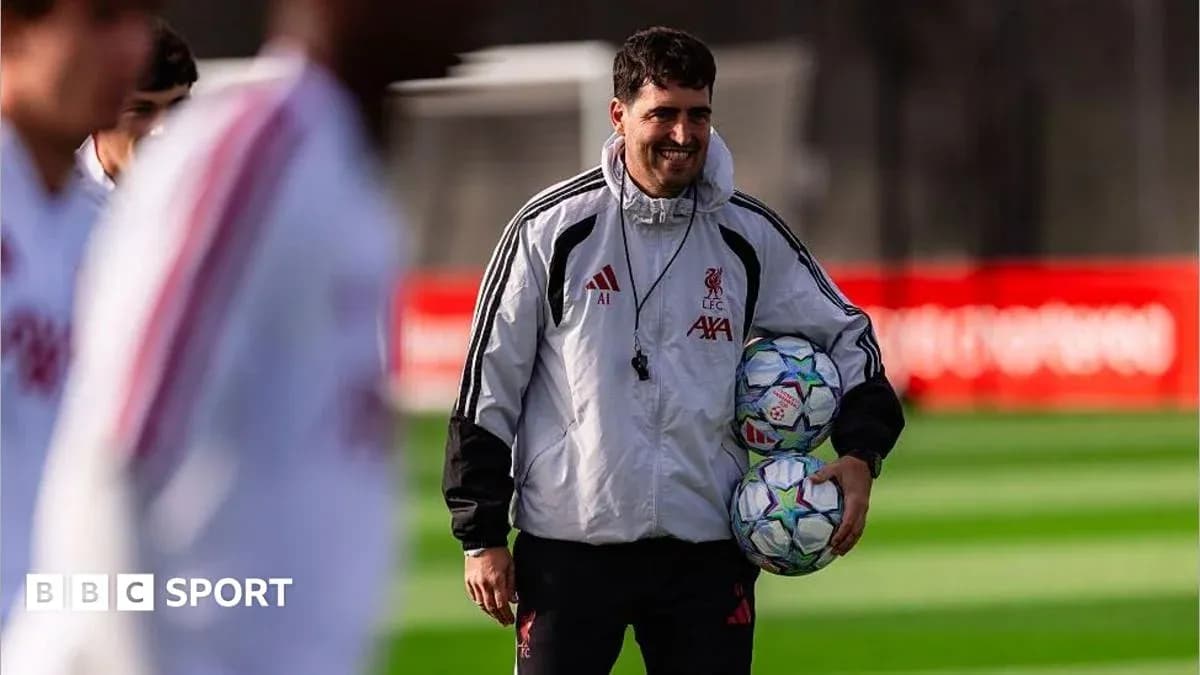
He has swapped the south coast seaside for Formby’s sand dunes, following the well-worn path of Jurgen Klopp and Brendan Rodgers. Locals have already clocked him in the city centre and out on his bike along the coast. Yet the place he truly lives is Kirkby, on the grass, with cones in his hands.
A six-days-a-week coach
Those inside Liverpool talk about a “six days a week” coach. Not in theory. In practice.
Iraola is often the first man on the training pitch, setting out cones, shaping sessions, driving the tempo. There are no easy days.
"It's really intense. There's a lot of hard work and no sort of light days. Everyone's putting in 100%," said forward Lewis Koumas. That line could have come from any of Iraola’s previous clubs. It fits the pattern.
Liverpool’s hierarchy felt the whole club needed a reset after last season. Too many defeats, too much emotional baggage. Even if Slot had stayed, the mood was always likely to lift simply because the page had turned.
Iraola has not walked in like a showrunner. At the AXA Training Centre he rarely hides away in his own office. He prefers the coaches’ room with Tommy Elphick, Shaun Cooper and Pablo de la Torre, blending into the staff rather than dominating the building in the way previous managers have.
De la Torre, who followed him from Rayo Vallecano to Bournemouth and now on to Merseyside, is crucial. His job is to help drive the physical standards Iraola demands, the engine behind the pressing and the relentless running that define his teams.
From the outside, a new head coach at Liverpool looks like revolution. Inside, the changes are more subtle. The structure of the role limits any one man’s ability to rip things up. Iraola’s challenge is to bend that structure just enough to fit his football.
Learning Liverpool’s calendar on the fly
His work at Bournemouth earned him the Liverpool job. His education in Liverpool’s calendar has started in real time.
This is a different world: a congested schedule, a squad that could easily push past 60 games if the cup runs stretch deep. The club expects intensity and trophies. The sports science department expects to be heard.
So Iraola listens. Medical and fitness staff at Kirkby have a real voice in how the week looks. Training times flex around kick-off times: late afternoon and early evening sessions are now common, a sharp contrast to Slot’s more fixed schedule.
There is alignment with the academy too. Under-21s coach Rob Page has been briefed in detail on what Iraola wants.
"We have an understanding of how the first team play and key principles, like how we press, how he wants his number 10 to press, how he wants his number eight to press, how he wants his centre-backs to press - we mirror that absolutely," said Page.
The idea is simple: when the kids step up, they already speak the same football language.
Dominik Szoboszlai spelt out the system earlier this week: a number six, a number eight and a number 10. Supporters spent the summer calling for a pure defensive midfielder, but Iraola believes the structure can work if the collective improves, if the press bites and the distances stay tight.
He likes to name his team on the morning of the game, not days in advance. He keeps the main debrief for the day after a match, when the emotion has cooled and the analysis can cut cleaner.
Words, intensity and the weight of the badge
He has already had a reminder of what this job is. In pre-season, speaking to LFC TV after a friendly against Monaco, Iraola admitted Liverpool had “run out of steam” after half an hour and didn’t yet have the energy to play with his desired intensity.
It was meant as a simple observation, a nod to the work still to come. It was reported as something more pointed. At Liverpool, every sentence carries weight, every phrase can be clipped, shared, twisted.
He has adjusted. In news conferences he appears calm, pragmatic, willing to explain rather than provoke. The adaptation runs both ways: a Basque coach learning Liverpool, a Liverpool squad learning Iraola.
The club chose him in part because of his track record with young players. That is already visible. The average age of Liverpool’s Premier League side this season is 25.3, with only five teams in the division fielding younger groups.
In the Carabao Cup against Tottenham, Rio Ngumoha (18), Trey Nyoni (19) and Koumas (20) all started. None of them are being treated as one-off stories. Inside the club, the expectation is that all three will play bigger roles this season than last.
Intensity is the non-negotiable. That word follows Iraola around. Yet he is no ideologue blind to reality. With a brutal fixture list, he knows Liverpool cannot sprint their way through every match. Some games will need to be won with a set-piece, a clever routine, or one flash of individual brilliance when the legs are heavy.
The data tells its own tale. Going into this weekend, Liverpool have recorded the most sprints in the Premier League. Yet they looked flat in the goalless draw with Fulham, coming less than 72 hours after a draining Champions League win over Atletico Madrid.
Sunday’s trip to Bournemouth will be their fourth game in 12 days. After the international break, they face a run of four in 10. Between 11 October and 7 November, they are scheduled to play nine times. That is the storm Iraola must steer through.
Back to the Basque, back to Bournemouth
On Thursday night, Bournemouth made their Europa League debut with a win over Real Sociedad in the Basque Country, where Iraola grew up. He would have seen the result. He might even have smiled.
The symmetry is hard to ignore. The club he left is making strides in Europe. The club he now leads expects to be there every year.
Somewhere on the flight down from Liverpool on Saturday, there will be a quiet moment. A look out of the window. A thought about Rayo, about Bournemouth, about Anfield. About how quickly the game has moved him from one touchline to another.
Liverpool’s start under Iraola has not been spectacular. But it has been solid. They have not lost. After 12 league defeats last season, becoming hard to beat is not nothing.
Yet this is Liverpool. As vice-captain Alisson reminded everyone last week, draws are not enough.
Iraola knows that too. He has not lost a Premier League game since January across his two clubs. Keeping that run alive, on familiar turf, with three points rather than one, would send him into the international break with something more powerful than a narrative.
It would send a message that his Liverpool are ready to stop merely surviving the schedule and start shaping the season.