Jack Grealish's Troubling Return to Everton: A Homecoming at Risk
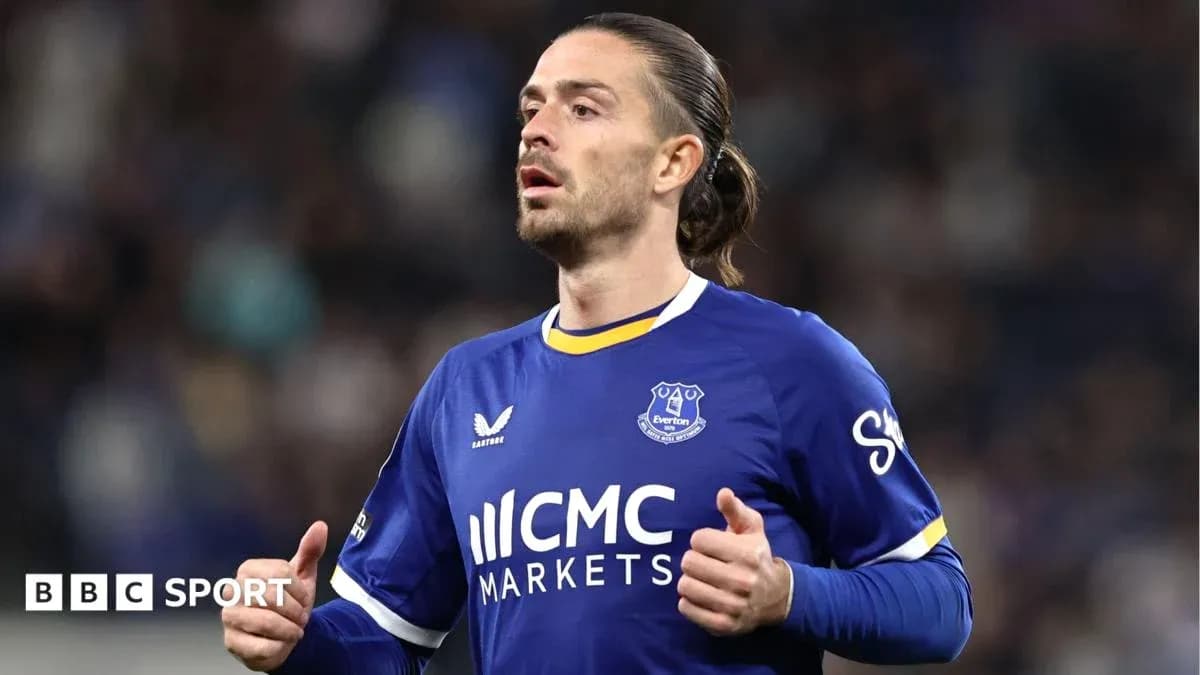
Jack Grealish rolled back into Finch Farm on deadline day like a returning cult hero, white Lamborghini glinting in the late-summer light, and for a few hours Everton felt like a happy club again.
Supporters clustered around the gates, phones out, kids in replica shirts craning for a glimpse. Grealish, 31 now but still carrying that street‑footballer swagger, signed everything, posed with everyone and lingered long after the paperwork was done. When he finally left in the early hours, it felt less like a loan signing and more like a homecoming.
Everton needed it. David Moyes needed it. Grealish needed it most of all.
His first spell on loan from Manchester City had been cut short by a serious foot injury, but he had shown enough flashes – the tight control, the drifting runs, the old mischief – to convince Everton that the risk was worth taking again. City had effectively exiled him at the start of the final year of his contract. Goodison offered a way back from the cold.
Now that lifeline is fraying.
A public dressing-down
When Everton announced before their Carabao Cup tie against Newcastle United that Grealish had been left out for “a breach of club discipline”, the wording was deliberate and pointed. This was not a quiet internal fine and a line drawn under it. This was the club going public.
The offence was simple and stark: he did not turn up for training on Monday.
For a player who once became Britain’s first £100m footballer when he left Aston Villa for Manchester City in 2021, it was a jarring lapse. For a squad as thin as Everton’s – Moyes has just 18 senior players to work with after a botched window – it was unforgivable.
Inside the club, the decision to punish him was taken at a high level, with Moyes fully on board. The message could not have been clearer: standards apply to everyone, even the star attraction in the white supercar.
This is not, Everton insist, the mythical “Last Chance Saloon”. Moyes cannot afford to banish game‑changers when his bench is already bare. But the pressure has ratcheted up. Grealish is now walking a tightrope.
Time running out
The timing could hardly have been worse for him. While Grealish sat out, Everton produced arguably their best performance of the season, beating Newcastle 3-1 and booking a quarter-final at League Two Fleetwood Town, the shock conquerors of Arsenal.
On the left flank, where Grealish might have expected to start, 20-year-old Tyrique George tore around with the kind of direct, dynamic running that has too often been missing from Grealish’s underwhelming campaign. No goals, no assists in eight appearances this season – two of them for City before the move – tell their own story. His habit of slowing attacks jars with the tempo Moyes demands.
The contrast was impossible to ignore.
Moyes, asked about the disciplinary call after the game, chose his words carefully and kept the focus on his team’s display.
“You probably know I’m not going to give any details. It’s a club decision and I support it. It’s something I don’t want to speak too much about,” he said.
Then came the line that will have echoed in the dressing room.
“The one thing about Everton is that they have got real good values. All the players stand behind it and accept the values, on the pitch and off the pitch, and I think the players did a good job.”
He talked about humility. About a small squad refusing excuses. None of it mentioned Grealish by name. All of it applied to him.
Moyes, the disciplinarian, and his favourite pupil
That is what makes this so jarring. Moyes and Grealish built a close bond almost from the moment they first spoke in August 2025. Grealish was explicit at the time: “As soon as I spoke to the manager, I knew there was only one place that I wanted to go and that was Everton.”
He meant it. When his first loan was cut short by that foot fracture in a 1-0 win at Aston Villa in January, he chose to stay on Merseyside for his rehabilitation rather than return to Manchester City’s Etihad Campus. Finch Farm felt like home.
Everton, for their part, agonised over bringing him back. The injury record, the finances, the question of character – all went into the mix before Moyes decided to move again for a player who insisted Merseyside was the only destination he wanted.
There had been minor time‑keeping issues in the past, but nothing on this scale. Inside the club he was seen as a hard trainer, someone who generally looked after himself. Under a manager as strict as Moyes, the boundaries are non‑negotiable. Missing training crosses a red line.
Grealish has since held talks with the hierarchy. The expectation is clear: no repeat. Not in this squad, not under this manager, not with Wembley suddenly looming into view in the Carabao Cup.
The contradiction at the heart of Jack Grealish
What makes this episode so painful for those around Everton is that it clashes so violently with the Grealish they think they know.
Inside the dressing room and across the club’s staff, he is hugely popular. He has been described as “a lad with a heart of gold, kind and charming, who actually loves being here”. The stories back that up.
Recently, he quietly donated £10,000 to a GoFundMe page for Everton supporter Leon Skapars, a 36-year-old father of three diagnosed with cancer. Skapars’ wife, Crystal, spoke of the impact: “In that moment, Jack gave our whole family something we desperately needed, hope. What he has done for our family is something we will never forget. It makes us feel incredibly emotional.”
Grealish turned up at the Daily Mirror’s ‘Pride Of Britain’ awards to present honours, telling the audience: “Footballers are classed as heroes – but these are the real heroes.”
He has extended his role as principal ambassador for Special Olympics Great Britain until 2027, having first taken it on in 2022. To mark the extension, he hosted five of the 10 Special Olympics GB athletes who completed the London Marathon at Everton’s Hill Dickinson Stadium, giving them a VIP experience, a tour and time with him pitchside.
At Finch Farm, he is usually one of the first to engage with Everton’s community programmes, particularly the Everton in the Community Down Syndrome team. He speaks often about the inspiration he draws from his sister Hollie, who has cerebral palsy.
This is the Grealish that colleagues and supporters want to believe in.
Yet the other side keeps intruding. In April, he was photographed asleep at a Manchester rooftop bar, surrounded by drinks. Not illegal, but ill‑judged for a high‑profile player rehabilitating from injury in an era of camera phones and instant outrage.
His history is dotted with similar lapses. In March 2020, while at Aston Villa, he broke lockdown guidelines to visit a friend and was fined by the club before issuing a public apology. Later that year, he admitted two counts of careless driving after incidents in which a Citroen van and a Mercedes were damaged.
The pattern is familiar: a warm, generous personality, followed by a moment of poor judgement that drags him back into the headlines for the wrong reasons.
A career at the crossroads
This latest breach feels different because of where he stands in his career. The Treble winner with Manchester City in 2023 is no longer a rising star. He is 31, in the final year of a City contract from which he has effectively been frozen out, clinging to the top end of the Premier League through the faith of a club with its own problems.
Everton, under owners The Friedkin Group, have been operating under financial constraints as the club is readied for sale. Moyes has been left to juggle a paper‑thin squad, his margin for error close to zero. He cannot afford passengers. He cannot afford self‑inflicted absences.
When Grealish missed the weekend defeat at Arsenal through what was described as “illness”, it already felt like a missed opportunity. Failing to report for training two days later turned that frustration into anger.
Everton will try to rehabilitate him. They almost have to. His talent remains obvious, his popularity inside the club intact, and his ability to change games – when fit and focused – is beyond dispute.
But the equation has shifted. The supporters who embraced him on that Lamborghini‑lit deadline night now need to see more than selfies and charm. Moyes, the manager who once felt like the perfect guardian for his late‑career renaissance, now needs proof that he can be trusted when it matters most.
For Grealish, this is the hard truth: if he cannot make it work here, in a club and a city that have bent over backwards to make him feel wanted, where does he go next?