James McClean's Struggles: A Career in Limbo
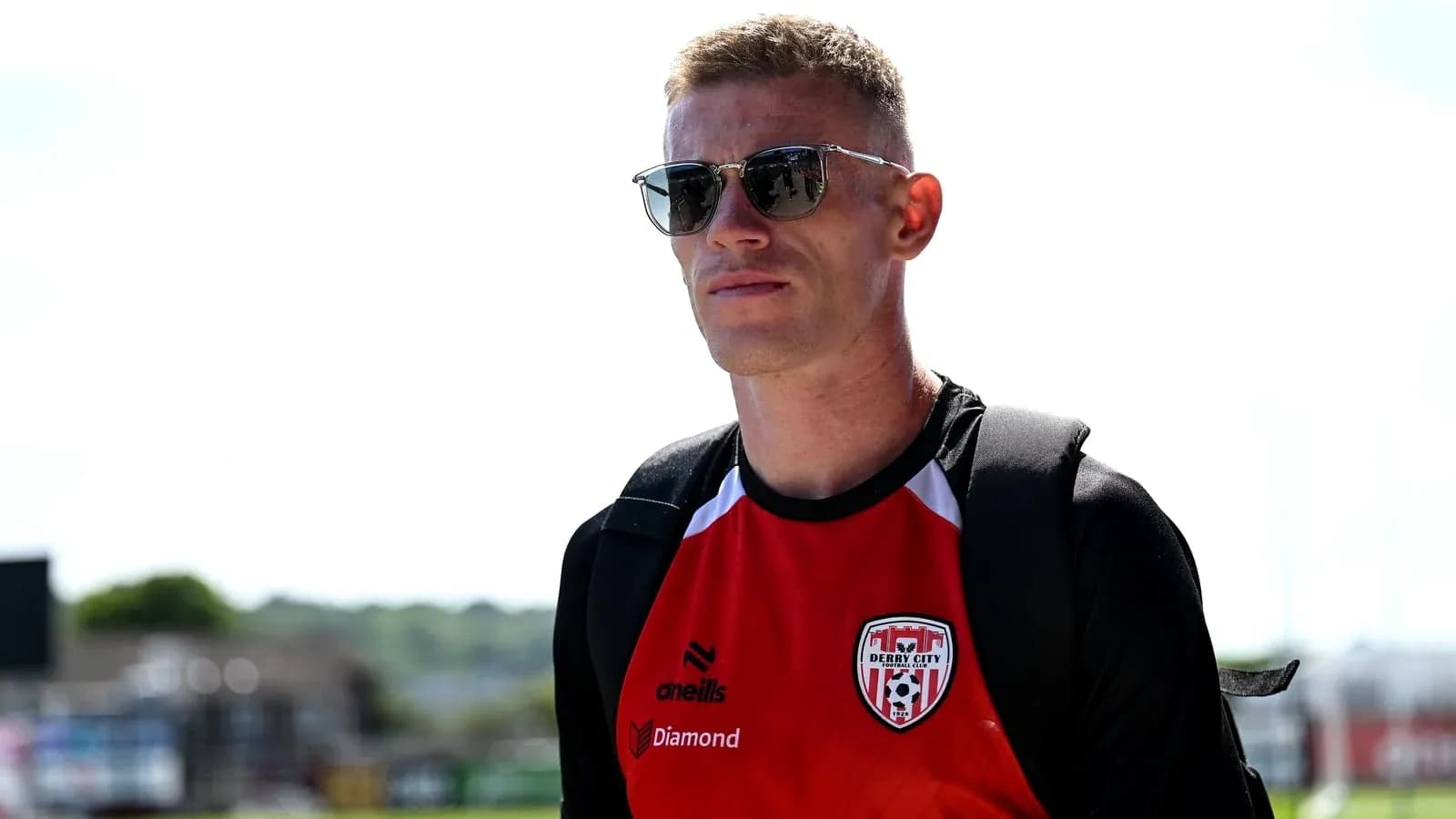
James McClean sits in limbo. Not retired, not playing, not wanted. Just waiting.
The former Republic of Ireland international has laid bare how deeply that reality is cutting, admitting he is “struggling” as his stand-off with Derry City drags on and his words on mental health ignite a storm he says he never intended.
Hometown return turned sour
When McClean came back to his hometown club from Wrexham in January, it was framed as a homecoming. A full circle. Instead, he has not been named in a matchday squad since early July.
In that time, the relationship has fractured badly.
The 37-year-old publicly attacked what he described as Derry’s “incomprehensible” attempt to terminate his contract. He later apologised for some of his fiercest criticism, yet the exile has continued. Interim manager Mark Connolly has not used him at all.
The club, for their part, have moved to distance themselves from his recent comments, stressing that they “do not reflect” Derry City’s core values or beliefs. The impasse has hardened.
For a player who has always worn his hometown and his heart on his sleeve, the sense of rejection runs deep.
“I’m struggling in my current situation,” he admitted on RTÉ Radio 1’s The Brendan O’Connor Show. “You go home expecting and being told one thing, and for that not to work out, and then to be cast aside and then made to feel like a leper in a place where you thought they would never do that to you… for that to happen is very tough.
“The one thing I have always loved doing, and all I have known, is playing football. For a power to take that away from me wrongly, and unfairly, has been difficult.”
A book, a backlash, and a clarification
McClean has been promoting his new book, The Walls, written with ghostwriter Dan McDonnell. In it, he reflects on a career that brought him 103 caps for Ireland and on a life that, away from the pitch, has been far from simple.
He reveals he only discovered the identity of his biological father around the age of 10, a man with alcohol issues whom he met just once. He also writes about a growing passion for boxing as football edges towards its final chapter.
It was an interview to promote that book in the Sunday Independent that lit the fuse.
Asked about therapy, McClean’s blunt response drew widespread criticism: “As a man, I see that as weakness. I don’t need to open up. I see it as a weakness that I’d have to speak to someone about my feelings; my emotions.”
The line was lifted, screengrabbed and shared. The pile-on followed. Derry City issued a statement that, in McClean’s view, only intensified the heat.
On radio, he tried to reclaim the nuance he insists was lost.
“That (the comment about seeking counselling as a weakness) was a screengrab, it was put out there and people jumped on it,” he said. “My own club (Derry City) put out a statement that didn’t help in the slightest, but not one person reached out to me to say, ‘James, can you clarify what you meant?’
“I’m pretty sure nobody actually read the context of the article. If they had, they would have seen that I was solely speaking on my own personal experience. When you are going through difficult situations, people have their own ways and means of coping with that.”
He is adamant his view is personal, not prescriptive.
“Any man or woman that needs to go to therapy to help themselves, I couldn’t commend them any higher,” he said. “That’s not to say me going to the gym is wrong either because that works for me. I was solely speaking about me.
“Me saying the word weakness, was probably my weakness in saying that, but I’m not going to apologise that I’m in a place where I feel I don’t need to go to therapy. That’s in a way what I’m getting bashed for.”
“I am struggling”
The scrutiny has not been confined to him alone. His wife, Erin, has also spoken publicly, saying her husband has been “struggling” during what she called a “daily battle” this year.
Pressed on whether he agreed with her assessment, McClean did not dodge.
“I am struggling,” he said.
The strain, he explained, is layered: the unresolved pain around his biological father, the current stand-off with Derry, the feeling of being attacked and misunderstood online.
“Erin has said I probably have trauma from my childhood that I have probably blocked out,” he admitted.
He knows his instinctive reaction when he feels under fire only adds fuel.
“My biggest problem has always been social media. In the moment, when I feel attacked, it’s almost like auto-pilot, I go on the offensive to show nothing bothers me.”
That defence mechanism has long been visible in his career, whether facing abuse over his stance on the poppy or criticism of his on-pitch style. Now, though, it seems to be colliding with a moment in his life when the game he loves is slipping from his grasp.
A career at a crossroads
McClean’s words carry the weight of a man who has built his identity on competing, running, tackling, playing. To be fit, eager, and yet sidelined by a club he once dreamed of representing again is a twist he is finding hard to absorb.
He insists his way of coping – gym work, fitness, physical release – is what keeps him steady, even as those around him, including his wife, argue that therapy could help.
“She (Erin) always says to me that she thinks it (therapy) will help. She is saying that based on situation surrounding my biological dad,” he said.
For now, he is holding that line, even as he concedes the language he used has brought a storm to his door and hardened opinions against him.
“It has probably made me more reluctant to do so going forward because I opened up on stuff that I never really spoke about privately, never mind publicly,” he said of writing the book. “What has happened over the last few days has made it really tough.”
The footballer in him still wants what he has always wanted: to play. The man in him is confronting questions he has spent a lifetime avoiding.
Derry City and James McClean remain locked in stalemate. One of them will have to move first.