Johaneko Louis-Jean: A Promising Debut in Athletic Club History
Johaneko Louis-Jean did not just make a debut. He walked into one of the most demanding footballing identities on earth, stared down Barcelona, and came out having etched his name into one of Athletic Club’s most exclusive lists.
At a club that has built its entire modern mythology on a strict Basque-only policy, every new face is a story. Louis-Jean’s is a rare one. Born in France, raised in that stretch of land where the Basque Country spills over the border into southwestern France, he represents a thin, precious thread in Athletic’s tapestry.
Only two French-born players had worn the shirt before him. Two giants.
- Bixente Lizarazu, the World Cup winner who arrived from the French Basque Country in 1996 and became a symbol of what this cross-border identity could mean.
- Aymeric Laporte, the elegant defender who came to Bilbao as a teenager in 2010, grew into a leader at San Mamés, then climbed to the summit of European football.
Now comes Johaneko Louis-Jean, the third name in that line. Not a statistic. A statement.
A debut earned, not gifted
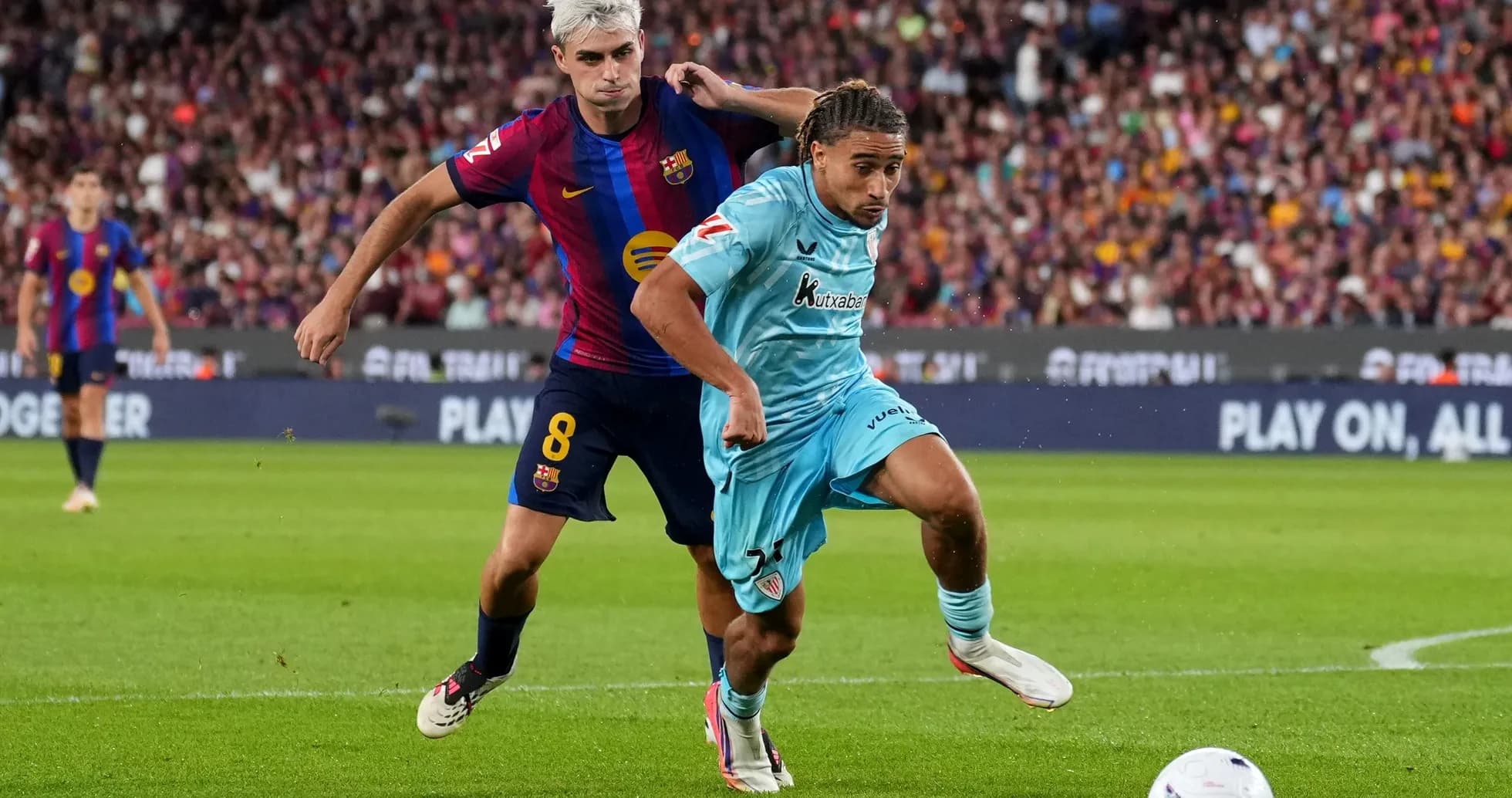
This was no ceremonial outing. No easy home game against modest opposition. Louis-Jean’s first steps came in a cauldron: away, under the lights, against Barcelona, with a crowd that feeds off any sign of weakness.
Edin Terzic, speaking after the match, made it clear this moment had been building for weeks on the training pitch. The Athletic coach underlined that the teenager had forced his way into contention through relentless work, not reputation.
He had, Terzic explained, “been working very well in trainings over the last weeks… so he fully deserved this opportunity.”
The message was unmistakable. In a club where the shirt is treated almost like a heirloom, Louis-Jean had convinced the staff he was ready to carry its weight.
Composed in the fire
Plenty of young defenders shrink in that setting. The noise, the pace, the colours of Barcelona flying at you. One mistake and the night can swallow you whole.
Louis-Jean did the opposite. He settled.
Terzic could not hide his admiration for how the French-Basque youngster handled the occasion, praising both his maturity and his technical level in a match where any flaw is exposed.
“I think it's quite impressive that he played here with this crowd against so incredible opponents,” the coach said, “and he played it in a really, really good way.”
No hyperbole was needed. The context did the talking.
The next French-Basque standard-bearer
Athletic’s policy has often been described as restrictive. Inside Bilbao, it is viewed as something else entirely: a responsibility. To the region, to its history, to the idea that identity can still matter in a game driven by global markets.
That is why the French-Basque link feels so significant. Lizarazu opened the door. Laporte walked through it and stayed long enough to become a pillar. Louis-Jean now follows them, not as a curiosity, but as the latest proof that the Basque story does not stop at the Spanish border.
For a teenager, that is a heavy lineage. Yet on this night, in this stadium, against this opponent, he did not look like a footnote. He looked like a beginning.
At San Mamés, they know how quickly a promising debut can turn into a career. The question now is simple: how far can Johaneko Louis-Jean carry that French-Basque flag in red and white?