Kristaps Porzingis: The Key to Warriors' Defensive Transformation
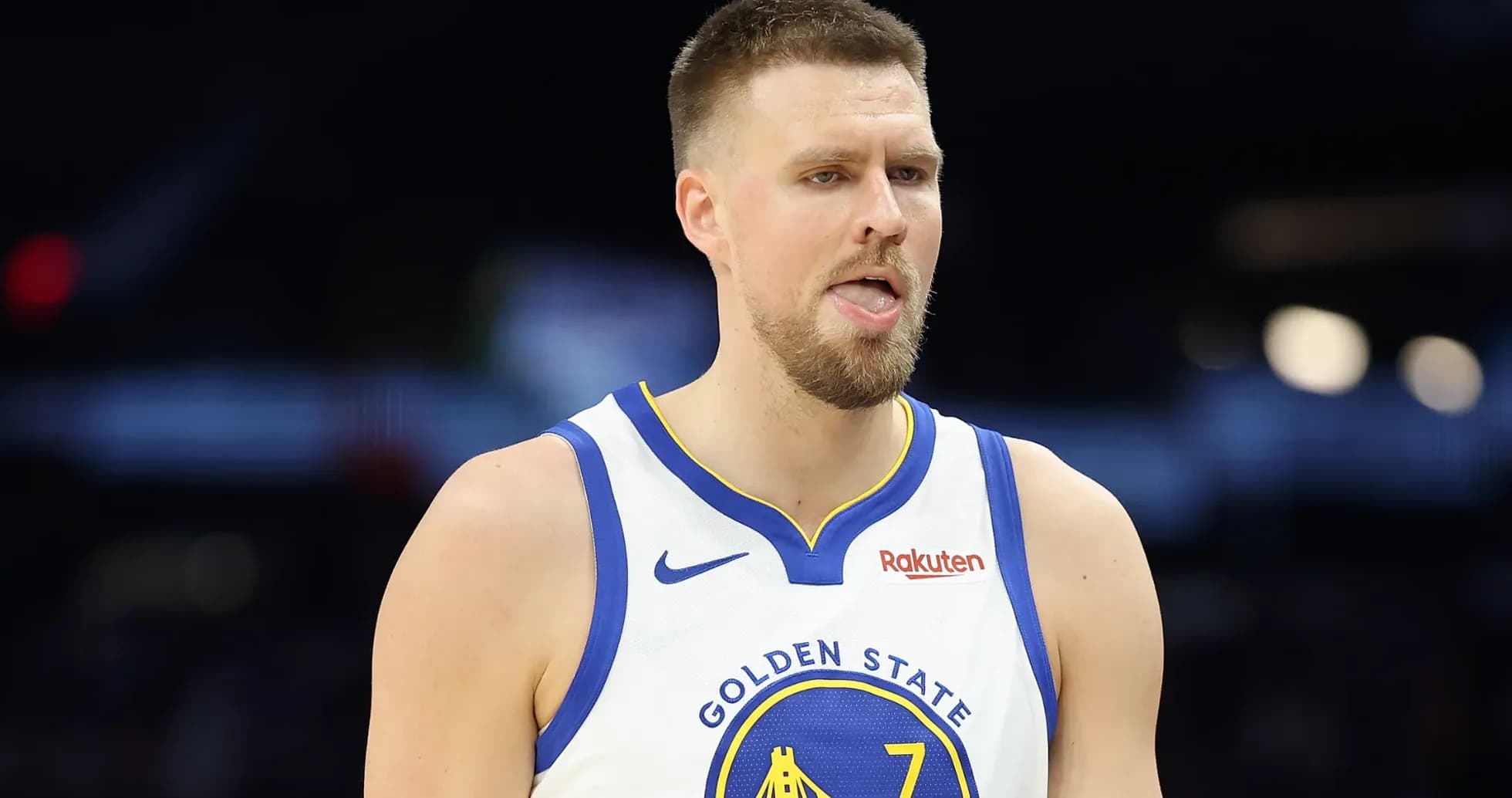
Kristaps Porzingis has already cost the Golden State Warriors a lot. Now they’re betting he’ll be worth every penny.
They moved on from Jonathan Kuminga and Buddy Hield to get him from the Atlanta Hawks at the trade deadline, then doubled down this summer with a two-year, $40 million commitment to a 7-foot-3 star who played just 15 games in their colors because of a recurring medical issue.
On paper, the production still teased what he can be: 16.1 points, 5.3 rebounds, 2.3 assists and 1.1 blocks per game. In reality, the Warriors barely got to see the version of Porzingis they believe can reshape their identity.
Now comes the real test.
Vogel’s Blueprint for a 7-foot-3 Anchor
Frank Vogel didn’t come to the Bay to tinker around the edges. The new Warriors assistant coach, long defined by his defensive standards, has always built his schemes around a rim-protecting big. Roy Hibbert in Indiana. Anthony Davis in Los Angeles. Different eras, same principle.
“We feel like Kristaps can fill that role,” Vogel told the San Francisco Chronicle. That’s not a casual comparison. It’s a job description.
Vogel is eager to plug Porzingis into his defensive system, one that leans heavily on positioning, timing and a shot-blocker who can erase mistakes behind aging legs on the perimeter. “There’s a lot of details I believe in with my defensive system and how I use shot-blocking bigs that really gets a lot out of ’em on that side,” he said. “I really look forward to putting KP in those spots.”
The message is clear: Porzingis isn’t a luxury piece. He’s the spine of what Vogel wants this defense to be.
Golden State’s staff turnover underscores that shift. With Terry Stotts, Jerry Stackhouse and Chris DeMarco gone, Vogel steps in as the defensive architect for a roster that no longer wins on youth and energy. The Warriors are older, slower, and increasingly dependent on structure. Porzingis, if healthy, becomes the one player who can cover for that.
Health, Risk and a Thin Frontcourt
That “if” hangs over everything.
Porzingis hasn’t played 70 games in a season since his rookie year with the New York Knicks in 2015-16. Every stop in his career has followed a familiar pattern: flashes of elite two-way talent, interrupted by injuries that reset the clock.
The Warriors know his history. They also know their margin for error at center is almost nonexistent.
Behind Porzingis, the depth chart is fragile. Al Horford is the second-oldest player in the league, still clever and composed but no longer built to shoulder a heavy regular-season load. Charles Bassey has size and tools, but not the résumé of someone you hand 25 minutes a night on a contender.
If Porzingis misses significant time, Vogel’s defensive vision shrinks quickly. If he stays upright, Golden State suddenly has a modern stretch-five who can space the floor on one end and protect the rim on the other, the kind of piece they’ve never truly had in the Stephen Curry era.
Porzingis did his part this offseason by skipping Latvia’s FIBA World Cup qualifying windows to focus on recovery. No national team, no summer heroics, just rehab and restraint. The decision signaled priorities: extend his career, justify the Warriors’ investment, and give this version of Golden State a chance to work.
Front Office Belief in a Healthier Year
Inside the building, the tone around his health is more confident than cautious.
Warriors general manager Mike Dunleavy Jr. told the Chronicle they went deep on Porzingis’ medical profile and how to manage him. “We looked at it extensively, what’s going on, how we can help him, how we can be better,” Dunleavy said. The conclusion, after those conversations and evaluations, leans toward optimism: “I just think the things we’ve discussed and look at and worked through lean in the direction of him having a healthier year.”
That’s not blind faith. It’s a calculated gamble that better planning, better usage, and a tailored role under Vogel can keep Porzingis on the floor more often than not.
Golden State is banking on it. They have to.
Porzingis gives them size they’ve long lacked, a release valve on offense and a deterrent on defense. He gives Vogel a familiar template and Curry a different kind of partner in the two-man game. He gives the franchise a new path to relevance as the core ages.
All he has to do now is the one thing that has eluded him since that first year in New York: stay available long enough to change a season, not just a box score.