Larne's Heartbreak Leaves Irish League Facing European Winter
Larne’s heartbreak leaves Irish League facing long European winter
It started badly and ended worse.
Linfield and Glentoran disappeared in the first round. Coleraine were swept aside in the second. Larne, the last flag-bearers, went out in the kind of collapse that lingers for years, not weeks.
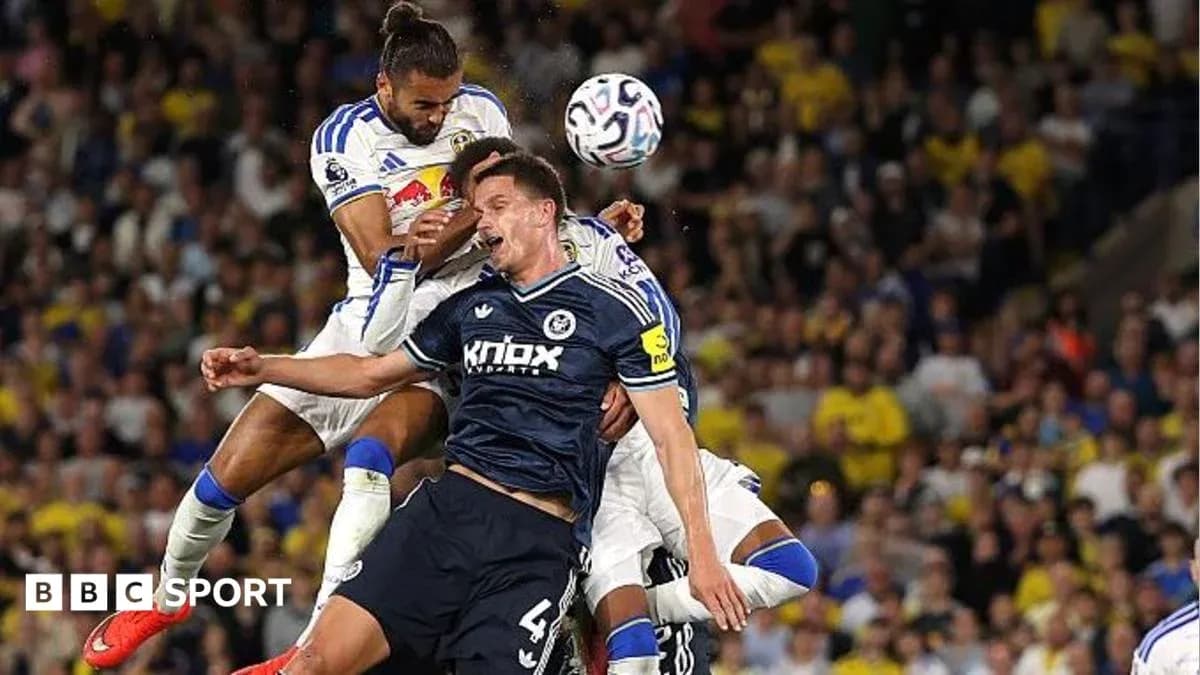
At Inver Park, they held a two-goal lead from the first leg of their Uefa Conference League play-off. Ten minutes from safety, they still looked in control. Then the night turned on them.
Lincoln Red Imps struck twice, Larne went down to 10 men, and the tie slipped into extra time. In the final minute, the Gibraltar side found a winner that didn’t just end a game. It ripped a hole in the Irish Premiership’s European future.
For Gary Haveron’s side, the pain is immediate and obvious. For the league, the damage could echo through the decade.
The fourth European place on the brink
This summer has always carried a shadow: the coefficient. Northern Ireland’s ranking has been under threat for some time, but this year’s European return has dragged it to the edge.
Right now, the Premiership champions, runners-up, play-off winners and Irish Cup winners all earn a European spot. Four tickets. Four chances at prize money, profile, and progress.
That luxury is now hanging by a thread.
The Irish League sits 50th in the coefficient table on 6.625. Georgia’s Iberia 1999 are the unlikely name now drawing more attention than many domestic rivals. If Iberia 1999 lose all six of their Conference League fixtures, Georgia cannot overtake Northern Ireland.
They have been handed a daunting draw: FC Copenhagen, Red Star Belgrade, Getafe, Sint-Truiden, Jablonec and Mjallby AIF. Every point they take tightens the noose around Northern Ireland’s ranking.
Liechtenstein’s clubs, long struggling in Europe, will also come into focus next season as their rankings slide. Small nations are now rivals off the pitch as much as on it.
The likely outcome is stark: the loss of the fourth European place. That would reshape the domestic landscape. The Irish Cup winners, who currently drop into the second round of the Uefa Conference League qualifiers, would be pushed back into the first round from the 2028-29 season. Harder routes, fewer opportunities, less money.
The knock-on effects will not be subtle.
Future of the European play-off under threat
If Northern Ireland drops to three European spots, the end-of-season script could change again.
At present, teams finishing between third and seventh chase the final European place through the play-offs. It has become a fixture of the calendar: chaotic, tense, and often more gripping than the title run-in.
Yet NIFL chief executive Gerard Lawlor has already floated the obvious question. With only three European places, does the play-off survive?
"We would need to talk to the clubs about that and have a discussion, but it is probably the most sensible and easy outcome," he said when asked if it could be scrapped. "We will give the club different models, but it is the reality we must adapt to."
Not everyone agrees. Haveron, speaking from the sharp end of those games, sees them as vital.
"There are so many dead rubber games at the end of the season and if you are in the bottom half of the table and not involved in the Irish Cup, what is your motivation?" he told BBC Sport NI.
"What is the motivation if you cannot chase down seventh place and a European spot?
"The play-off has led to loads of excitement. Do I like being involved in them? No, but I have been involved in two finals, and the drama is absolutely unbelievable."
That is the tension. Sporting drama versus structural logic. Lose the fourth place, and the league must decide what matters more: clean lines or chaos with meaning.
A financial blow that goes beyond Inver Park
The most brutal number of the week is not the scoreline. It is the one on the balance sheet.
Had Larne reached the Conference League league stage, they were staring at around £2.75 million in participation money alone. Results in the group could have pushed that figure higher.
For a club of Larne’s size, that is transformative. It shapes transfer plans, wage structures, academy investment, and infrastructure. It funds ambition.
Now, that money is gone. The club will have to revisit budgets both on the pitch and behind the scenes. The European windfall they almost banked has vanished in a few wild minutes of football.
The pain does not stop there. The rest of the Premiership would have shared a significant solidarity payment – a six-figure sum spread across the league. When Larne previously made history by becoming the first Northern Irish side to reach the group stages of a European competition, the other 11 Irish League clubs shared more than £2m.
That kind of cash builds training pitches. It pays for full-time staff. It keeps talented players at home a little longer.
Another Larne run in the league phase this season could have delivered another injection of money across the division. Instead, the cupboard stays lean. Clubs now stare at tightening budgets at the very moment European competition is getting tougher.
The summer football debate refuses to go away
Whenever Northern Irish clubs fall short in Europe, one question always comes back: timing.
The Irish League plays through the traditional autumn-to-spring calendar. By the time July’s qualifiers arrive, domestic clubs are out of season, still working towards sharpness and cohesion. Their opponents, in many cases, are already deep into their campaigns.
Lawlor has already signalled his intention to revisit the issue. Earlier this month, he said he hoped to discuss a switch to summer football with clubs before Christmas, with a possible vote to change the calendar as early as the 2028-29 season.
The idea divides opinion. The Republic of Ireland plays from mid-February to early November, and no club from there reached the group stages of a European competition this season either. So the argument is not straightforward. Calendar change is no magic bullet.
But the question refuses to die, especially after a summer like this one. Fitness, rhythm, preparation – all of it feeds into the widening gap between Irish Premiership sides and the clubs they now regularly face.
The full impact of this European wipeout will not be felt immediately. Coefficient rankings move slowly. Financial decisions take time to bite. Calendars do not shift overnight.
Yet the direction is clear. Northern Ireland’s clubs are slipping further from the European stage at the very moment the rewards for staying on it have never been greater.
Something has to give. The only real unknown now is whether the Irish League chooses to change on its own terms, or waits until Europe forces its hand.