Lindblad Enjoys Monza's Chaotic Dog Fight as Racing Bulls Limit Alpine Damage
Arvid Lindblad walked away from Monza with just four points on the board and a grin that said far more than the result line. Eighth place, miles from the chaos in front and the squabble behind, should have felt routine. It didn’t.
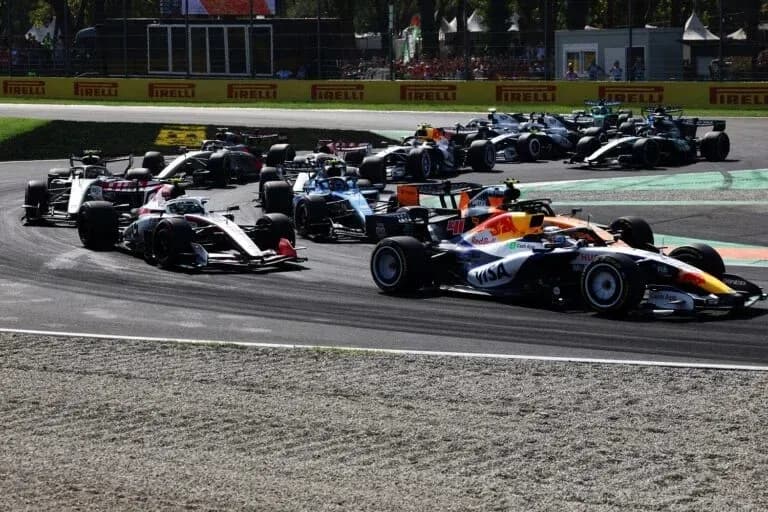
Because for long stretches, this Italian Grand Prix looked nothing like the traditional F1 procession. It looked like F2. Even F3. A full‑blown dog fight.
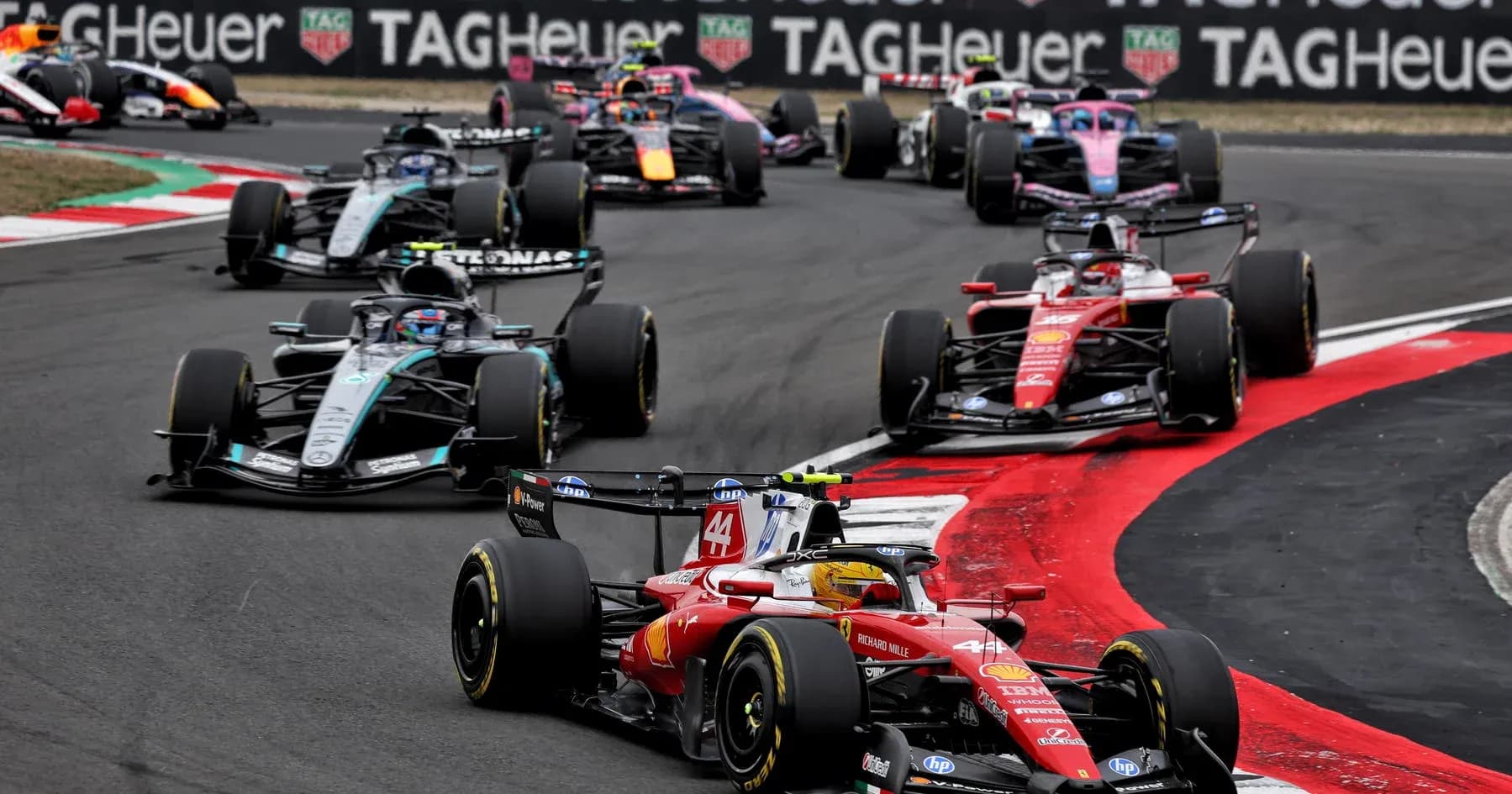
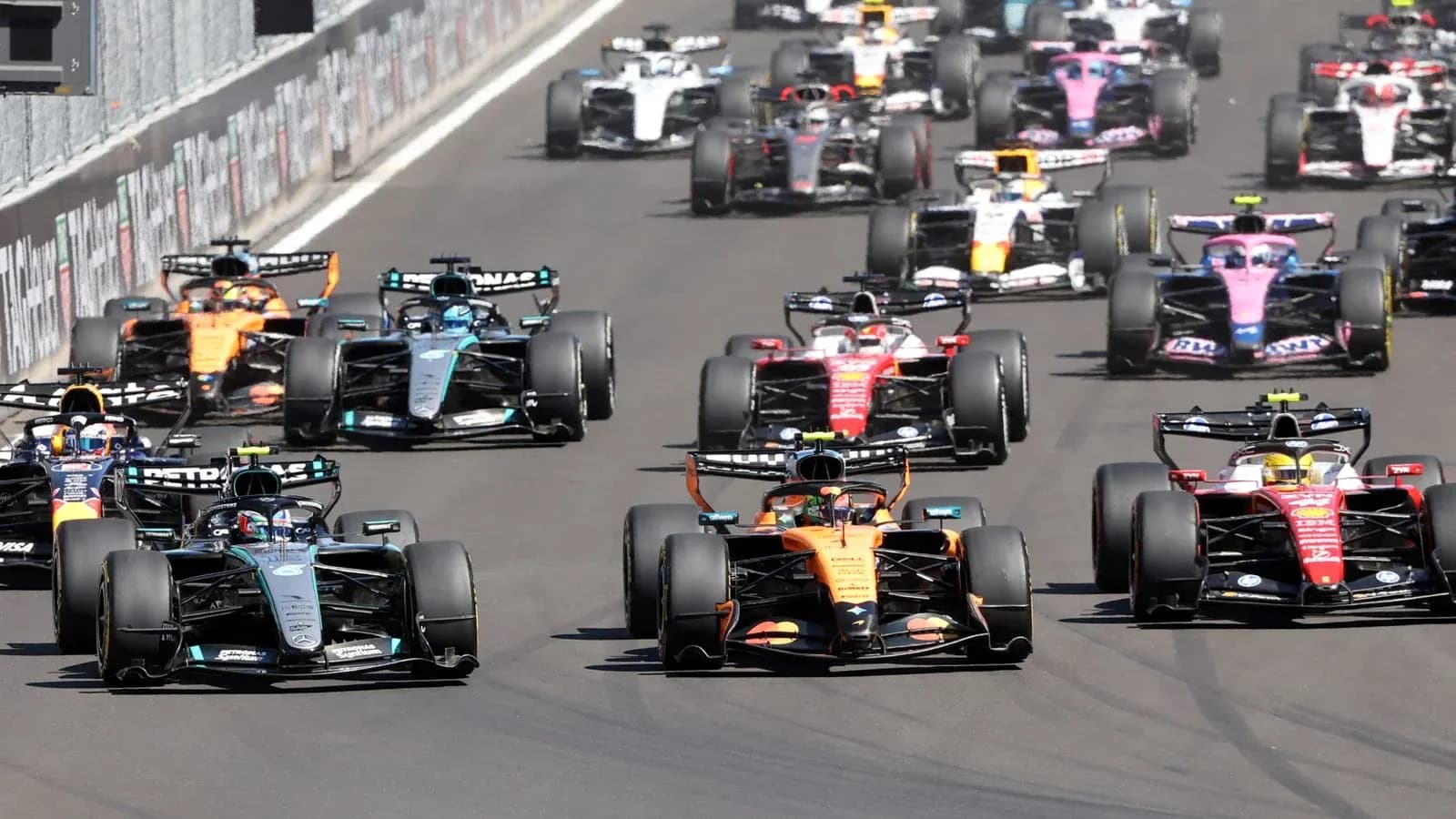
The long Monza straights turned the race into a high‑speed tug of war, cars slingshotting past each other with different energy deployment, only to be dragged back into range again a lap later. That “yo‑yo” effect, which has lingered in the sport despite tweaks to the regulations since Australia, returned with a vengeance.
At the front, it was relentless. The Mercedes pair of George Russell and Andrea Kimi Antonelli traded blows, with Max Verstappen’s Red Bull, Lewis Hamilton’s Ferrari and Oscar Piastri’s McLaren all dragged into the brawl. Lando Norris joined late, adding another sharp edge to an already crowded fight.
Pierre Gasly’s Alpine and Franco Colapinto also muscled into the picture at various points, turning the lead pack into a rolling street fight at 330 km/h.
Behind that mayhem, the midfield wrote its own story. Before the red flag, gaps ebbed and flowed, attacks built and faded. After it, the race fractured. At the back, the field spread out. The gaps grew. The tension thinned.
Lindblad found himself stranded in that no‑man’s‑land: eighth place, a sizeable cushion to the Norris/Gasly scrap in front, and another clear margin to the pack behind, where Colapinto, Haas rookie Oliver Bearman and Lindblad’s Racing Bulls team‑mate Yuki Tsunoda were locked in their own dispute.
From the cockpit, though, the Brit had already seen enough to draw a sharp contrast with what F1 usually serves up.
He likened it to F2 and F3 racing – elbows out, constant position changes, nobody allowed to settle. Not the clean, textbook overtakes you’d expect in a highlight reel, but a rawer, more chaotic version of racing. And he was absolutely fine with that.
“No, it was fun,” he said afterwards, pushing back on any suggestion it had been too messy. For him, the problem with modern F1 is simple: “not got enough racing” and “a bit too single file”. What unfolded at Monza looked far more like the junior series, where that kind of action is the norm.
“I think it was good for the sport to show that,” he explained. He admitted it might not be the ideal way to demonstrate overtaking and racecraft in F1, but the scrap itself? That, he relished. “It was cool to have a bit of a scrap, have a bit of a dog fight going on. Because that's what we're all here for, so I enjoyed it.”
The only real disappointment for him arrived with the red flag.
Just when the race seemed set for another twist, the stoppage froze the order and killed the tactical intrigue. Everyone bolted on hard tyres, everyone ran to the flag. The race Lindblad had been enjoying turned flat.
“I was honestly a bit sad when the red flag came out because we all just put on the hard and went to the end, and there wasn't really much of a race anymore,” he admitted. From there, his afternoon became a lonely time trial. “It was pretty boring for me. It was 10 seconds in front, 10 seconds behind, and just cruising around.”
Lonely or not, those four points mattered. Racing Bulls are locked in a tight constructors’ fight with Alpine for fifth, and at a circuit where Alpine had the upper hand, damage limitation was the only realistic target.
Lindblad delivered exactly that. He brought the car home in eighth, with Tsunoda in 10th. Gasly finished seventh for Alpine, Colapinto ninth, but the combined Racing Bulls haul was enough to keep a seven‑point cushion in the standings.
“Yeah, I think it's good,” Lindblad said of the result. “In the end, it was the maximum that was possible, so we should be happy.” Alpine, he acknowledged, “have had the upper hand this week” and “been way faster than us on the straights”.
Monza’s unique demands magnified that weakness. The team knew it. They circled this round as one to survive, not dominate. “To limit the damage here was good,” Lindblad said, stressing the confidence inside Racing Bulls about the car they’ll have at more typical circuits. “We’re very confident that we know the package we have in the upcoming rounds, so it shouldn't be a problem.”
One cloud still hangs over the weekend: Tsunoda could yet be dragged into trouble if Audi’s appeal proceeds and succeeds. For now, though, the points stand, the gap to Alpine remains, and Lindblad leaves Italy with something more intangible but just as valuable.
Proof that F1, under the right conditions, can still look and feel like a bare‑knuckle fight. The question now is whether the rest of the season will dare to be that wild again.