Lindy Waters III Leaves NBA for Beijing Ducks
Lindy Waters III is heading east, and this time it’s not to another NBA city.
After five seasons of fighting for minutes and contracts across four franchises, the 27-year-old wing is leaving the league to sign with the Beijing Ducks of the Chinese Basketball Association, a move first reported by Brett Siegel of ClutchPoints. His NBA chapter closes quietly; his next one begins in a league that has become a refuge and relaunchpad for plenty of former pros.
In Beijing, Waters will link up with another ex-NBA name, JaKarr Sampson, on a Ducks team that already knows how to win. They finished fourth in the CBA last season at 29-13, pushed through to the semifinals, and only bowed out to the eventual champions, the Shanghai Sharks. This isn’t a soft landing. It’s a pressure spot on a contender.
From undrafted to everywhere
Waters’ route to this point has never been straight.
After four seasons at Oklahoma State, his name went uncalled in the 2020 NBA Draft. He started his professional career with the Enid Outlaws of The Basketball League, a long way from national TV and charter flights. That grind earned him a look from the Oklahoma City Thunder, who brought him into the organization and kept him there for three seasons.
In Oklahoma City, Waters lived the two-way life. One night with the Thunder, the next in a smaller gym with the Oklahoma City Blue in the G League. Across 104 games for the Thunder, he averaged 5.3 points and 1.8 rebounds, carving out a role as a floor-spacer who could slide between the wing spots and survive defensively.
His next shot came with a franchise that has built its dynasty on shooting and smart role players. The Golden State Warriors signed Waters in the summer of 2024, and he cracked the rotation often enough to appear in 38 games, starting nine. He posted 5.5 points, 2.5 rebounds and 1.1 assists per game, the kind of solid, unspectacular production that keeps a player on scouting reports but not always on long-term plans.
Midway through the 2024-25 season, the league’s trade machine pulled him in. Waters went to the Detroit Pistons as part of the five-team Jimmy Butler deal, a reminder of how often role players become the connective tissue in blockbuster moves. In Detroit, opportunity shrank. He played 14 games, averaging 3.4 points and 1.0 rebounds, a brief stop on a roster more focused on its young core.
San Antonio arrived as his next chance and, ultimately, his last NBA stop.
A small role on a big stage in San Antonio
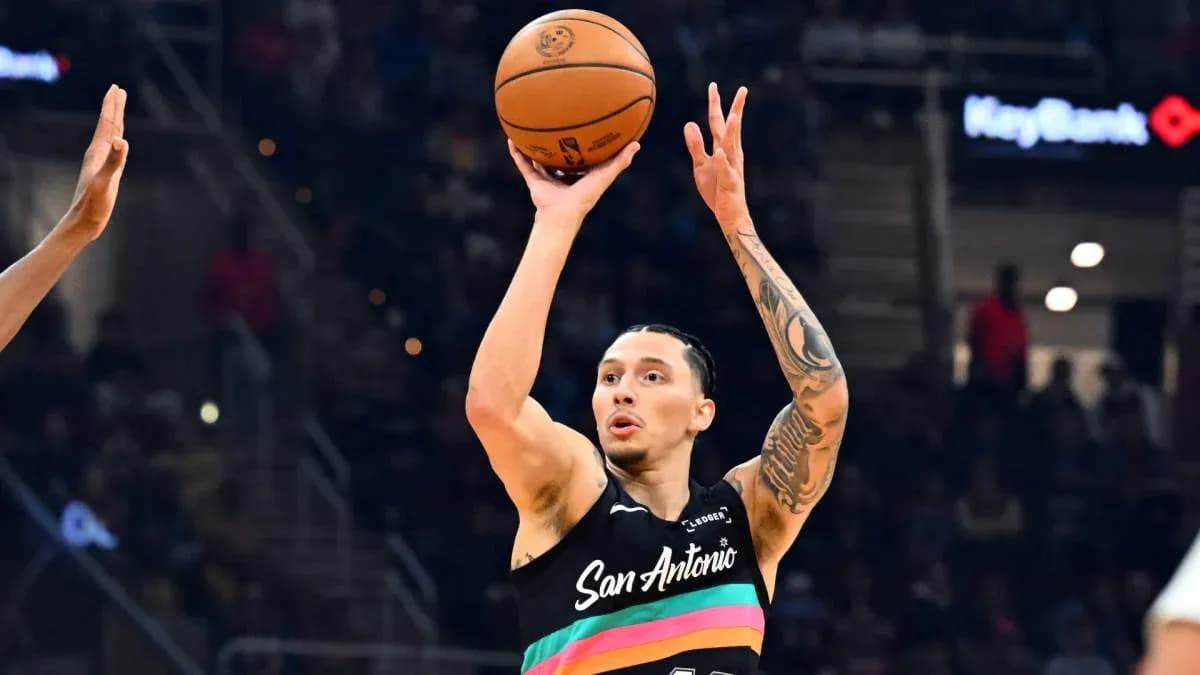
The Spurs picked up Waters last summer, folding him into a rotation built around the towering presence of Victor Wembanyama and a young core learning how to win under the brightest lights. Waters suited up for 40 regular-season games, almost exclusively off the bench, averaging 2.4 points in 7.1 minutes per night.
Those numbers won’t grab headlines, but the context will. San Antonio surged all the way to the 2026 NBA Finals, and Waters found himself on the sport’s biggest stage. He appeared in nine postseason games, logging 3.8 minutes and 1.7 points per outing. These were cameo roles, but they were earned in a playoff environment where every possession matters.
Once the Finals run ended and the confetti belonged to someone else, the Spurs front office faced a familiar summer question: who stays, who goes, and where do the margins matter? Waters didn’t receive a new deal. For a player on the edge of rotations, that often means a decision—chase another camp invite and a two-way slot, or take a prominent role and a secure contract overseas.
Waters chose Beijing.
Spurs stay the course after Finals run
San Antonio’s decision not to bring Waters back fits with an offseason built on continuity and targeted tweaks rather than sweeping change.
The headline move came at the top of the roster. The Spurs locked in Victor Wembanyama with a five-year, $252 million extension, cementing the franchise’s future around the 7-foot-4 phenomenon who has already dragged them back into contention. Around him, the front office focused on keeping the supporting cast intact, handing new contracts to Harrison Barnes, Julian Champagnie and Jordan McLaughlin.
They did, however, address what had been circled as a clear need: power forward. The Spurs moved quickly to sign veteran Tobias Harris on a two-year deal, setting up a direct battle with Champagnie for the starting spot next to Wembanyama in the frontcourt. It’s a positional fight that could shape how San Antonio plays on both ends—whether they lean into Harris’ scoring and experience or Champagnie’s energy and spacing.
The draft brought more youth into the building. San Antonio used its first-round picks on Jayden Quaintance and Tarris Reed Jr., then added Ja’Kobi Gillespie and Maliq Brown in the second round, deepening a pipeline that already looks crowded with young talent. For a player like Waters, squeezed by age, role, and roster math, the writing was on the wall.
A new stage, a familiar fight
So Waters turns the page.
In Beijing, he’ll find a league that values scoring wings, shooting, and versatility—traits that kept him in the NBA for five seasons and earned him looks from organizations with very different timelines and ambitions. The Ducks, already a top-four team and recent semifinalist, will expect impact, not just depth.
He leaves behind a Spurs team convinced it can return to the Finals with Wembanyama as its anchor and a retooled frontcourt around him. San Antonio moves forward with its core. Waters moves halfway around the world for a bigger role and, perhaps, the kind of spotlight he never quite claimed in the NBA.
For a player who has built a career on persistence, the question now is simple: how far can that game travel?