Lionel Messi's Ballon d'Or Nomination: A 20-Year Journey
Lionel Messi’s latest Ballon d’Or nomination is not really about another line on an already bloated résumé. It is about time. About how long one man can bend a sport to his will.
Twenty years have passed between his first appearance on the shortlist, in 2006, and this new one. An entire football generation has come and gone since a 19-year-old from Rosario first slipped onto that list as a bright Barcelona prospect. Many of the players who voted for him then are pundits now. Some of the kids who idolised him in 2006 are nearing retirement themselves.
Messi is still there.
From prodigy to reference point
That first nomination came when he was still just a promise with sharp edges. A teenager terrorising full-backs at Camp Nou, more potential than proof, but already impossible to ignore. At 19, he had not yet lifted a Ballon d’Or. He had not yet defined El Clásico, re-written Champions League nights, or carried a nation to glory. He was simply the next big thing.
The “next big thing” became the standard by which everything else is judged.
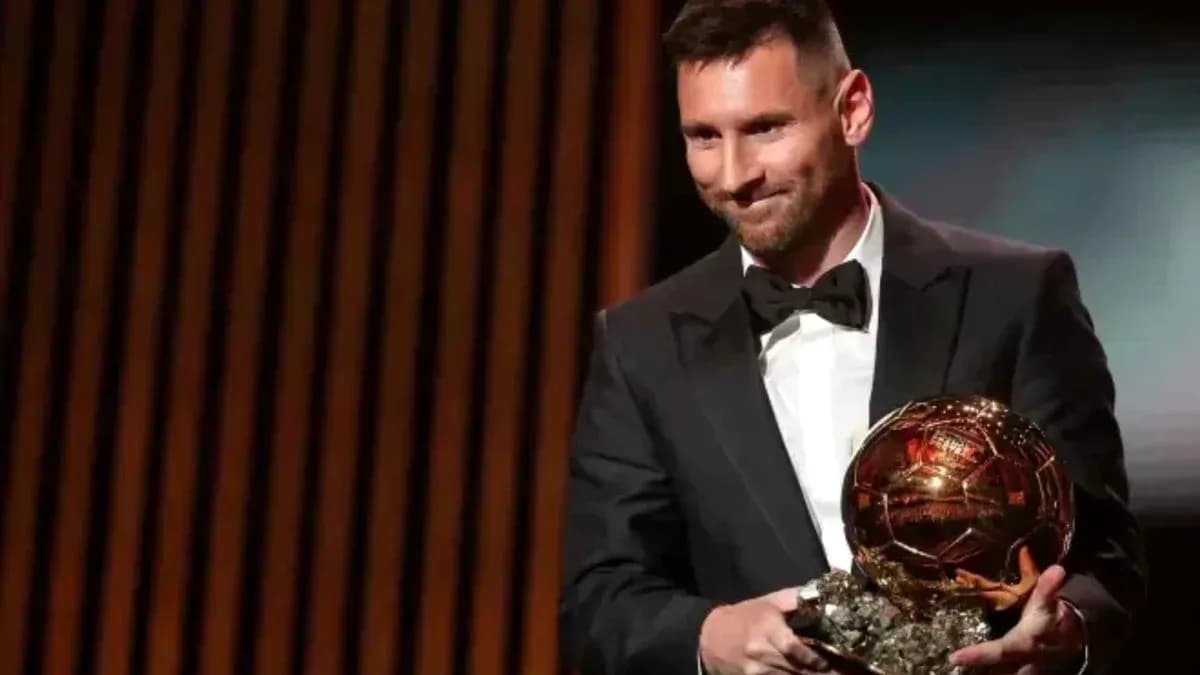
From that early nod in 2006, Messi turned the Ballon d’Or into something close to a personal property. Eight times he has walked away with the golden trophy, building a hegemony that framed an entire era of the sport. Coaches changed, systems evolved, rival stars rose and fell. The award kept circling back to the same name.
Now comes the statistic that feels almost untouchable: a 20-year gap between his first nomination and his latest one in 2026. Not two or three cycles at the top. Two full decades in the conversation for the game’s highest individual honour.
Three decades, three shirts, one constant
The numbers around him have long since drifted into the surreal, but even by those standards, this is rare air. Messi already stands alone as the only player to win the Ballon d’Or in three different decades: the 2000s, the 2010s and the 2020s. He did it while wearing three different club shirts: FC Barcelona, PSG and Inter Miami.
Different leagues, different continents, different demands. Same outcome.
His latest nomination is not a sentimental lifetime achievement nod. It arrives off the back of another year in which he remained central, not peripheral. In Miami, he transformed Inter Miami from a struggling franchise into a global attraction, dictating games in a league still adjusting to his presence. With Argentina, he led the world champions all the way to the final of the 2026 World Cup, still the heartbeat of a side that leans on him in the defining moments.
The legs may move differently now. The runs are shorter, the bursts more carefully chosen. The mind, though, sees everything quicker than everyone else. That is how careers stretch across eras.
Chasing number nine
On October 26 in London, the stage is set again. If Messi’s name is called, the record book will need another update. A ninth Ballon d’Or would push him even further into territory no one else has approached, extending his lead over Cristiano Ronaldo, who remains on five, to a chasmic four trophies.
Four Ballon d’Ors between first and second. In an award that has crowned the greatest of the great, that sort of distance feels almost absurd.
Whether he lifts it or not, the fact he is still here, still relevant, still among the candidates after 20 years is its own kind of victory. Trophies can be counted. Longevity like this is harder to measure, but every so often, as with this nomination, it becomes impossible to ignore.
Two decades after that first nod, the same question lingers, only sharper now: how much longer can Lionel Messi keep stretching the limits of what a football career is supposed to look like?