Madring Circuit Challenges Drivers as Antonelli Leads
The Madring had been billed as a trap. A 5.4-kilometre hybrid monster stitched together from city streets and purpose-built sections, lined with walls, blind turns and high-load corners that promised to punish the smallest mistake.
On day one, it lived up to the hype – without completely exploding.
Kimi Antonelli walked away as the man to beat, Liam Lawson walked away in one piece, and Madrid’s first Formula 1 weekend in 45 years revealed a circuit that will demand nerve, precision and a very thick tyre blanket.
Antonelli on a Roll
Antonelli arrived in Spain with a 66-point cushion in the standings and the glow of an outrageous comeback win in Monza, where he charged from 19th on the grid to victory in front of his home crowd.
He did not cool off in Madrid.
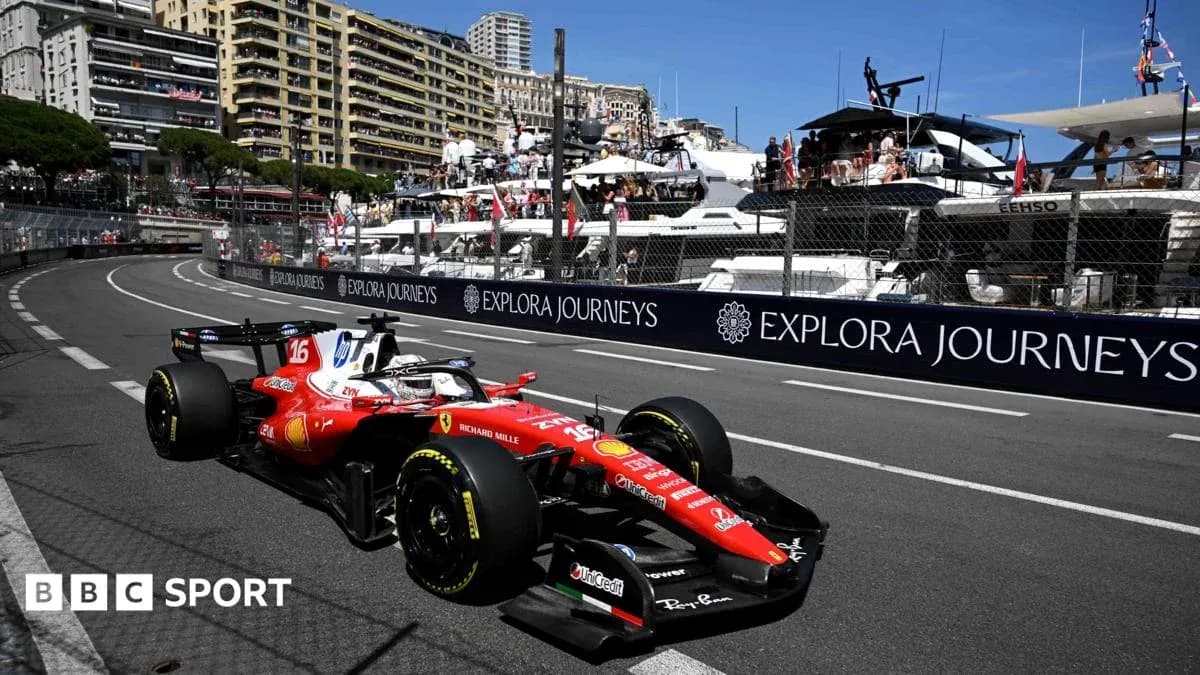
After George Russell topped the first practice session, Antonelli led the way in the second, clocking the fastest time of the day and underlining his authority at the front of the field. Ferrari’s Charles Leclerc and Lewis Hamilton slotted in just behind him, both within a tenth, close enough to keep Mercedes honest but not close enough to dislodge the Italian from the top of the timesheets.
“It is a very cool circuit to drive around,” Antonelli said, clearly relishing the challenge. High-speed corners, walls looming, braking zones while still turning – this track demands exact lines and total commitment. Lock-ups came easily, clean laps did not.
Drivers brushed walls, kicked up dust and flirted with the limits, but the chaos never quite boiled over. Not yet.
Lawson Calm in the Chaos
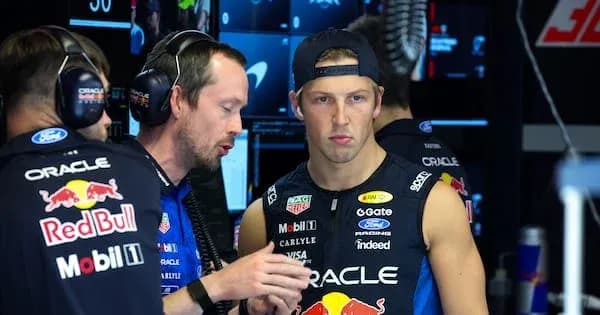
For Liam Lawson, this was about survival and learning. F1’s newest track, minimal reference points, and the pressure of an interim Red Bull seat on a weekend where mistakes could be very expensive.
He handled it with quiet efficiency.
Lawson finished both practice sessions in P10, each time roughly 0.8 seconds off teammate Max Verstappen. Not spectacular, but solid, especially given the pre-weekend concern that Madring could be a minefield for the unwary.
“On a track like this, you want to have as much time on track as possible,” he said. This was not Monza, where most of the grid could drive the layout in their sleep. Here, every lap mattered, every run built confidence.
Yet there was a sting. Lawson’s usual Racing Bulls outfit, where he has been the benchmark, had the edge on him in Madrid. British rookie Arvid Lindblad outpaced him in both sessions, even with a crash in FP2 that brought out the first red flag of the weekend.
It was another data point in a growing narrative: the gap between Red Bull and Racing Bulls machinery feels unusually narrow.
Verstappen’s Warning Shot
Max Verstappen had already raised eyebrows with his comments about the 2024 regulations and how they shape the feel of the cars. The Dutchman highlighted just how interchangeable the two Red Bull-owned teams have looked at times.
“No disrespect. And I hope no one picks up on this. But look at Yuki. He jumps in the car. Never driven the car before. Immediately competitive,” he said.
“Liam jumps from the Racing Bulls to the Red Bull — immediately competitive. It’s because these cars are numb to your driver inputs. Of course, yes, you still have to do a good lap. And you still have to commit. The fastest drivers will always come out on top. But it’s really, really limited.”
On a track as extreme as Madring, where you would expect driver feel and bravery to separate the great from the good, the closeness between the two Red Bull-owned teams is striking. Lindblad in a Racing Bull, Lawson in a Red Bull, both in the same competitive window. Verstappen’s frustration with the regulations has a very real, very visible backdrop.
Lindblad Crashes, Madring Shows Its Teeth
The circuit did not wait long to claim its first victim.
Lindblad lost control of his Racing Bull, slid into the barriers and triggered the opening red flag of the weekend. “I’m really sorry, I lost it super early,” the rookie told his team over the radio, a blunt admission on a day when the track was catching out even the most experienced drivers.
Some ran wide, others brushed the walls. Track limits became a recurring theme as the combination of gradient changes, blind entries and long loaded corners squeezed the margin for error to almost nothing.
Yet, for all the talk of a potential demolition derby, major incidents remained rare. The most dramatic moment came from a different category: a fiery crash for F2 driver Tasanapol Inthraphuvasak, whose car hit the barriers and caught fire. He climbed out, but the image underlined how little forgiveness Madring offers.
Tyres on the Edge
If the layout is brutal, the tyres might be even worse.
Drivers and teams emerged from Friday deeply uneasy about degradation. Grip was surprisingly strong, but that only meant more load, more heat and more wear.
“There’s a big question mark over the tyre degradation,” Russell said. “With the tyre degradation we all had, we think a six-stop race would probably have been the fastest way. I don’t think anybody’s going to do a six-stop race on Sunday and I’m sure tyre deg will be better, but with that big long corner, it really hurts the tyres. That’s going to be a real challenge for everyone.”
That long, punishing corner could define the race. Nursing the tyres without surrendering track position will be a brutal balancing act, especially when overtaking looks so limited.
Qualifying Becomes King
Traffic already looked messy in practice. The tight layout, the mix of fast sweeps and fiddly sections, and the lack of clear overtaking zones all point in one direction: track position will be everything.
“Overtaking is likely going to be a real challenge,” Antonelli admitted. That puts enormous weight on Saturday’s single-lap runs. Get it right, and you control your own destiny. Get it wrong, and you could spend Sunday staring at a rear wing you can’t get past, while your tyres cook.
Teams will spend the night walking a tightrope between qualifying pace and race durability. On this circuit, compromise might not be optional; it might be survival.
Norris Halted, Spain’s Heroes Struggle
Not everyone got the mileage they wanted.
Lando Norris saw his second session cut short by a gearbox problem, losing valuable laps at a time when every tour of Madring builds the mental map a driver needs to attack in qualifying.
For the home crowd, the news was even more deflating. Organisers expect 350,000 fans across the three days, tickets sold out, the atmosphere electric. But the chances of a Spanish winner already look remote.
Fernando Alonso’s Aston Martin lacked pace and reliability. A clutch problem sidelined him for parts of FP2; he ended the day 15th in the first session and 17th in the second. Carlos Sainz fared no better in his Williams, 17th in FP1 and 16th in FP2. On raw performance, both are marooned in the midfield.
Madrid may be buzzing, but it is unlikely to be celebrating a home victory.
A New Circuit, a Familiar Question
So the picture after day one is clear enough, yet loaded with uncertainty.
Antonelli leads the way, carrying the form of a champion-in-waiting into one of the most complex tracks on the calendar. Russell lurks as the nearest threat in the standings and showed speed early. Leclerc and Hamilton are right there, ready to pounce if Mercedes stumble. Verstappen and Red Bull are in the mix but not yet dominant.
Lawson, methodical and composed, sits in the shadows of that fight, banking laps and staying out of trouble on a day when the Madring demanded respect.
The European leg of the season ends here, on a brand-new circuit that already feels like a character in the championship story. The walls are close, the tyres are fragile, overtaking will be scarce.
With ten races left and a title leader in full flow, the real question is simple: who will dare to push this track to its limit when the lights go out, and who will blink first?