Madring Circuit: F1's New 'Car Killer' Track
The new Madring circuit has not hosted a single Formula 1 lap in anger yet, and already it has a reputation. Not as a showpiece. Not as a postcard backdrop. As a “car killer”.
That’s not social-media hyperbole. It’s a warning born out of bent suspension, shattered carbon fibre and a two-day Formula 3 test that turned into a demolition derby.
A street track with teeth
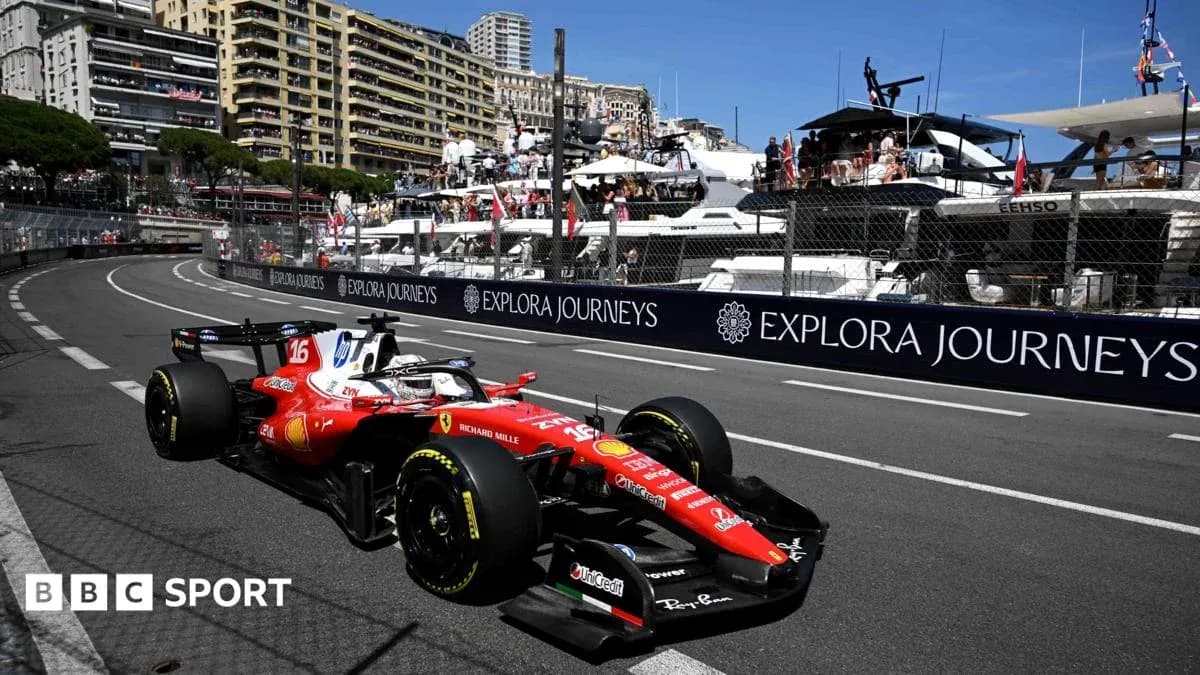
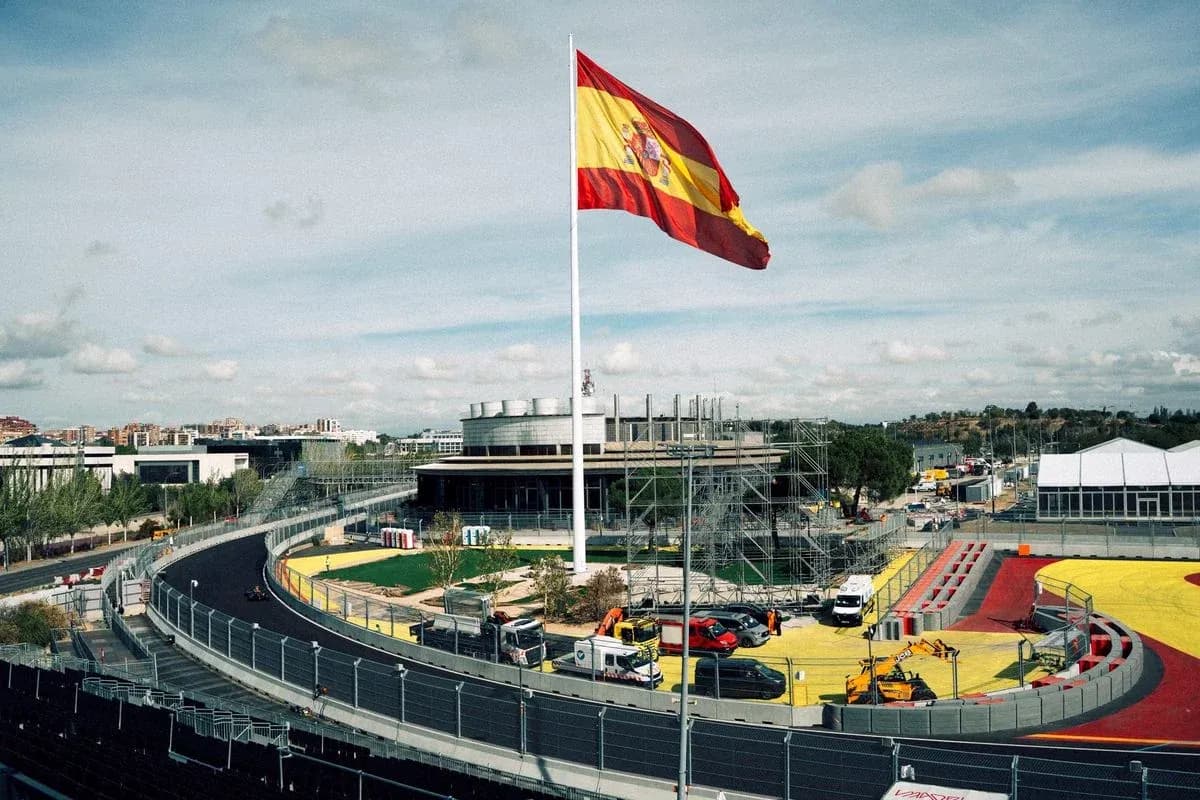
Madrid’s brand-new layout, which will stage its first Spanish Grand Prix this weekend, has been likened by those who’ve driven it to a mash‑up of Monaco, Macau and Jeddah. Narrow. Unforgiving. Walls that don’t politely step back on corner exit but rush towards you instead.
It’s an old-school circuit dressed as a modern street track. Proper character. Corners that already look like they could become instant reference points. And yet, behind the excitement, teams are quietly running the numbers on repair bills and cost-cap exposure.
Williams team principal James Vowles didn’t sugar-coat what Formula 3 teams just went through.
“In the Formula 3 test there were 19 red flags and three broken chassis, broken suspensions… OK, they’re Formula 3 drivers, but it’s a track that kills cars,” he told Spanish outlet Sport.
Those 19 stoppages weren’t concentrated in one notorious section. They were scattered across the lap. That’s what has F1 engineers shifting uneasily in their chairs. There isn’t a single danger zone to manage. There are many.
For teams budgeting every last upgrade under the 2026 cost cap, the prospect of a brand-new circuit that chews through machinery is the last thing they need.
Why Madring bites
To understand why this place is so vicious, you have to look at its rhythm – or rather, how hard it is to find one.
Audi-backed F3 championship leader Freddie Slater, one of the few to properly unlock it during that test, captured the essence.
“The corners that are there, they're so tight and they're not forgiving and also the walls come at you on the exit of the corners. They don't go away from you like most tracks,” he told The Race.
“You're always coming out of the corner and trying to drive away from it instead of maximising, so it's a very tricky track to get in the rhythm of things.
“You have to push otherwise you're slow. So I think that's why it creates so many crashes because if you don't push you're just not on the limit.”
That’s the central tension of Madring: drive within yourself and you’re nowhere; lean on it properly and you’re one misjudged kerb away from a wrecked car.
Slater, though, loved it.
“Honestly it's probably one of the best tracks on the calendar in my opinion, just because it's got that old-school feeling to it. Kind of like some of the old-school UK tracks, Macau, places like that. So I'm really excited to have the [F3 championship] finale there.”
The lap opens with a slow chicane reminiscent of Jeddah’s, then hurls the drivers flat-out through Turns 3 and 4 before spitting them into the first major flashpoint: the second chicane.
This is where the circuit bares its teeth. A high-speed change of direction, concrete looming on exit, approached after one of only two straight-mode zones on the track. Drivers will arrive at around 340km/h (211mph). Get it slightly wrong and the trajectory is simple: head-first into the wall.
It’s a nastier, modern echo of the old Singapore Sling – but with more commitment, less margin and kerbs that punish any attempt to shortcut them. F3 cars found that out the expensive way.
“That’s where there's so much laptime because there's uphill section after that,” Slater said. “That's why I see a lot of people risking obviously for maximum laptime but also it's probably the place where the most crashes are.
“Also the kerbs are not very forgiving so you have to get it correct otherwise you're going to end up crashing.”
Survive that, duck under the underpass and the lap climbs again through another technical sequence that also claimed multiple F3 victims.
And that’s before you even reach the corner everyone is talking about.
La Monumental: F1’s new monster corner
On paper, La Monumental is the showpiece. In reality, it might be the most brutal single corner on the F1 calendar.
A 24% banked left-hander that makes Zandvoort’s banking look modest, it sits just past a tight chicane and a fast right-left at Turns 10 and 11 – a combination that already caught out plenty of F3 drivers.
Pirelli’s chief engineer Simone Berra has called La Monumental “the most severe turn” in the championship. His numbers back that up: compared with Zandvoort, it loads tyres with 20–30% more energy.
Unlike Zandvoort’s power-limited banking, this one is grip‑limited. Drivers won’t just be pinned by the engine; they’ll be hanging on to the tyres and the car’s structural limits, asking both to do more than they really want to.
The exit is blind. The surface is heavily banked. And bottoming out over the crest is a real threat.
“It feels like I'm in an IndyCar [on an oval],” Slater said. “It's just about flat, probably, in a Formula 3 car. I think it's going to be a little bit more difficult in your Formula 2 and maybe even Formula 1.
“It's quite difficult to get the right line because obviously where the crest is, the bottoming can get quite bad. It looks an easy corner when you look at it but actually to drive it, it's quite a difficult corner to get the rhythm."
F3 drivers spent the test experimenting with wildly different lines. Expect F1’s heavyweights to do the same in Friday practice, hunting for a path that protects the tyres without surrendering time.
And remember: La Monumental is only halfway around the lap.
From there, the track just keeps coming – more tight complexes, more walls, more places to make a tiny error with big consequences. Turn 17, a tight right-hander late in the lap, has already been flagged as another trap.
Monza F3 sprint winner Taito Kato summed up the mindset required: “If you want to gain laptime, you have to push until you’re close to the wall, so it’s risky but fun to drive.”
Dangerous or just demanding?
Among the drivers, the early verdict is a blend of excitement and unease.
At Monza, Carlos Sainz said “everyone seemed quite shocked by the track that Madrid has come up with” when they swapped first impressions on the drivers’ parade. Shocked, he clarified, that F1 had added a track with real character, rather than another bland, wide-berth street circuit.
Sainz, an ambassador for the Madrid race, knows the F3 test turned the place into a car graveyard. Whether that translates directly to F1 machinery remains to be seen, but he’s not expecting a clean weekend.
He has already predicted “safety cars, red flags and yellow flags in qualifying”.
Audi F1 driver Gabriel Bortoleto called it “a very interesting track, dangerous track, but at the same time very challenging and it's nice to race in a new track like that.”
Sergio Perez pushed back slightly on the alarm, arguing: “I don't think it's any more dangerous than Jeddah, to be honest.”
Jeddah, of course, has already delivered some huge shunts – including Mick Schumacher’s 2022 qualifying crash that destroyed his Haas and ruled him out of the race. “Not any more dangerous than Jeddah” still leaves plenty of room for Madring to be savage on cars.
What it does promise is a circuit where the driver can genuinely make a difference. The layout is relentlessly technical, full of low-speed corners, tricky cambers and sequences where bravery and precision will decide tenths.
Arvid Lindblad has already called it “a real drivers’ track”. Many in the paddock are expecting a qualifying session on a knife-edge, with razor-thin margins and the potential for a shock result if one of the big names blinks.
The concern lies not with Saturday. It lies with Sunday.
Will the race live up to the lap?
If qualifying looks set to be electric, the race itself could go the other way.
The same traits that make Madring a driver’s dream over one lap – tight corners, few long straights, almost no heavy braking zones – are a nightmare for overtaking.
There will be plenty of energy-recovery opportunities, which should keep batteries healthy and deployment consistent. But the racing template many expect is closer to Hungary than to Monza, Silverstone or Spa. Strategy and track position may matter far more than wheel-to-wheel heroics.
Alex Albon captured the mood with a deadpan line: “I don’t think there’s going to be any overtaking. I hope you guys got your fix in [Monza] and ignore next weekend.”
Chaos could change that. Safety cars, red flags, restarts – the usual ingredients of a wild street race are all in play. And this time, F1 won’t be the only show in town.
F2 and F3 will pound around Madring first, with five races between them and F3 staging its title decider. That means plenty of rubber, plenty of incidents and a grid full of young drivers with everything to prove and very little to lose.
It’s hard not to think back to Baku 2016. Then, GP2 produced one of the most chaotic weekends in its history, with 17 retirements across two races. When F1 rolled out for its debut grand prix, the drivers – having watched the carnage – reined themselves in. The result was a surprisingly dull race on a circuit that later became synonymous with chaos.
Sainz remembers it well.
“The grand prix was boring, right? Yeah, I remember. I was there in 2016 in Baku and I think F1 drivers, we tend to be a bit more disciplined in these things,” he said.
“We obviously have bigger responsibilities in the fact that we represent a thousand people at the factory building those cars and we need to be a bit more careful with the material.
“We know we have also sometimes parts constraints and we have more experience also, so we also drive faster cars, which normally if anything is easier to crash.
“But yeah, we tend to have a bit more discipline with that.”
There’s another layer too: F1’s ability to reshape a new venue on the fly. Kerbs, walls, run-offs – all can be tweaked across the weekend if the data and the incidents demand it.
“Even by watching an FP1 live, we could almost sometimes text the race director and say this kerb there doesn't make sense, it's going to generate a crash or a bad moment,” Sainz said. “We can help the race director and the FIA learn through the weekend with us as we observe the same kind of patterns.”
Even with that safety net, it feels almost inevitable that someone will be caught out. Around Madring, there are precious few places to make a mistake and get away with it.
Madrid’s high‑stakes audition
Sainz has urged his fellow drivers not to rush to judgment. He wants a “good debrief” after the race, an honest assessment of what worked and what didn’t.
He has also warned that F1 must “see if it’s [producing] a bit too much” chaos. Some things, he expects, will “go greatly, and other things that don’t go as well”.
He points to Miami as the template. Its 2022 debut was, in his words, “a bit of a disaster” before evolving into what he now calls a “great grand prix”. Circuits can grow into themselves. So can events.
Madrid, though, does not have the luxury of anonymity. In an era where cities queue up for a place on the calendar, a new 10-year deal is only as strong as the show it delivers. This weekend is a high-stakes audition in front of the whole sport.
What Madring offers is clear: an old-school, punishing layout with a spectacular banking and almost no room for error. It will test cars. It will test drivers. It will almost certainly test the patience of team principals staring at damaged monocoques and shredded budgets.
Qualifying should be ferocious. The question that will define Madrid’s opening chapter is simple: can the race be anything like as good?