Man Utd’s Current Winless Run Far From Their Longest in History
Manchester United’s Six-Game Winless Streak
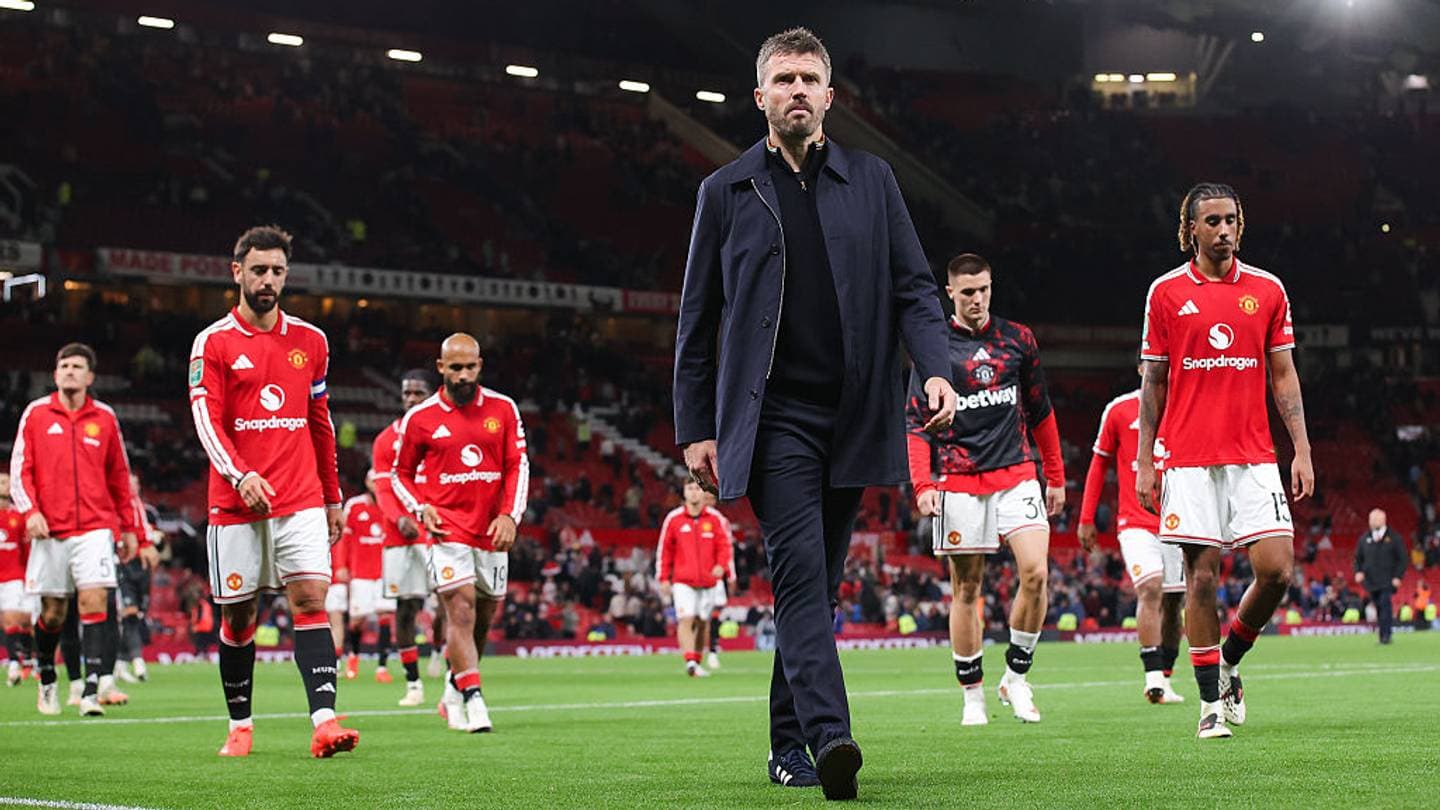
Manchester United have endured six matches without a victory this season, yet their current difficulties don’t come close to the club’s longest winless stretch.
The Record Set Nearly a Century Ago
The most extended winless run dates back to the early 1930s, a period marked by global upheaval. The aftermath of World War I lingered, the Great Depression was underway, and iconic literature like John Steinbeck’s Of Mice and Men was still years away from publication.
At that time, Manchester United wasn’t the dominant force it is today. Although they had captured league titles in 1907–08 and 1910–11 under Ernest Mangnall, the club quickly lost ground. Mangnall left for Manchester City in 1912, and by the outbreak of World War I, United was struggling near relegation before competitive football halted after the 1914–15 season.
A Season of 16 Winless Matches
After the war, United’s form declined further, finishing mid-table and then being relegated in 1921–22. They bounced back to the First Division but faced stiff competition from Huddersfield Town, Sunderland, Everton, and Arsenal.
In 1926, manager John Chapman was suspended with no explanation, leading to Lal Hilditch’s short tenure as player-manager. Herbert Bamlett then took over but is remembered as one of the club’s poorest managers. Ownership troubles followed when John Henry Davies passed away in 1927, pushing the club toward financial hardship once again.
The 1929–30 season ended with four consecutive games without a win, a pattern worsened in the following season. Beginning the 1930–31 campaign, United lost the first 12 matches straight, finally breaking their 16-match winless streak with a 2-0 victory over Birmingham City on November 1, 1930.
Details of the 16-Match Winless Stretch
- Season: 1929–30 & 1930–31
- April 19, 1929–30: Man Utd 3–3 Everton
- April 22, 1929–30: Huddersfield 2–2 Man Utd
- April 26, 1929–30: Leeds 3–1 Man Utd
- May 3, 1929–30: Man Utd 1–5 Sheffield Utd
- August 30, 1930–31: Man Utd 3–4 Aston Villa
- September 3, 1930–31: Middlesbrough 3–1 Man Utd
- September 6, 1930–31: Chelsea 6–2 Man Utd
- September 10, 1930–31: Man Utd 0–6 Huddersfield
- September 13, 1930–31: Man Utd 4–7 Newcastle
- September 15, 1930–31: Huddersfield 3–0 Man Utd
- September 20, 1930–31: Sheffield Wed. 3–0 Man Utd
- September 27, 1930–31: Man Utd 0–2 Grimsby
- October 4, 1930–31: Man City 4–1 Man Utd
- October 11, 1930–31: West Ham 5–1 Man Utd
- October 18, 1930–31: Man Utd 1–2 Arsenal
- October 25, 1930–31: Portsmouth 4–1 Man Utd
Fan Reaction and Club Recovery
Supporters expressed their frustration during this dark period. The Manchester United Supporters’ Club submitted five demands to the board, including a new manager, better scouting, fresh signings, boardroom changes, and new shares to raise funds. These were ignored, prompting boycott threats ahead of an October 18, 1930, match against Arsenal. Despite the threats, over 23,000 fans attended, but attendance dropped sharply afterward, with fewer than 4,000 watching the final top-flight game of that season.
Financial salvation arrived in 1931 when James W. Gibson took control. The club's performance remained unstable, flirting with further relegations before settling back into the top flight by 1938. Progress included founding the Manchester United Junior Athletic Club, the forerunner to today’s academy, and the appointment of Matt Busby after World War II brought lasting stability.
Since then, Manchester United has never gone 16 consecutive matches without a win.