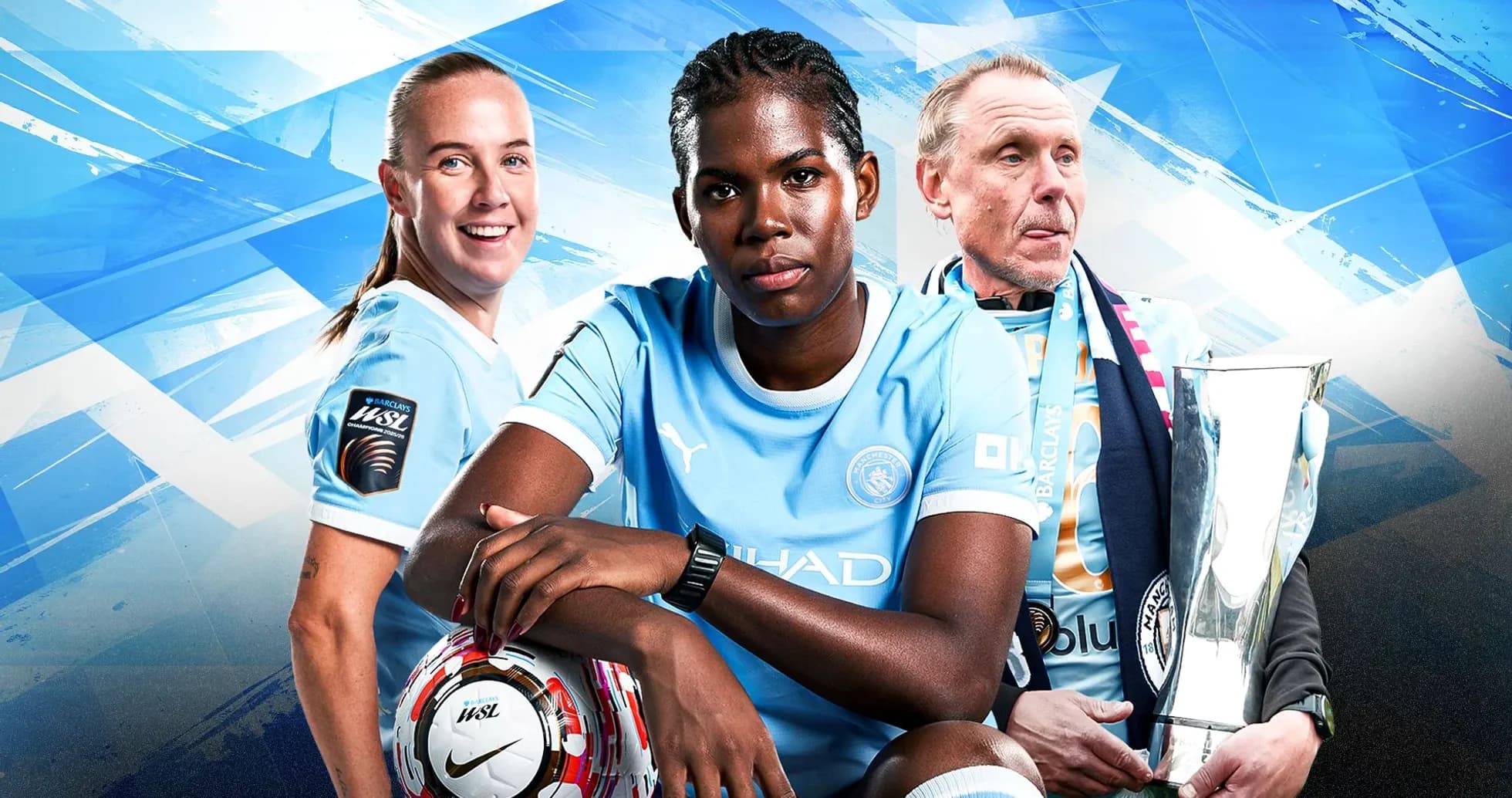
Manchester City’s WSL Title Journey: From Nearly There to Champions
The banners and the open-top bus told one story last spring. The real tale of Manchester City’s WSL title, though, started long before the confetti.
Jonas Jeglertz walked into a club that had been “nearly” for years. The squad was good enough. Everyone knew it. Pundits tipped City annually as the side most likely to break Chelsea’s grip on the league, only for the campaign to fray in the final weeks or implode far earlier. Talent was never the problem. Something deeper was.
Alex Greenwood called it a “shift in culture.” Not a catchy slogan on the training ground wall, but a change in how players spoke about themselves, how they framed pressure, how they talked about trophies as something to be hunted rather than hoped for. She admitted it felt “a little bit uncomfortable sometimes,” but that discomfort became the fault line where mindsets moved.
The payoff was brutal and emphatic. City didn’t just win the WSL; they ended a four-year wait for silverware and finally cashed in on seasons of promise. Suddenly, success didn’t feel like a one-off. It felt repeatable.
Mary Fowler put it plainly. In previous years, belief had wobbled at the crucial moment. “Maybe we fell short because there was a bit of a lack in the mindset where we felt we were really capable of winning,” she told GOAL. Now they’ve done it, the internal dialogue has changed. “You are very capable and you can do that again.”
That’s the environment Jeglertz returned to after a short summer break: not a dressing room softened by success, but one sharpened by it.
“I've seen it already in the players,” he told GOAL. The confidence is “calm, but curious” – a group already asking, “What do we do to become a little bit better?” It’s not relief. It’s restlessness.
Champions arrive to a champion’s dressing room
If City’s culture now feels robust, they have doubled down on it with their summer business.
Niamh Charles comes from the ultimate winning machine. Five straight WSL titles at Chelsea, seven more domestic cups in six years. She has lived inside a dynasty, felt the grind of defending titles, understood what it means to go again and again.
“That means that she has a little bit of a leader in her,” Jeglertz said. He sees value not just in her performances, but in the way she can set standards “in sessions and in how you win from one year to the next year.”
Beth Mead brings a different type of pedigree. Back-to-back European Championship titles with England. A starring role in Arsenal’s 2025 Champions League triumph over Barcelona. She has seen the biggest stages, carried the weight of expectation, and still arrives in Manchester with hunger in her eyes. Jeglertz made that point himself: she is “still very eager to be part of this and to learn more.”
On paper, City look perfectly armed to defend their crown in terms of mentality, environment and those intangible edges that so often decide tight title races. But this season carries a twist they didn’t have to navigate last time.
The Champions League is back on the calendar.
A smaller squad, a bigger load
Last season, while Chelsea, Arsenal and Manchester United juggled European commitments, City focused solely on domestic fronts. That advantage has gone. The schedule will swell, the flights will increase, and the strain on a leaner squad will grow.
And it is leaner.
Beyond Mead and Charles, only Carlotta Wamser has arrived, a versatile full-back who can cover both flanks and plug gaps left by Leila Ouahabi’s departure. Against that, nine first-team players have gone. This was never meant to be a revolution, but the numbers are stark.
“The depth is there,” sporting director Nils O’Neill insisted at the end of last season. “It’s not about a squad transformation. It’s about adding in the key positions we need.” On paper, City have done that: left-back shored up by Charles and Wamser, forward options refreshed with Mead after Kerolin’s move to Barcelona.
Reality, though, has already bitten. Early-season injuries are piling up, the most significant being Vivianne Miedema. The Guardian understands she may not be back until 2027. For a club that tried to add again on deadline day but couldn’t push any deal over the line, the alarm bells are at least flickering.
Jeglertz is choosing faith in what he already has. Risa Shimizu, back from a loan spell at Liverpool, will be asked to bulk out the full-back rotation. Sydney Lohmann and Grace Clinton are expected to produce the seasons City thought they were buying last summer, after injuries and inconsistency blunted their impact.
Then there’s Fowler. Back from an ACL injury, she showed glimpses of her ceiling from February onwards. This will be her first full season in rhythm again, and inside the club there’s a sense she could tilt games and maybe even campaigns.
Up front, City have options rather than a traditional pecking order. Mead, Fowler, Lauren Hemp, Aoba Fujino and Iman Beney can all slide across the forward line. Several of them can operate through the middle, which is why the club resisted signing a pure back-up to Bunny Shaw just to watch her from the bench all year.
Behind them, the academy is starting to knock on the door. Sacha Lewis, Amelia Oldroyd and Aoibhe Brennan have all signed their first professional deals. Mayzee Davies, already a senior Wales international and tied down last year, could become a genuine squad option if she bridges the gap quickly.
At the top end, the core remains formidable. Shaw, Greenwood, Hemp, Kerstin Casparij, Jade Rose and Yui Hasegawa still anchor what is arguably the strongest starting XI in the league. And at some point, however far away it feels now, Miedema will rejoin that group.
Built for more games – but built for bad luck?
So is it enough?
City’s title run last year rode on more than tactical clarity and mental steel. They also enjoyed something they hadn’t had for a while: a clean-ish bill of health. The injury record was almost immaculate. In elite football, that sort of luck rarely repeats.
O’Neill insists they’re ready for the new demands. “We’ve learned and we will absolutely be ready next season,” he said. Jeglertz, for his part, felt the squad was too big last year. For him, the expanded calendar is a blessing.
“We have too many good players to play these few games we are playing,” he said back in May. “Next year will be different because it's more games. The squad is built for that.”
The theory is sound. The risk is obvious.
Certain positions are one injury away from a crisis. Others depend heavily on players who still have to prove they can carry a season – Lohmann, fresh from hip surgery, and Clinton among them. The campaign hasn’t even settled into its stride and City already know Miedema will start it from the treatment room, with others at various stages of recovery.
Rivals may have deeper benches. They also have more questions. New managers, new systems, unsettled dressing rooms. Culture and cohesion are not guaranteed just because the recruitment has been aggressive.
City don’t have those doubts. They know exactly who they are now.
A Chelsea-style dynasty, in a WSL that has never been more competitive, feels a stretch. But a team that dominated England “by a country mile” last season, as many observers saw it, has not lost its edge. If anything, the title has sharpened it.
The trophy ended a decade-long wait for another league crown. The way this group talks, trains and recruits, it feels like the question no longer is whether they’ll have to wait another 10 years.
It’s how many they can squeeze into the next few.