Miami Heat's Roster Moves: The Kyrie Irving Question
The Miami Heat are suddenly back at the center of the NBA conversation, and not in a subtle way.
You don’t trade for Giannis Antetokounmpo and add Klay Thompson, one of the greatest shooters the league has seen, and expect to blend into the background. Miami has detonated its roster and rebuilt it around a two-time MVP, an all-time sniper and the ever-present Bam Adebayo. The aim is obvious: jump straight from the fringes of relevance back into the inner circle of contenders.
And yet, the work isn’t finished.
One Spot Left, One Big Question
Miami still has a roster spot open. Inside the organization, the expectation is clear: find another backcourt piece to complement Davion Mitchell, the defensive bulldog projected to guard the point of attack.
That’s the practical side of the offseason. The other side is noise — and right now, that noise is Kyrie Irving.
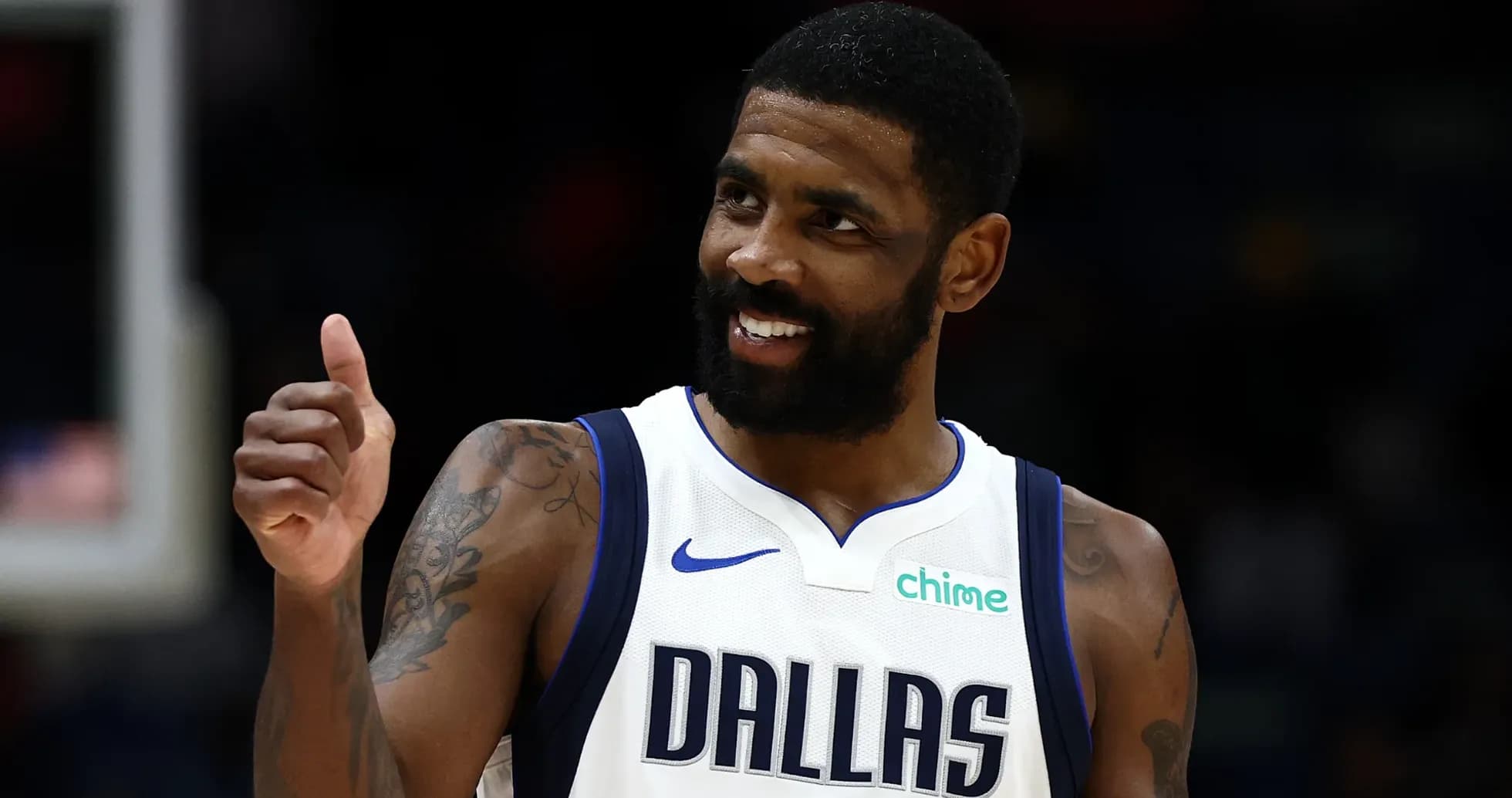
As soon as the Heat landed Antetokounmpo, the rumor machine kicked into overdrive. A star joins a star, and the league instinctively scans for the next domino. League insider Marc Stein recently noted that teams “continue to wonder aloud” how firmly the Dallas Mavericks will cling to their current stance on Irving as the season unfolds and the February 11 trade deadline creeps closer.
Once that line hit the public, the dots practically connected themselves: Giannis in Miami, Klay in Miami, one roster spot left, Dallas facing a new timeline around teenage prodigy Cooper Flagg. Kyrie’s name was always going to surface.
A Path to Kyrie? On Paper, Maybe
Is Miami a realistic landing spot if Irving hits the market?
Heat reporter Ira Winderman laid out the reality: possible, but not exactly plausible at this stage.
“With Giannis Antetokounmpo and Bam Adebayo accounting for so much of the Heat’s cap, the remainder of the roster offers limited options in terms of matching salary,” he wrote in a subscriber-only Q&A. That’s the starting point. The money is heavy at the top, and the flexibility beneath it is tight.
Andrew Wiggins could, in theory, be a key matching piece. He earns enough to help balance out a star-level salary. But Winderman points out that his extension is team-friendly, and his role on the wing is too important to how this version of the Heat is built. In his words, Wiggins “seemingly stands as a keeper (arguably more valued than Kyrie).”
So the Heat have to look elsewhere.
Once the September 6 trade restriction is lifted on Bobby Portis — allowing him to be aggregated in a deal — the math starts to line up. Winderman notes that a package built around Portis, Nikola Jovic and Davion Mitchell could, at least technically, work in a salary-matching sense.
On a whiteboard, you can circle the names and draw arrows. The numbers add up.
On the Mavericks’ side of the table, it gets a lot harder to justify.
Why Would Dallas Say Yes?
Winderman doesn’t dance around it: “But Dallas would do that why?” he asks.
From the Mavericks’ perspective, that hypothetical deal means taking on three more years of Jovic, another year of Portis, and then waiving three players just to make room. The Heat, after going all-in for Antetokounmpo, also have limited draft capital left to sweeten any offer.
“So, yes, there is math that could be argued (albeit not argued very convincingly),” Winderman writes. The rules of the CBA allow a structure. Common sense pushes back.
There’s also the question of fit and timing. Dallas has already bought out Klay Thompson, another veteran guard, as it pivots toward Flagg and a younger core. Irving, 34, doesn’t exactly align with a long-term youth movement. That part is real.
But if the Mavericks do decide to move him, they’ll survey a market wider than one star-chasing team in South Florida. “Other teams probably could offer more, if so inclined,” Winderman notes, and that’s the crux of it. Miami can make a case. Other franchises can probably make a better one.
So for now, the idea of Kyrie Irving in a Heat jersey lives more in the imagination than in any front-office pipeline.
The Clock Ticking in Dallas
Whether he ends up in Miami or not, Irving’s name is circling the trade-rumor orbit again.
Dallas has so far slammed the door on inquiries. Publicly and privately, the Mavericks have signaled they want to see Irving and Cooper Flagg share the floor, to test the ceiling of that partnership before they even think about breaking it up.
The rest of the league isn’t convinced it will last.
ESPN recently polled a panel of experts on which player they expect to be the next to request a trade. Irving landed second on that list, behind only Washington Wizards star Anthony Davis. The reasoning in the piece was blunt: “Front offices across the league anticipate that one or both parties could decide it’s in their best interest to part ways, wondering about the long-term fit of the 34-year-old Irving as the Mavs prioritize building around teenage prodigy Cooper Flagg.”
That’s the tension. Irving is 34. Flagg is just beginning. Their timelines intersect now, but not forever.
Irving is expected to return healthy next season after tearing his ACL in March 2025. Dallas, at least in the short term, seems eager to showcase the pairing — a seasoned, nine-time All-Star guard guiding a teenage sensation into the spotlight.
Miami, meanwhile, waits with one roster spot open, a new superteam framework in place, and the league’s gaze fixed squarely on South Beach.
If Irving does eventually hit the trade block, the Heat will almost certainly be mentioned again. The question is whether, when the real offers arrive, Miami will still be in position to do more than just listen.