Minnesota Timberwolves' Jonathan Kuminga: A Power Forward Solution?
The Minnesota Timberwolves think they’ve solved their power forward problem with Jonathan Kuminga.
One of the people who knows Kuminga best isn’t so sure it will be that simple.
On his show, The Draymond Green Show, Draymond Green applauded Kuminga’s decision to sign a two-year, $12.4 million deal in Minnesota, calling it a “great opportunity” for his former Golden State teammate. Then he cut straight to the concern that hangs over the move.
“My only worry for JK is that if it’s not working, you’re the first plug that gets pulled,” Green said.
In other words: the contract that got Kuminga in the door might be the same one that makes him expendable.
A Starter on a Bench Salary
Minnesota plans to start Kuminga alongside LaMelo Ball, Anthony Edwards, Jaden McDaniels and Rudy Gobert. It’s a loaded, expensive group. Kuminga will earn about $6 million this season, a fraction of what the others make and less than some of Chris Finch’s expected reserves.
Green’s issue isn’t with Kuminga’s ability. He’s seen the talent up close. The question is what happens if this shiny new lineup stumbles.
In Green’s view, money often dictates patience in the NBA. Teams live with the mistakes of max players. They don’t always extend the same grace to those on mid-tier or bargain contracts.
“A $6.5 million salary in the NBA is a bench-role salary,” Green said.
Minnesota’s roster only sharpens that point.
Ayo Dosunmu just signed a five-year, $112 million deal with the Wolves after transforming their backcourt following his arrival from Chicago in February. He averaged 14.8 points last season and authored a 43-point playoff explosion against Denver that instantly raised his profile.
Now, with Kuminga walking into the starting four spot, Dosunmu is likely headed to a sixth-man role. He’ll do it on an average annual salary of $22.4 million — more than triple Kuminga’s number this season.
Finch won’t be scripting his rotation off a payroll spreadsheet. But Green’s argument lives at the organizational level. If Minnesota decides something has to change, Kuminga is the easiest lever to pull. He carries far less financial weight than Edwards, Ball, Gobert, McDaniels or Dosunmu.
For Kuminga, that reality hits even harder because of the way his deal is structured. His contract includes a player option for 2027-28. If he delivers this season, he can opt out next summer and chase the long-term money that slipped away this offseason. If his role shrinks, his leverage shrinks with it.
A Bet Minnesota Knows Well
Green’s words land differently because he has long been one of Kuminga’s loudest advocates inside Golden State. He isn’t poking holes in the move out of spite. He actually likes the gamble.
He believes Kuminga needed to stop replaying what he might have earned and instead find a place that could reset his value around the league. Minnesota, in his eyes, offers exactly that.
The Wolves tore into their frontcourt this summer, moving on from Julius Randle and Naz Reid and leaving a glaring vacancy at power forward. Kuminga’s length and athleticism slide cleanly into a younger core built around Edwards and Ball. The fit on paper is obvious.
Minnesota also has fresh, painful memories of what Kuminga can do when he’s unleashed.
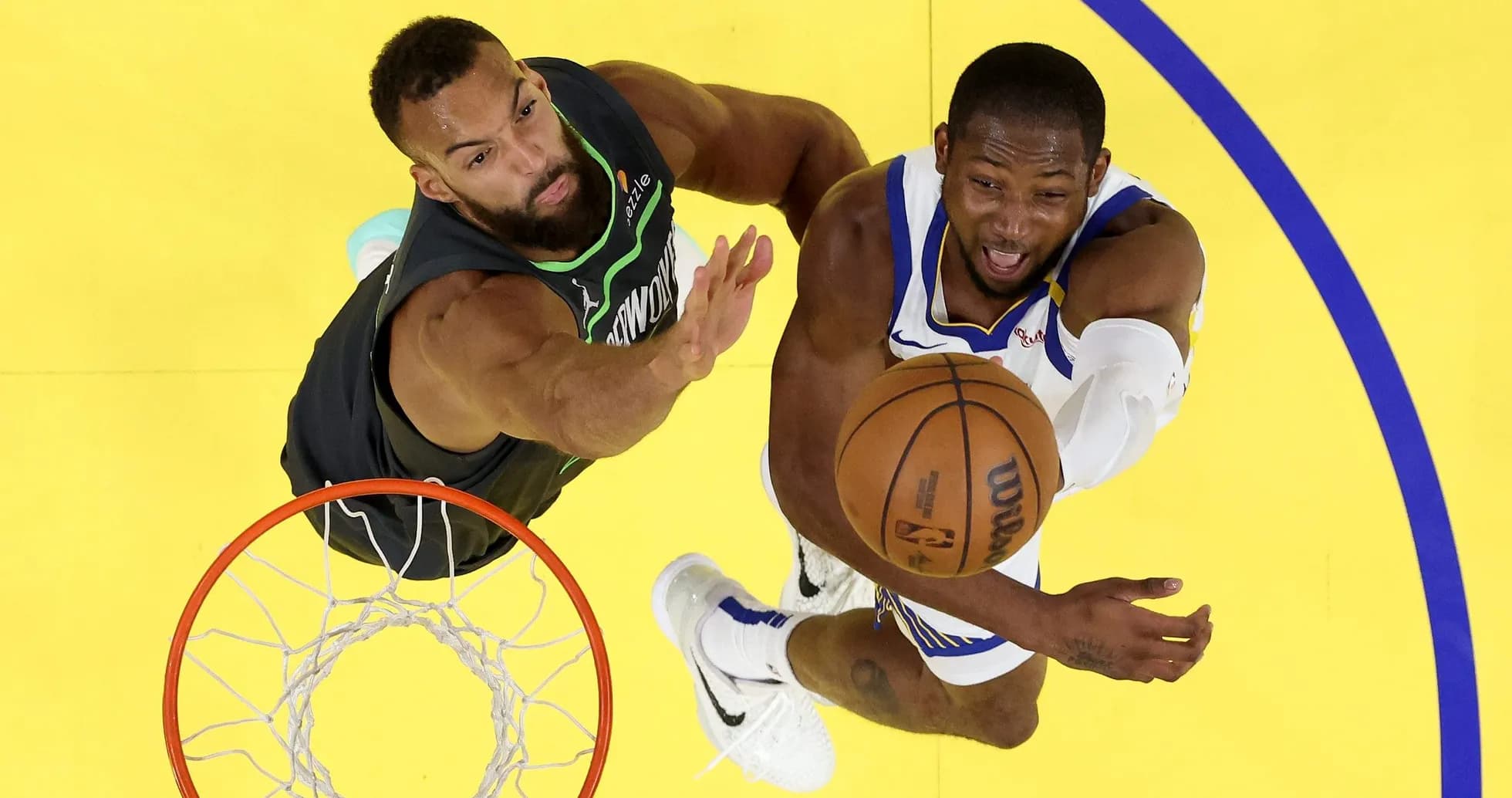
When Stephen Curry went down during Golden State’s 2025 playoff series against the Wolves, Kuminga stepped into a larger offensive role and punished Minnesota. He averaged 20.8 points on 54% shooting in that series, a breakout that didn’t go unnoticed. Green is convinced that run stuck with Wolves president Tim Connelly — and with Edwards.
“I think it’s a great opportunity for JK,” Green said.
The Wolves are clearly banking on that version of Kuminga showing up every night. At roughly $6 million this season, the upside is enormous if he finally strings his flashes into steady production.
But that’s the edge of the blade. His contract also makes him one of the league’s cleanest “value plays,” a starter whose deal looks more like a rotation piece. If the experiment misfires, Minnesota can reshuffle the lineup with minimal financial pain.
Kuminga has his runway. It just might be shorter than everyone else’s in that starting five.