Gary Neville warns Carrick: Defending Problems Resurface for Manchester United
Manchester United walked into stoppage time at the Hill Dickinson Stadium looking like a side about to steady their early-season nerves. They walked out of it looking painfully familiar.
Ainsley Maitland-Niles’ 96th-minute equaliser for Everton turned a controlled away win into another uncomfortable inquest, leaving United with four points from their first three Premier League games and reopening an old file: this team still cannot close a game.
“Teams think they’ve got a chance”
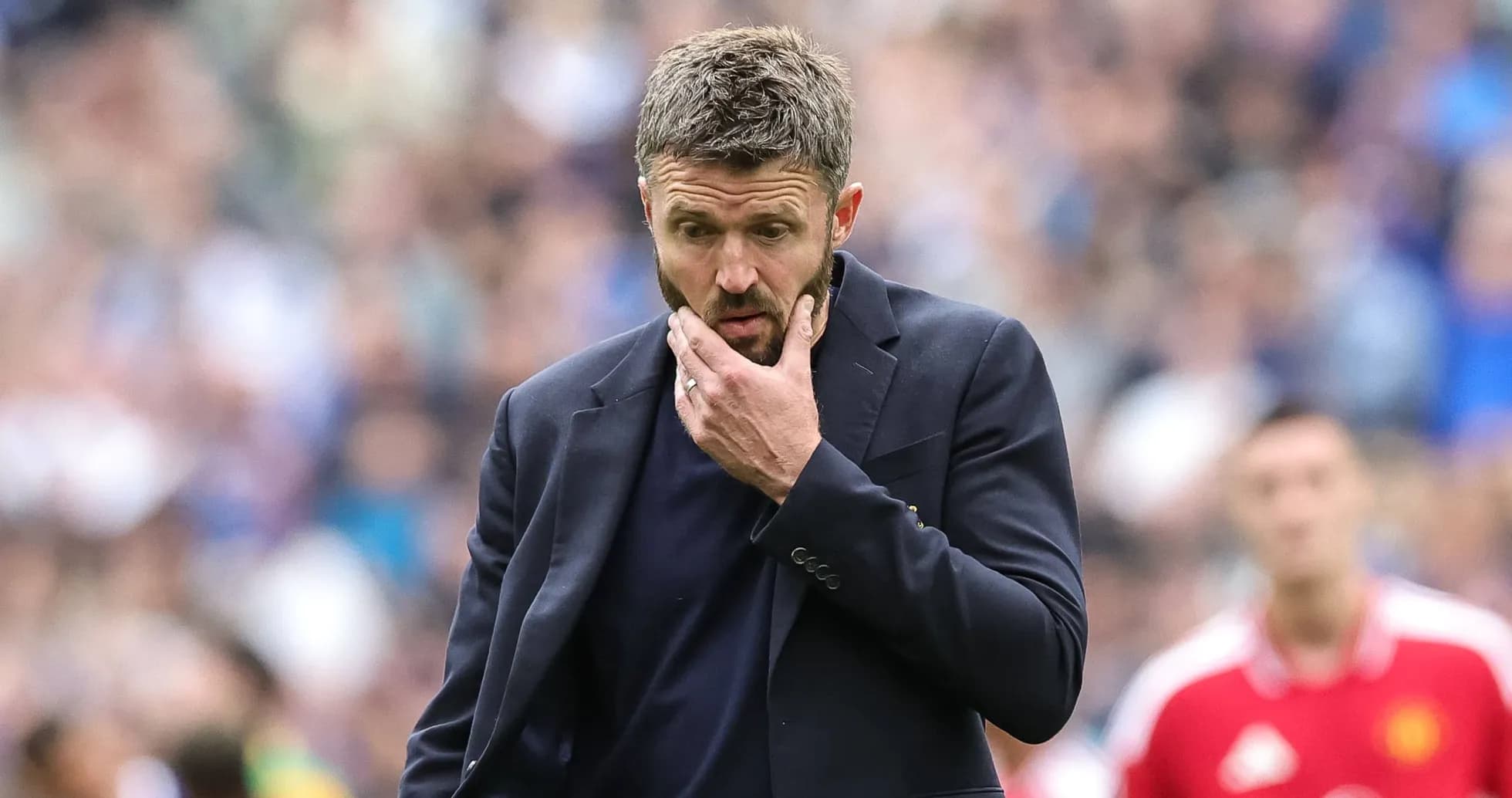
On his podcast, Gary Neville did not bother softening the edges. The former United captain has seen this film before – under Erik ten Hag, under Ruben Amorim – and he can already see the same plotlines forming under Michael Carrick.
“Teams think they've got a chance against them,” Neville said. That line cuts to the heart of it. United led, they had the game where they wanted it, but they never slammed the door shut.
“I thought they were a little bit complacent,” he added. “They lacked that killer instinct before that period when Everton equalised and then they react again.” The pattern is damning: control, drop off, invite pressure, concede, respond too late.
This is not about one wild swing from Maitland-Niles. It is about a side that still feels fragile the moment the clock ticks past 85.
Carrick’s late gamble at the back
The most contentious passage of the afternoon came in those final minutes, when Carrick turned to his bench and shuffled a back line that had, until then, held Everton at arm’s length.
Neville could not hide his disbelief. The withdrawals of Luke Shaw and Diogo Dalot, two of United’s most reliable defensive outlets, struck him as a self-inflicted risk for a team already wrestling with their defensive identity.
“I don't think it's going to go away and that's my big fear,” Neville said of United’s habit of conceding. “I think conceding goals is going to chase them and hunt them down the road and I don't know how Michael deals with it because he's got his best back four on the pitch.”
Then came the detail that jarred most. “I don't know why Shaw went off with five minutes to go – hopefully he's not injured.” Shaw’s exit, with United under late pressure, symbolised the broader concern: why tamper with your strongest defensive unit at the very moment you need it most?
For Neville, it felt eerily close to the constant defensive tinkering that undermined previous regimes. Different manager, same nervous ending.
Carrick accepts the defensive issue
Carrick, calm as ever in front of the cameras, did not attempt to dress it up. He praised the quality of Everton’s goals but accepted that United’s game management is nowhere near where it needs to be.
“Obviously, we can't ignore it,” he said of the defensive lapses. “We need to concede fewer goals to give us a better chance of winning games. We'll certainly look at that and keep improving. There's obviously things we need to get better at as a team.”
He pointed to the nature of the strikes United conceded – “two strikes from distance really, two really good strikes from their point of view” – and noted that efforts like that “sometimes… fly in the top corner and more often than not they probably don't.”
Yet even he acknowledged the sting of the timing. Asked about conceding late, Carrick was clear: “Yeah, for sure, it is.”
That is the crux. United can talk about low-percentage shots and fine margins, but when late goals keep finding them, the conversation stops being about luck and starts being about habits.
Rashford scare adds to unease
As if the dropped points were not enough, United now have a fitness concern over Marcus Rashford. The forward, bright and sharp on the left, left the pitch in the second half with what Carrick later described as a physical issue.
Rashford had linked fluently with Shaw, the pair combining down the flank with the kind of understanding that comes from years together in the same channel. They looked dangerous, they looked in sync – and then it was gone.
“He felt a little bit of something, so we had to change him,” Carrick explained. He was quick to underline the positives. “We had good connections pretty much all over the pitch at different times of the game, and Marcus and Shaw have played together for a long period of time and have a good understanding. And you can see that, they look really dangerous down that side, and there is obviously more to come.”
United will hope that “little bit of something” is nothing more than early-season tightness. Lose Rashford for any length of time and that left flank, one of the few clear attacking certainties, suddenly looks far less secure.
Old ghosts, new manager
Strip it back and the story of the afternoon is brutally simple. United had the game where they wanted it. They let it slip. Again.
Neville’s warning to Carrick is not about one bad substitution or one late goal. It is about a creeping sense that, unless this defensive softness is confronted head on, another United manager will find himself dragged under by the same tide.
Carrick has his ideas, his personality, his calm. What he does not yet have is a team that can suffocate a game when it matters most.
Until that changes, every lead will feel fragile, every stoppage time minute will feel like a test, and every rival will keep thinking exactly what Neville said they do now: against this United, you’ve always got a chance.