OU Tennis Center Earns USTA Outstanding Facility Award
NORMAN — On most days, the Headington Family Tennis Center and Gregg Wadley Indoor Tennis Pavilion are simply home courts for Oklahoma tennis. This week, they became something more: a national standard.
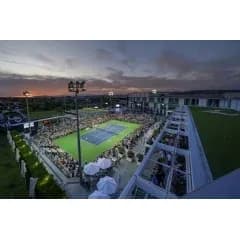
The University of Oklahoma complex has been named a 2026 USTA Outstanding Facility Award winner, one of only 12 educational institutions in the country to earn the honor and one of just six based on a college campus. The recognition was announced by the United States Tennis Association and presented in New York during the U.S. Open, a fitting backdrop for a venue that has quietly built a big-time reputation.
For OU, this is validation of years of investment, design and detail.
Coaching Perspectives
Head women’s coach Audra Cohen sees it every day.
“We are incredibly proud to call the Headington Family Tennis Center our home,” Cohen said, pointing to the experience it creates not just for players but for anyone who steps inside. She credited tennis club director Dawna Johnston for her “heart, dedication and many years of service to OU Tennis,” and everyone who helped shape the complex into “one of the premier tennis facilities in the country.”
On the men’s side, Nick Crowell watches recruits and opponents walk in and immediately understand where they are.
“It’s incredible to walk into our facility every day and see the very best in college tennis,” the OU head men’s coach said. He highlighted the upgrades and renovations fueled by donors and the athletics department, saying they have turned Headington into “the finest collegiate tennis facility in the nation.”
Evaluation Criteria
This award backs up that kind of talk with hard criteria.
USTA judges evaluated facilities on layout and how the complex fits its site, the quality of the court surface and lighting, and how easy it is to maintain. They looked at how well players, fans and media are accommodated, the aesthetics and graphics, including signage and landscaping, and the amenities: casual seating, food options, social spaces. They also weighed each facility’s role in grassroots tennis.
From there, nominees were sorted into four categories: public courts (small centers with 2–11 courts and large centers with 12 or more), private facilities that run both USTA and public programming (again split into small and large), educational institutions ranging from grade schools to universities, and an “Innovation” group recognizing creative approaches to delivering tennis. All 2026 winners receive a wall plaque and an all-weather sign to display on site — a permanent marker of national recognition.
Facility Features
OU’s complex checks boxes across the board.
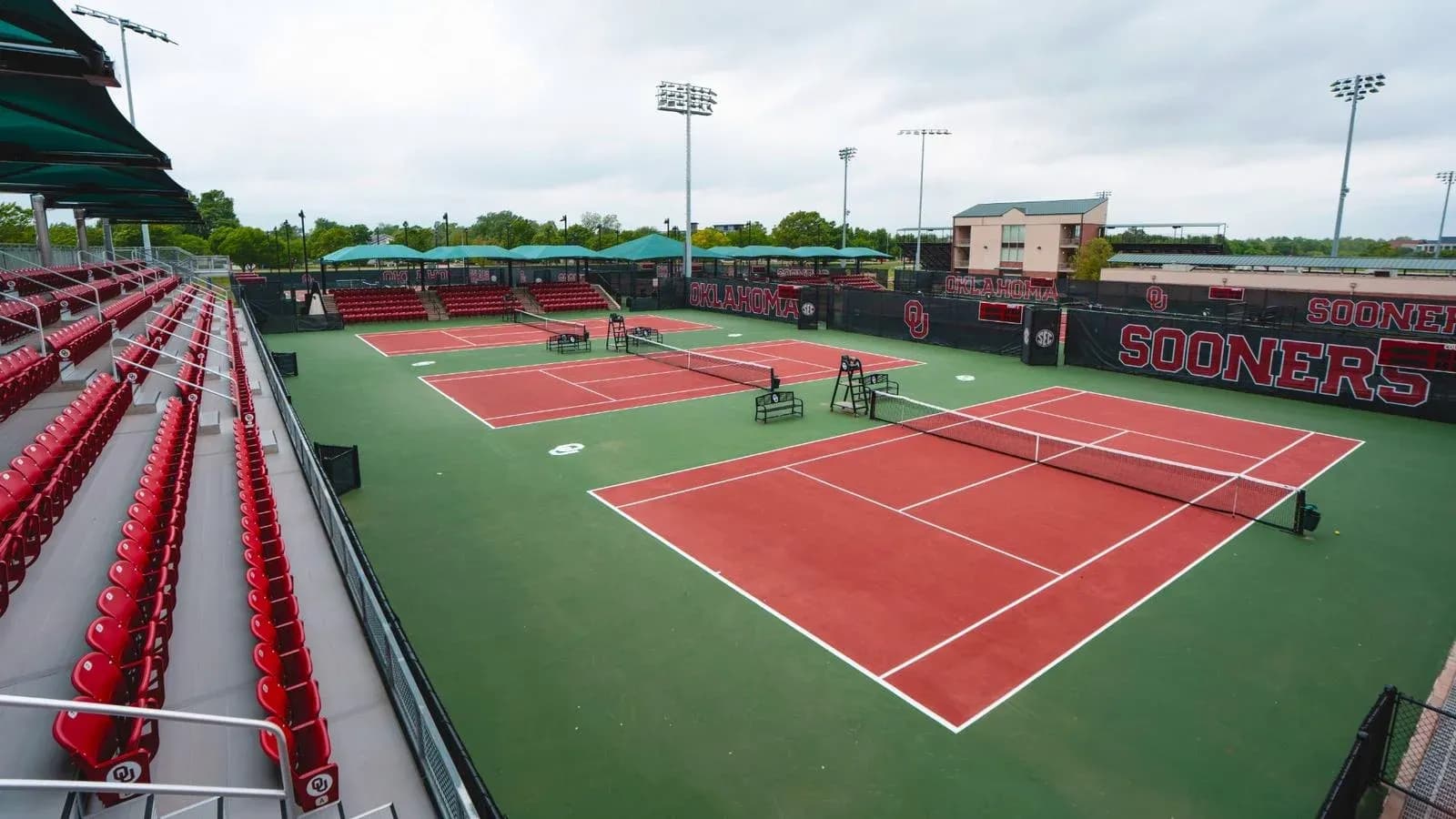
Home to both the Oklahoma men’s and women’s programs, the Headington Family Tennis Center offers 12 outdoor courts wrapped in a fan-friendly layout. The courts are arranged in four three-court quadrants, making it easier for spectators to move, watch multiple matches and stay close to the action. Championship-level lighting and surfaces, a sound system, electronic scoreboards and benches on every court turn dual matches into full productions rather than simple practice sessions.
Step inside and the scale grows. Including the Gregg Wadley Indoor Tennis Pavilion, the complex boasts 18 courts in total. There are locker rooms for home teams and visitors, storage for trainers and equipment staff, and indoor spaces designed with fans in mind when the weather turns.
NCAA Calendar
This isn’t a showpiece that sits idle. The Headington Family Tennis Center has become a staple on the NCAA calendar, hosting First and Second Round action 15 times: 2003, 2004, 2010–14, 2016–18 and 2022–26. That kind of repeat selection underlines why the USTA has taken notice.
Honoring Support
The name on the gate matters, too. The center honors Timothy C. Headington, a 1972 University of Oklahoma graduate and tennis letterwinner whose support helped turn a campus facility into a national benchmark.
Now, with a USTA Outstanding Facility Award on the wall and an all-weather sign soon to be mounted outside, Oklahoma’s courts don’t just stage college tennis. They help define what a modern collegiate tennis venue is supposed to look like.