Pedro de la Rosa Defends Lance Stroll's Speed Against Fernando Alonso
Pedro de la Rosa has gone firmly to bat for Lance Stroll, insisting the Canadian has the raw speed to live with one of Formula 1’s greatest competitors – Fernando Alonso.
The Aston Martin ambassador, a meticulous data-watcher and long-time development guru, believes the numbers on the timing screens don’t tell the whole story.
A lopsided record – on paper
Since Alonso arrived at Aston Martin in 2023, the head-to-head looks brutal.
In qualifying, Alonso leads Stroll 89–15. Over race distances, the Spaniard has piled up 335 points to Stroll’s 131. Even in 2026, with Alonso now 45 and Stroll deep into his F1 career, the gap in qualifying pace still averages around three tenths of a second in Alonso’s favour.
On the surface, that’s dominance.
De la Rosa, though, sees something different when he digs into the data.
“Lance is super fast,” he said on F1’s Beyond The Grid podcast, explaining how he pores over telemetry to understand where each driver shines. In those traces, away from the headlines, he sees a very different contest.
“Unbeatable” in places
De la Rosa describes a driver who, corner by corner, can be devastatingly effective.
In many circuits, in many specific turns, he says Stroll is “unbeatable”. Not just strong in one type of corner, not limited to high-speed bravery or low-speed precision. According to him, Stroll is “extremely quick in all types of corners”.
The comparison with Alonso, he stresses, is not as simple as assigning strengths: Lance here, Fernando there. The two, he argues, are “very evenly matched” when the car and conditions line up.
That’s a bold claim when the reference point is a two-time world champion still operating at a ferociously high level.
And yet De la Rosa points to the days when everything clicks for Stroll. On those weekends, the Canadian doesn’t just hang on to Alonso – he can beat him.
Sometimes Stroll “gets it in quali and he outqualifies Fernando,” De la Rosa notes, underlining the weight of that achievement with a reminder: “we’re talking about Fernando Alonso, you know.”
The missing piece: putting it all together
So why does the scoreboard look so harsh?
For De la Rosa, the gap lies not in peak speed but in execution over a weekend. He highlights “mistakes in qualifying or little things” that snowball. When Stroll misses the mark on Saturday, it “compromises the whole weekend”. Track position goes, strategy options shrink, and the race becomes damage limitation.
The underlying pace, he insists, is not the issue. Consistently harnessing it is.
Even so, he’s quick to praise Stroll’s Sundays. Once the lights go out, De la Rosa sees a driver with “impressive” race pace and a strong touch with tyre management – traits that often separate the good from the elite in modern F1.
A difficult car, a demanding benchmark
There is, however, a significant caveat in De la Rosa’s defence.
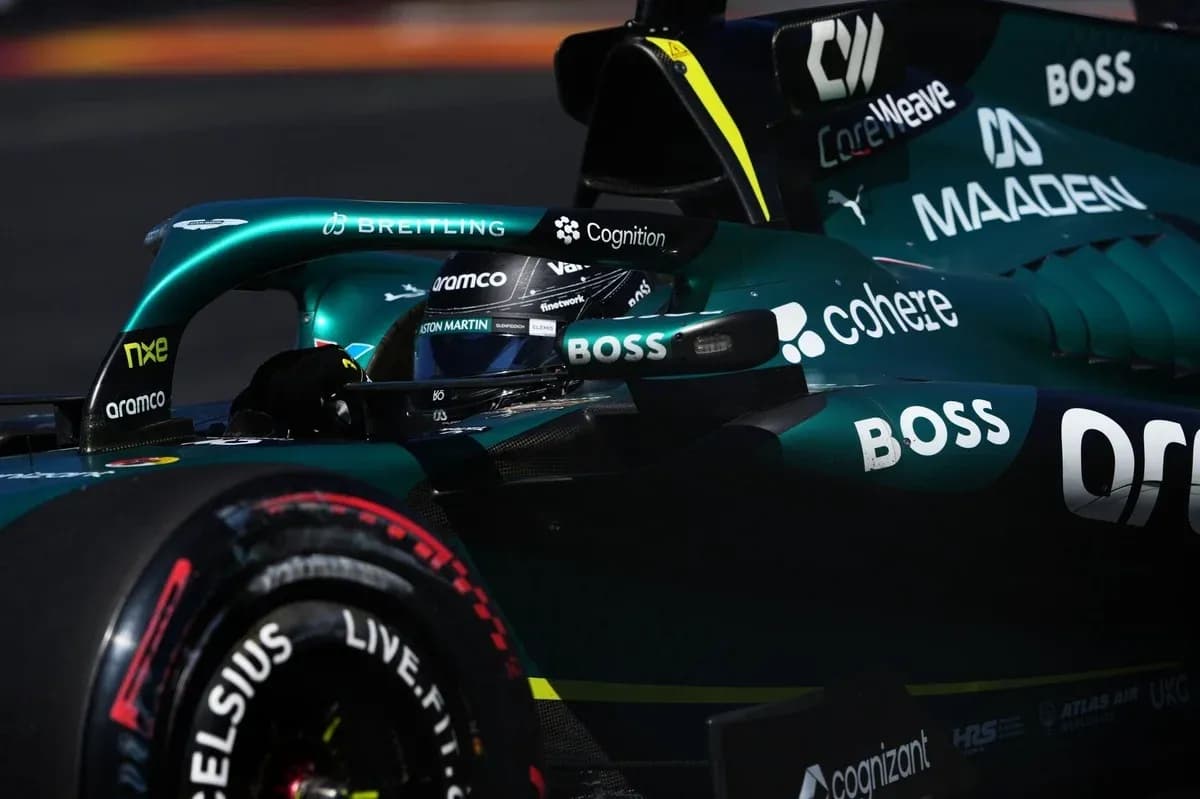
He makes it clear that Stroll’s best form depends heavily on the machinery underneath him. Aston Martin’s current car, he says, is “very difficult” to drive, not just in terms of chassis behaviour but also engine driveability. It needs to become “more driver-friendly”.
“When we improve the car and make it a bit more driver-friendly… whenever the car is driving properly, he’s as quick as Fernando. There’s no question about that,” De la Rosa insists.
That line is striking. Not “close to”, not “almost at”. “As quick as Fernando.”
For a driver widely written off in some quarters as simply making up the numbers, it is a powerful endorsement from someone who has seen the raw data and worked alongside both men inside the team.
The numbers on the board still favour Alonso by a distance. The telemetry, De la Rosa argues, tells a far tighter story. If Aston Martin can tame its car, the paddock may yet be forced to reassess the man in the other green machine.