Pierre Gasly’s Monaco Podium Stripped Again: FIA Ruling Reinstates Penalties
Pierre Gasly’s Monaco podium is gone. Again.
Three months after celebrating third place in the Principality, the Frenchman has been pushed back to seventh by the FIA’s International Court of Appeal, which has reinstated the two five‑second penalties for pit-lane speeding that were originally scrubbed. Red Bull’s Isack Hadjar inherits the final step on the podium.
It is a brutal reversal for Alpine and a landmark case for Formula 1’s rulebook.
From street hero to courtroom casualty
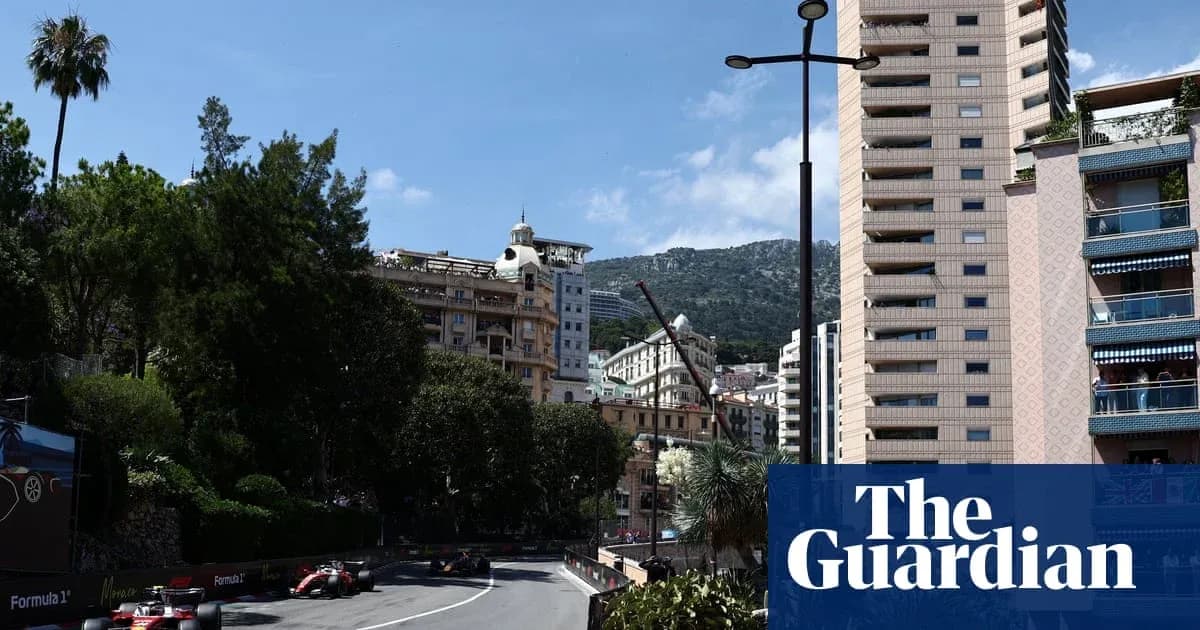
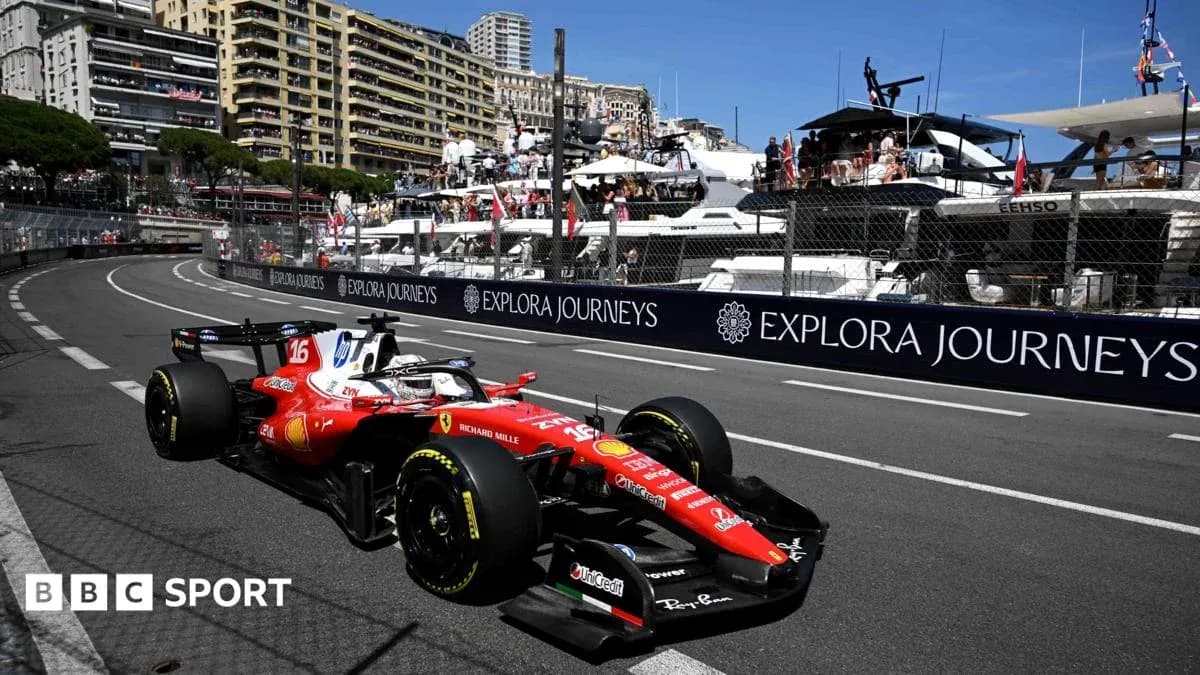
Gasly crossed the line third in June’s Monaco Grand Prix. On the road, it was a hard-earned podium. On the timing screens, it quickly became complicated.
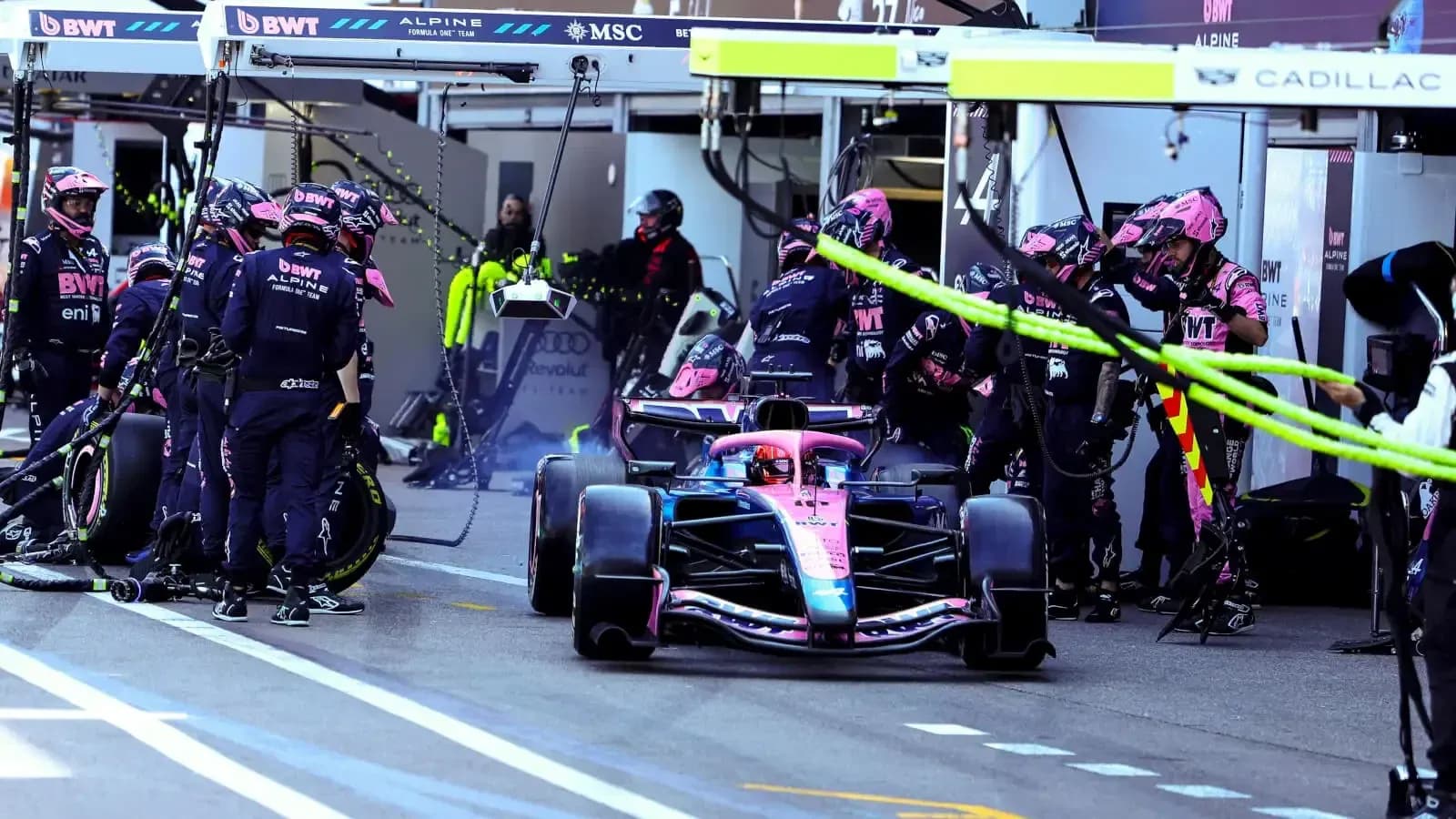
Two separate pit-lane speeding infringements brought two five‑second penalties, dropping him to seventh after the flag. Alpine fought back, arguing that the official system could not conclusively prove Gasly had exceeded the 60 km/h limit because of uncertainty around the distance used between the timing loops in the pit lane.
That technicality opened the door.
Because Alpine had deferred serving the penalties until after the race, it could lodge a petition for a right of review. The stewards accepted Alpine’s case, ruled that the breach had not been proven beyond doubt, and restored Gasly to third.
The victory was short-lived. McLaren and Red Bull were not prepared to let it stand.
They took the matter to the International Court of Appeal in Paris, arguing that the stewards’ U‑turn undermined the common standard every team had raced under. Those hearings took place behind closed doors in the days after the Dutch Grand Prix. On Friday at Monza, the verdict landed: the original penalties stand, Gasly drops to seventh, Hadjar is back on the podium.
McLaren and Red Bull: one benchmark, not many
At the heart of McLaren and Red Bull’s case was a simple sporting principle: everyone must compete to the same yardstick.
Six drivers were flagged for pit-lane speeding in Monaco. Five served their penalties during the race. Only Alpine managed to delay Gasly’s until the finish, then used that window to dismantle the basis of the sanction.
The two teams argued that the stewards were wrong to throw out the original decision. The official timing system, run by FOM and used by the FIA stewards, is the established reference for pit-lane speed. Teams calibrate their limiters against it. Strategy, risk, and compliance are all built on that foundation.
The system does not measure instantaneous speed. It calculates an average based on the time taken to travel between two timing loops. For Monaco, that meant a distance parameter of 2692 cm. Every car, every team, every limiter setting was built around that figure.
Alpine had persuaded the stewards that the regulations did not explicitly state the official timekeeper’s method as the only way to measure the 60 km/h limit. In that gap, they argued that if the actual distance was shorter than 2692 cm, Gasly’s average speed would drop below the limit.
McLaren and Red Bull pushed back hard. They said the official timing method was the de facto authority and that allowing a bespoke, retrospective recalculation for one team shattered consistency and safety.
The pit-lane limit exists first and foremost to protect people working in a confined space. Letting a competitor reframe the calculation after the race, they argued, weakened the predictability of a safety rule and the reliability of the FIA’s systems.
They also challenged the stewards’ reasoning itself, calling it “insufficient, contradictory, and legally inadequate”, and claimed the standard of proof had been misapplied.
Motorsport UK, present as an interested third party, underlined the wider risk: if an accepted official measurement system can be discarded after the fact on the basis of one team’s alternative calculation, national associations around the world would be left in an impossible position.
Strip away the legal language and the message was blunt: the official timing system must be the common benchmark. You cannot rewrite it for one car after the chequered flag.
Alpine’s fight: the letter of the rule
Alpine, unsurprisingly, stayed on the line it had drawn in Monaco.
Its argument was rooted in the wording of the regulations: the rules set a 60 km/h limit, but do not explicitly declare that only the official timekeeping method can determine compliance. If that method used an incorrect distance, Alpine said, then the resulting penalties should be open to review.
The team launched its own investigation into the pit-lane distance. It used three sources:
- FOM’s GNSS data
- Alpine’s Leica laser measurements
- An independent survey by Ridge & Partners LLP
The outcome was striking. FOM’s own data indicated the relevant minimum distance was 2615 cm, not the 2692 cm used by the timing system. On that shorter distance, Gasly’s recorded times would translate to an average speed below 60 km/h.
Alpine insisted that correcting the distance did not compromise safety, that it was legitimate to overturn an illegitimate penalty regardless of what had happened to other teams, and that no competitor had been treated unequally – the others had simply not pursued a right of review.
The team maintained that the stewards in Monaco had enough evidence to be satisfied Gasly had not actually broken the rule.
How the Court picked its side
The International Court of Appeal narrowed its focus to one key issue: not the limit itself, but how that limit was measured and enforced during the event.
The judges accepted that the 2692 cm distance used by the timing system was a parameter, not a physical tape-measure reading of each car’s path. It was a notional value applied equally to all competitors, and teams had calibrated their cars around it.
Crucially, the Court found that 2692 cm was not an “error” in the way Alpine framed it. It was simply one possible distance value, used consistently across the field. The later geometric analysis, which suggested a shorter minimum path, could not be allowed to overrule that common event-wide benchmark for a single competitor after the race.
Sporting fairness and equal treatment became decisive. Every other driver raced under the 2692 cm calibration. Allowing Alpine to substitute a different methodology afterwards would, in the Court’s view, break that principle.
The judges were careful not to declare the timing system untouchable. They stressed that it can be challenged if there is evidence of malfunction, incorrect timing, misidentified signals, or other technical faults. What they would not accept was the replacement of the shared calibration parameter with a new, tailor-made distance reconstruction for one car once the event was over.
The Court also drilled into the numbers. Gasly’s recorded times between the loops were 1.604 and 1.602 seconds. At an average of exactly 60 km/h, that would imply distances of around 2673 cm and 2670 cm. FOM had not measured his precise trajectory and had no proof he travelled those exact distances.
Alpine’s own reconstruction of Gasly’s line through the pit lane, described by the team as its “best estimate”, could not claim centimetre-level accuracy. It was not precise enough to prove conclusively that his actual path was short enough to keep him under 60 km/h.
On that basis, the Court ruled that the Monaco stewards had erred in scrapping the penalties on the strength of Alpine’s later distance analysis. The right of review had been granted, but the conclusion they reached was wrong in law.
The result: McLaren and Red Bull’s appeals were upheld, the rescinding decisions were overturned, and Gasly’s two five-second penalties were reinstated. The FIA and Alpine were ordered to share the Court’s costs.
Alpine left fuming, FIA under the microscope
Alpine has been left deeply unimpressed. The team made clear it still believes Gasly never exceeded the pit-lane limit at any point in the race and feels “unjustly punished”, but it has acknowledged the Court’s authority.
Behind the scenes, the team is weighing its next move. One possible route is an escalation to the Court of Arbitration for Sport, though that would take the dispute beyond the usual confines of F1’s own judicial ladder.
On the governing side, the FIA has taken the verdict as a trigger for introspection. It has confirmed it is reviewing the methodology and operation of the current Formula 1 timing system, along with the relevant regulations. It also plans to look again at judicial procedures, including the right of review and appeal processes.
The federation reiterated its backing for the stewarding structure, stressing the independence and objectivity of its panels and pointing out that stewards work in a different environment to the Court, with less time and legal resource. Each ICA decision, the FIA said, feeds back into a cycle of “continuous improvement”.
That is the political layer. On the sporting side, the damage is already done.
Gasly’s Monaco fairy tale has been rewritten twice. Hadjar’s first F1 podium has been restored. Alpine is left with a sense of injustice, a legal bill, and a car that still has to fight in a fiercely congested midfield.
The bigger question now hangs over the system itself: after Monaco and this bruising legal battle, how much faith will teams place in the timing lines that govern every centimetre of a modern Grand Prix weekend?