Pierre Gasly's Monaco Podium Stripped Again After Legal Ruling
Pierre Gasly’s Monaco podium has vanished for a second – and final – time, after the FIA’s International Court of Appeal ruled that his pitlane speeding penalties must stand.
What looked like a messy timing error has ended as a hard legal line. No reprieve. No third place.
From fairytale podium to legal tug-of-war
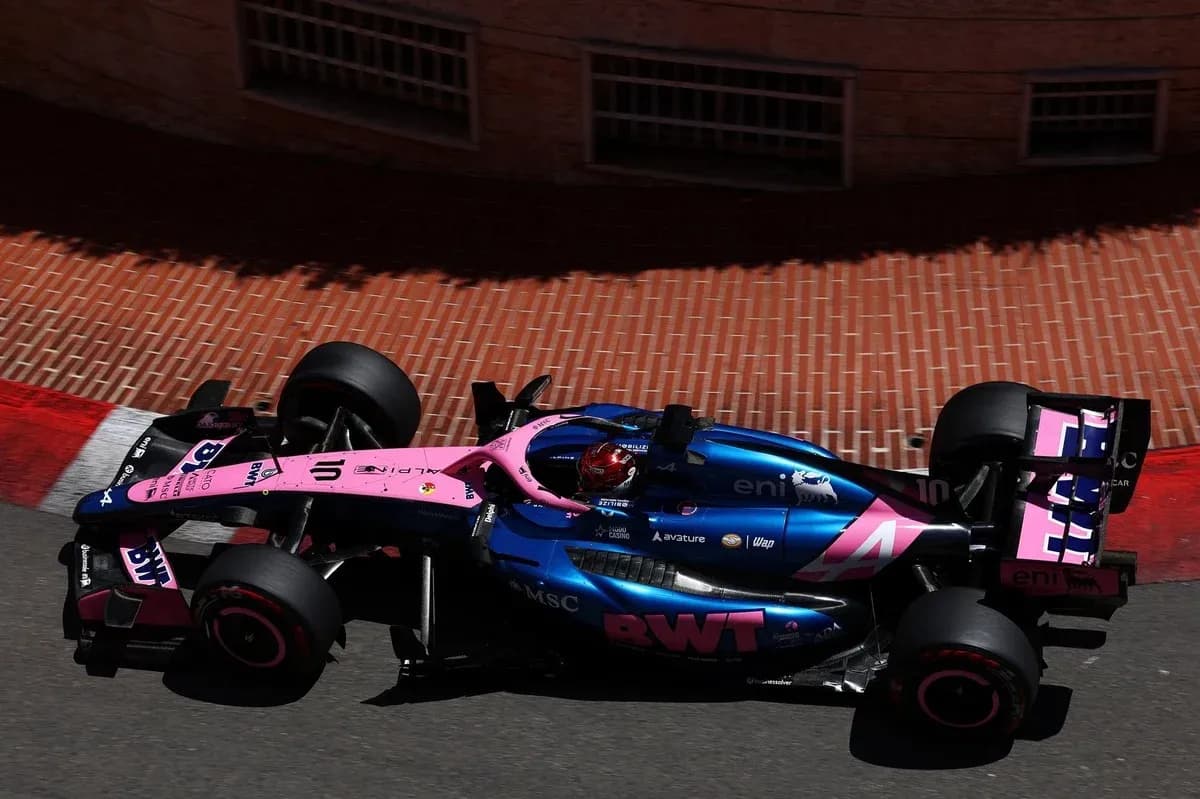
Gasly had originally crossed the line in third in the 2026 Monaco Grand Prix, a rare high point in a difficult spell for Alpine. Then came the wave of pitlane speeding penalties that distorted the result and the mood in the paddock.
Several drivers were flagged for speeding in the pitlane, only for it to emerge that the timing system itself was off. The first two timing loops were misaligned by 77cm, an anomaly that helped trigger an unusual cluster of sanctions.
For some, the damage was immediate. Oscar Piastri and George Russell served their penalties during the race – Russell even took a drive-through after Mercedes applied his sanction incorrectly – and their afternoons were effectively ruined on the spot.
Gasly’s fate was different. His two five‑second penalties were bolted onto his race time after the chequered flag, dropping him from third to seventh. That timing opened a narrow legal window. Alpine seized it.
The team requested a right of review, arguing that with the pitlane measurements proven inaccurate, the penalties had no solid foundation. On 12 June, the stewards agreed and scrapped Gasly’s sanctions, restoring him to third. Alpine celebrated; others bristled.
There was no way to “un-serve” the penalties that Piastri, Red Bull’s Isack Hadjar and others had already taken during the race. Their positions – and their points – were gone. The sense of injustice quickly flipped direction.
McLaren and Red Bull push back
McLaren and Red Bull appealed to the ICA, with Racing Bulls and Motorsport UK lending support. Their case was straightforward: if Gasly’s penalties were cancelled, while others remained stuck with theirs, the outcome distorted sporting fairness in another way.
The Court delivered its verdict on Friday. The penalties stay. Gasly is seventh again. Hadjar inherits the third place he had celebrated in the immediate aftermath of the race, before the brief Alpine-led reversal.
Behind that headline, the Court’s reasoning cut straight to the core of Alpine’s argument.
The ICA accepted that the timing loops were misaligned, but said Alpine could not prove, with full certainty, that Gasly had actually travelled a longer distance between them than the system recorded. His shorter time between the loops, the Court said, could be down to “a shorter path, greater speed, or a combination of both”.
Crucially, the judges also addressed the awkward split between drivers who served penalties during the race and those, like Gasly, who received them afterwards. The Court made it clear that the fact others had already taken their medicine “cannot be an obstacle to the cancellation of an illegitimate sanction, because those penalties were served at the discretion and choice of the team”.
In other words: teams chose when to serve penalties; that choice cannot be used as leverage to protect another driver’s result. To rule otherwise, the Court argued, would itself clash with the idea of sporting fairness.
Alpine furious but resigned
Alpine did not hide its anger. The team issued a statement expressing “disappointment and frustration” with the ICA’s decision and doubled down on its belief that Gasly never actually exceeded the pitlane speed limit.
“While we disagree with the decision, and still fully maintain that Car #10 did not exceed the Pit Lane speed limit at any point during the race, the team acknowledges the decision of the judging panel from the recent hearing in Paris,” the statement read.
The message was clear: Alpine feels wronged, but the fight is over.
“While the result is not what we had hoped for, as we feel that we have been unjustly punished, the team is firmly focused on continuing to improve its performance on track and remains in a close and very competitive Championship fight.
This outcome will not deter the team’s efforts and motivation in achieving its objectives by the end of the season.”
For Gasly, the emotional swing is brutal. A Monaco podium is career-defining for many drivers. To stand on that rostrum, lose it, reclaim it, and then watch it disappear again in a courtroom, not on a circuit, is a particular kind of sporting cruelty.
FIA under scrutiny
The FIA, for its part, moved quickly to defend its stewards while promising a broader review of how Formula 1 is timed and policed.
“The ICA decision upholds the appeals of McLaren F1 Team and Red Bull Racing against the decisions of the stewards contained in document 99 of the Monaco Grand Prix, effectively overturning those decisions,” the federation said in a statement.
The governing body stressed that stewards operate in a very different environment to the Court, with less time, less legal input and fewer layers of evidence to sift through. The implication: mistakes or reversals are not necessarily a reflection of incompetence, but of the realities of real‑time decision‑making.
“The FIA is reviewing the methodology and operation of the current Formula 1 timing system and the related regulatory matters. It will also be reviewing other judicial procedures and operations including the right of review and the appeal processes.
The FIA is fully supportive of the Stewarding process and the independence and objectivity of the diverse panels of Stewards who are an integral part of global motorsport.
“Stewards’ decisions are taken in a different environment to that of the Court, whereas the Court has access to extensive and additional legal counsel input, arguments and evidence.
The FIA Stewards constantly review their processes and take part in extensive professional development. Every decision of the ICA is carefully examined by FIA Stewards ensuring a process of continuous improvement.”
So the system will be examined. The timing loops will come under the microscope. The legal pathways of review and appeal will be re‑drawn and tightened.
None of that changes the classification in Monte Carlo.
Hadjar keeps his podium. Piastri and Russell remain victims of penalties they served on the fly. Gasly’s name is erased from the top three for good, his Monaco story now etched not in champagne and photographs, but in case files and court documents.
In a sport that sells itself on thousandths of a second, 77cm of misaligned timing hardware has redrawn a race, reshaped a podium and reopened the debate over where fairness really begins and ends in Formula 1.