
Premier League Transfer Window Chaos: Key Issues and Insights
Two days on from the Premier League’s most deranged transfer window yet, the dust hasn’t so much settled as rearranged itself into new, even stranger shapes. The numbers are obscene, the logic elastic, and the sense that any of it really matters grows thinner by the year.
This was the summer the Chelseafication of the market felt complete. Fees lost all relation to reality. Players became chips in a casino where the house never seems to lose. Spend £100m on the wrong man? Don’t worry. Someone will be along with £80m soon enough, happy to take the problem – and the amortisation – off your hands.
How do you apply reason to a landscape where Chelsea can drop £60m on Mykhailo Mudryk, watch him toil, watch him get banned, and still find a way to structure a deal that might show a profit by this time next year?
You don’t. But we’re going to pretend you can, by revisiting the 10 biggest issues identified three weeks ago and asking a simple question of each: did anyone actually fix anything, or did the chaos just change costume?
Tottenham’s missing striker
This is where the absurdity really starts to hum.
Tottenham needed a striker. They still kind of do. Or maybe they don’t. It depends who you ask and what you think a striker actually is these days.
Savio, Omar Marmoush and Mudryk have all arrived. Dominic Solanke and Richarlison, both bristling in their own ways under Roberto De Zerbi, are still in the building. De Zerbi has already set Savio a double-figure goals target and hinted at a collective approach to scoring.
Marmoush looks a sharp piece of business, a forward smart enough to realise that playing second fiddle to Erling Haaland at Manchester City is a career cul-de-sac. But he isn’t a classic No 9 either. Nor were the other attacking names that slipped away – Cody Gakpo, Iliman Ndiaye. The absence of a proper centre-forward feels less like a failure of recruitment and more like a deliberate choice from a manager who, by all accounts, got most of what he wanted.
The problem? Two league games, zero goals, and precious few chances. The new-look attack needs to reveal itself quickly. Otherwise the club that finally decided to flex its financial muscle risks discovering it has bought itself another season of angst, only this time at a higher price point.
Manchester City’s midfield panic
The alarm bells rang after the Community Shield, which is usually a warning in itself. Kneejerk reactions to glorified friendlies rarely age well.
But in Cardiff, a midfield pairing of Elliott Anderson and Mateo Kovacic looked worryingly flimsy. City responded as only City can: by hurling another nine-figure solution at the problem and prising Enzo Fernandez from Chelsea.
Fernandez was already cast as a Premier League villain-in-chief after his World Cup theatrics with Argentina. Now he’s the poster boy for a summer of unchecked spending, moving from one financial superpower to the other. He will be booed everywhere he goes. City will be jeered with him. Anderson, once the fresh face of evolution, suddenly looks like collateral.
Did City fix their midfield? On paper, yes. In reality, they’ve just doubled down on a model where every perceived weakness is met with another enormous cheque. It works. Until it doesn’t.
Manchester United’s creaking back line
United did the hard, necessary work in midfield. That was the surgery Erik ten Hag demanded and, eventually, received.
The defence, though, remains an exercise in wishful thinking. Two games in, two promoted teams have helped themselves to four goals. The echoes of that 4-0 capitulation at Brentford four years ago are hard to ignore.
The schedule will tighten, the games will stack up, and a brittle back line will be asked to withstand more strain than it has in years. A huge amount rides on Luke Shaw staying fit and functioning from now until Christmas. That is a gamble, not a plan.
Liverpool’s fitness – and their bill
While City and Chelsea and Spurs played out their spending arms race in full view, Liverpool quietly ended the window with the biggest net spend of the lot. And yet, stand back and squint, and the squad doesn’t look meaningfully better than last season’s.
Bradley Barcola is the headline act: exhilarating, raw, and staggeringly expensive. But Liverpool already had thrilling, raw, staggeringly expensive forwards who haven’t quite exploded yet. At some point, one or two of last summer’s big bets will have to come good for this latest one to matter.
The specific question was fitness. Two games, two 2-2 draws, two late equalisers. That can be read two ways: a team that runs to the end, or a team constantly scrambling to save itself. This time last year, Liverpool were snatching late winners that turned out to be disguises for deeper flaws.
Maybe this is different. Maybe it isn’t. Maybe it’s just a pile of unrelated moments that we’ll later pretend formed a pattern.
Chelsea’s goalkeeper – a rare clean answer
At least Chelsea gave us one straight line in a window of squiggles.
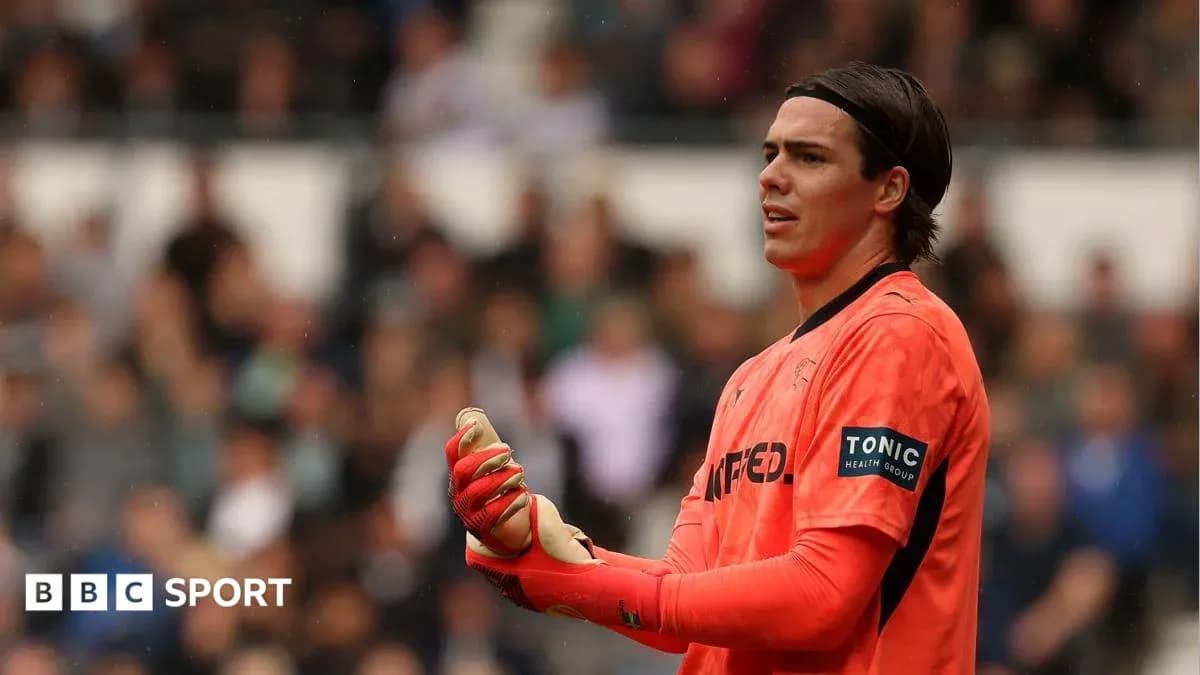
Goalkeeper was a glaring issue before a ball was kicked. It looked worse after the opening game. Then they went and did the obvious thing: signed Emi Martinez.
No debate needed here. Emi Martinez is better than Robert Sanchez. Everyone can agree on that, which is a minor miracle in itself after the summer we’ve just witnessed.
Of course, this being Chelsea, solving one problem simply shifted the anxiety elsewhere. Enzo Fernandez has gone and no like-for-like replacement has arrived. Without European football, they can probably stumble through to January with Moises Caicedo as the constant and a rotating cast of Romeo Lavia, Valentin Barco and Reece James filling in around him.
If that proves insufficient, there’s always the January fix: another £80m, another big name, another roll of the dice. Or the comedy option – the free-agent market, where Yves Bissouma or, for maximum chaos, Tanguy Ndombele could be summoned as short-term ballast.
In this era, nothing would feel more on-brand.
Aston Villa’s ripped-out spine
Villa’s summer looked chaotic from the outside. Key figures from the spine that drove their recent rise – Emi Martinez, Ezri Konsa, Youri Tielemans, Morgan Rogers, Ollie Watkins – have gone, and with them a sense of continuity.
Yet amid the churn, there was one piece of business that might end up defining their season: Leon Goretzka, in as a free agent after leaving Bayern Munich. It barely registered in the wider noise, but it could prove one of the shrewdest moves of August once everyone clocks it actually happened.
Villa have had to rebuild while nursing their permanent grievance, the chips on both shoulders that they seem determined never to put down. There has been more change than is ideal, but the recruitment across the pitch has a certain logic to it.
Their goalless, pointless start to the campaign looks concerning on paper. On grass, it feels more like a stutter than a crisis – certainly when compared with other clubs in similar early trouble.
Newcastle’s Newcastle problem
So much for the fears around Newcastle being a muddled version of themselves.
Matthias Jaissle has walked into the job and, on early evidence, looks like he knows exactly what he’s doing. Four points from games against Liverpool and Tottenham is a fine return in any season.
The nagging doubt? Those results might be telling us more about Liverpool and Spurs than they are about Newcastle. Beat chaos, and you might just be less chaotic, not actually good.
We’ll learn more once they face a side with fewer existential questions hanging over it. Bournemouth this weekend should offer a clearer reading.
Fulham’s uneasy marriage
Alvaro Arbeloa, the Temu version of Xabi Alonso, already sits at the top of the Sack Race markets. That takes some doing in a league where Tottenham are stumbling and Evangelos Marinakis has somehow gone weeks without firing anyone.
Fulham and Marco Silva always felt like a rare alignment: right manager, right club, right moment. That’s gone now, by choice on both sides, and the replacement feels fragile.
Arbeloa has the name, the playing career, the aura. What he doesn’t yet have is a body of work to justify taking over a club that had finally found a stable, upward trajectory. Of all the new managers dotted around the division, he looks the easiest to imagine on the wrong end of a brutal October statement.
Coventry and the Sky Bet smell
Coventry still reek of the Sky Bet era. That was the fear, and nothing in the opening weeks has dispelled it.
Defeat to Hull has left their fixture list looking ominous. Manchester City, Brighton, Nottingham Forest and Newcastle await over the next month. By the time they get their traditional respite at Dr Tottenham in late October, they could already be staring at a gap that feels too wide to close.
The numbers are damning. Coventry have spent £150m just to construct a squad that, at best, resembles Championship Deluxe. In a summer defined by excess, that might be the clearest measure of how distorted the market has become: even survival-level upgrades now cost small fortunes.
Crystal Palace and the Chelsea carousel
Palace were a worry before the window closed. Two defeats, including a mauling by a Manchester City side still clearly under construction, have done nothing to calm the nerves.
Their answer has been to lean heavily into the Chelsea pipeline. Axel Disasi has arrived on loan from Stamford Bridge, as he seems contractually obliged to do for at least one Premier League club every season. Honest Ahanor is also in, technically on loan from Atalanta but in reality en route to Chelsea next summer.
It is the sort of move that makes regulators twitch. A player literally called Honest being used to test the limits of the rules feels almost too on the nose. The deal doesn’t stand alone, but it does symbolise a system that now treats loopholes as features, not bugs.
To complete the set, Ben Chilwell is back, returning to Selhurst Park after a previous loan spell, this time via Strasbourg and with an injury in tow. Years of deadline-day experience tell you one thing: clubs only sign an injured Ben Chilwell on deadline day when they are very, very worried.
And that might be the truest reflection of this whole window. Clubs are richer than ever, spending more than ever, and yet so many of them look more anxious, more improvised, more exposed. The money keeps going up. The certainty does not.
How long can that bubble float before someone finally stops paying £80m for another club’s £100m mistake?