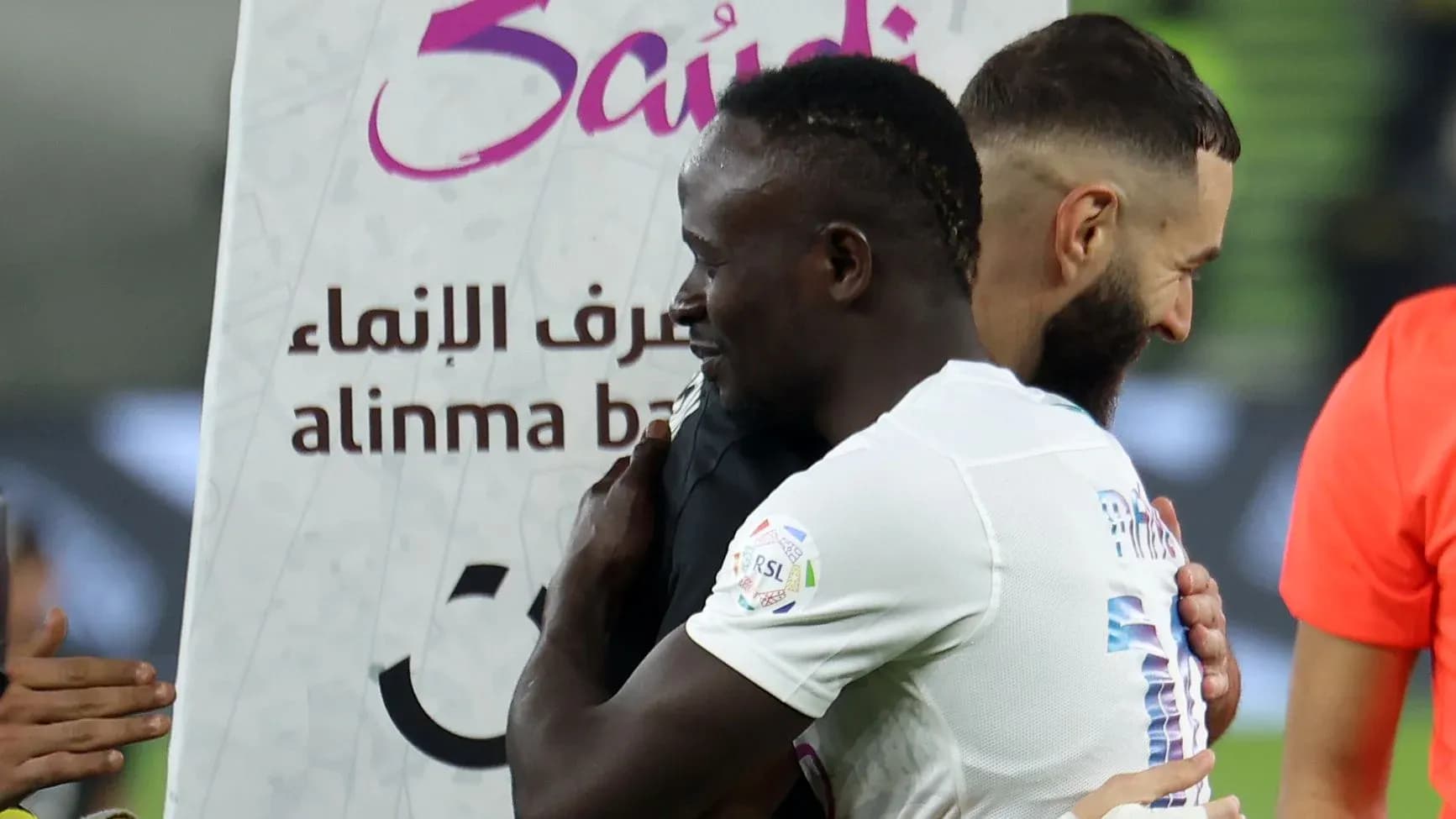
Saudi Roshn League Makes Ballon d'Or History with Mane and Quinones
The Saudi Roshn League has forced its way into Ballon d'Or history, not through a side door, but straight down the main boulevard.
With the release of the 2026 Ballon d'Or shortlist on Tuesday by "France Football", two names from Saudi Arabia’s top flight sit among the elite: Sadio Mane of Al-Nassr and Julian Quinones of Al-Qadsiah. On paper, it is just a pair of nominations. In reality, it is a statement about where the power lines of the global game are starting to shift.
From European Afterglow to Saudi Spotlight
This is not the first time the Saudi Roshn League has appeared on the Ballon d'Or radar. In 2023, Yassine Bounou of Al-Hilal and Karim Benzema, then of Al-Ittihad, both featured among the contenders.
But the context then was very different.
Benzema’s 2023 recognition belonged to his final, glittering chapters with Real Madrid. His goals, his titles, his aura in white carried him onto that list long before he set foot in Jeddah. Bounou’s case was similar: his heroics with Sevilla and his World Cup exploits for Morocco paved the way to Al-Hilal and into Ballon d'Or contention.
The Saudi League, at that point, was a destination, not yet a stage.
This time, the stage is the story.
Mane and Quinones are not riding the echo of European nights. Their nominations rest squarely on what they have done in Saudi Arabia and with their national teams over the past season. That is the line in the sand.
Mane: Titles at Home, Impact Abroad
Sadio Mane arrived at Al-Nassr with a reputation already carved in stone. What he has done since has added a fresh chapter rather than a quiet epilogue.
Domestically, he became the driving force behind Al-Nassr’s charge to the Saudi Roshn League title, ending a seven-year wait for the club. In a league packed with imported stars and rising local talent, Mane did not just blend in; he led. Goals, assists, relentless running, big moments when the pressure tightened — the full package of a player who still treats every game as a final.
His influence did not stop at club level. With Senegal, he pushed his country to the final of the 2025 Africa Cup of Nations, confirming once more his status as the heartbeat of a golden generation. At the 2026 World Cup, he helped steer Senegal into the round of 32, extending the nation’s presence on the biggest stage and reinforcing his case as one of the most consistently decisive forwards of his era.
Put simply, Mane’s nomination is not a nostalgic nod. It is a reward for a season in which he carried weight both at home and on the international stage.
Quinones: A New Name, A Clear Signal
If Mane is the established superstar, Julian Quinones represents something else: the proof that the Saudi Roshn League can elevate new figures into the global conversation.
The Mexican forward’s season with Al-Qadsiah was ruthless in its simplicity — he scored, and then he scored some more. By the end of the campaign, Quinones stood alone as the league’s top scorer, the first time he has claimed such a crown in his career. In a competition increasingly defined by marquee attackers, he finished at the top of the pile.
For Mexico, he carried that form onto the world stage, helping drive El Tri into the round of 16 at the 2026 World Cup. In a tournament where fine margins decide reputations, Quinones did enough to push his name from regional recognition into global relevance.
His nomination is not just about numbers. It is about timing, impact, and the sense that a player based in Saudi Arabia can now play, score, and lead his way into the Ballon d'Or debate without needing a European address.
A New Kind of Benchmark
Two Saudi-based players had appeared on the Ballon d'Or list before. The difference now is what earned them the right.
Back in 2023, the league was a backdrop to achievements made elsewhere. In 2026, it has become the proving ground itself. Mane and Quinones have been judged on what they did in the Saudi Roshn League and with their national teams in the same period, not on past glories in La Liga or the Champions League.
That shift matters.
It signals that performances in Saudi Arabia are no longer being politely applauded from afar; they are being measured, weighed, and rewarded alongside Europe’s top leagues. The Ballon d'Or panel is watching the Roshn League not as a curiosity, but as a genuine arena of influence.
The question now is not whether this is a one-off, but how many seasons it will take before a Saudi-based player moves from nominee to winner.