Transfer Window Closes: The Spin Continues
Transfer window shuts. The circus doesn’t.
Two days after the market has officially “SLAMMED SHUT”, the noise hasn’t dipped; it’s just changed costume. The narrative has swerved from deadline-day drama to a different kind of illusion: dressing up routine contract realities and long‑shot possibilities as urgent, game‑changing moves.
The late deals are gone. Welcome to Free Agent Fantasyland.
The Dimarco “deal” that doesn’t exist
The standout example of the genre comes from the Daily Express, with a headline that does a lot of heavy lifting for a story that barely stands up.
“Man Utd can sign one of best left-backs in the world for free – but there’s a catch.”
The “catch” is not a minor detail. It is the entire story.
Buried more than 200 words in, the piece finally concedes that Manchester United cannot sign Inter’s Federico Dimarco now. At all. What they can do is “begin laying the groundwork” for a possible free transfer next summer, when his current contract is due to expire in 2027 and he would, theoretically, be available on a free at the end of that deal.
No suggestion United are interested. No hint of talks. No tenuous “sources” linking club and player. Just the bland, universal truth that Manchester United – like every other club on the planet – could sign Federico Dimarco on a free transfer if he ever reaches the end of his contract and chooses to leave.
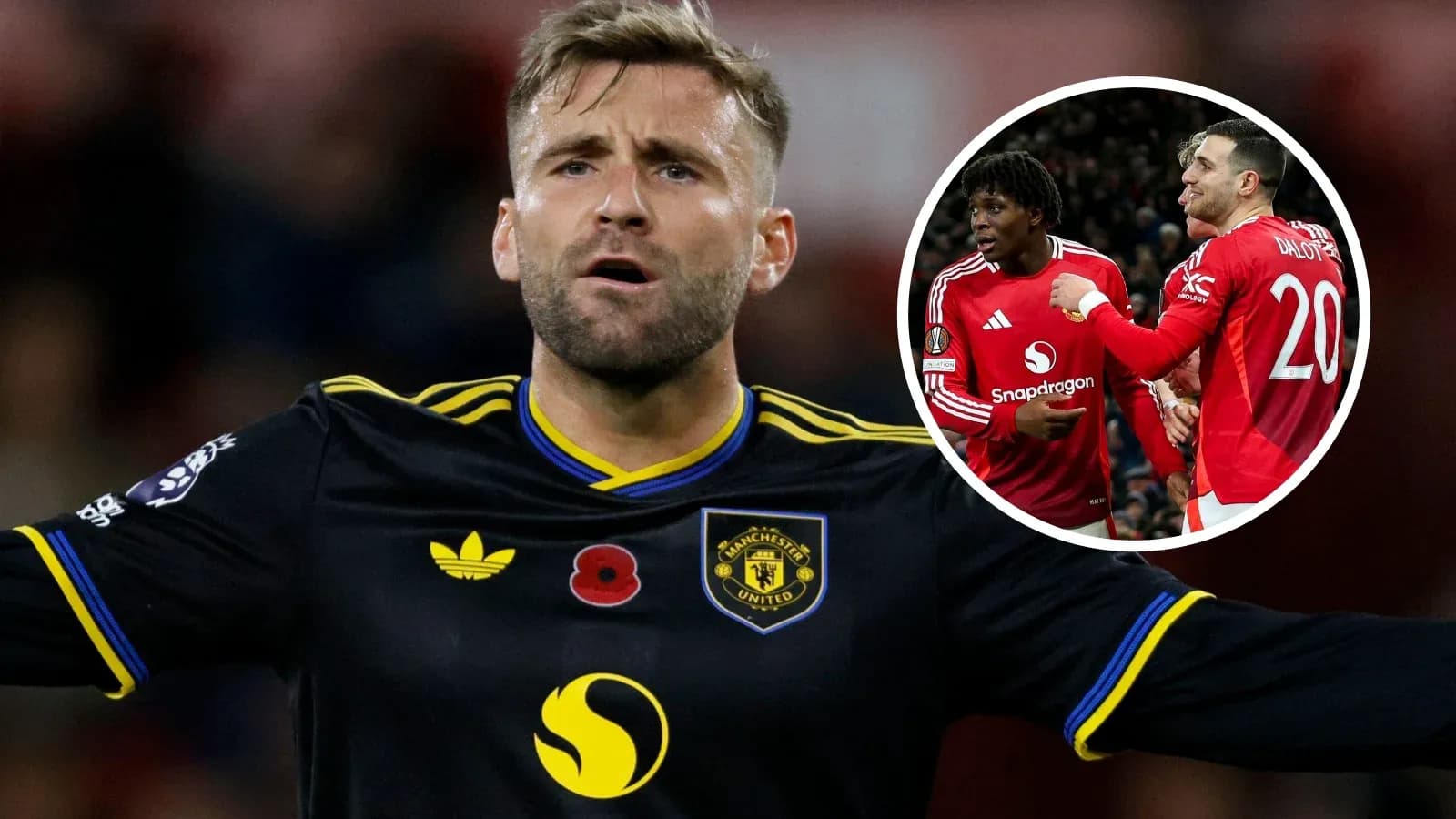
That basic, hypothetical possibility has been stretched into something that looks, at first glance, like a live solution to United’s very real left‑back problem over the next four months. A problem created by injuries and a heavy reliance on Luke Shaw’s fitness. A problem that, in reality, can now only be addressed by dipping into the actual free-agent pool.
And that’s the trick. The headline is constructed to feel like a loophole, a clever route around the closed window. It plays directly on supporters’ anxiety about defensive cover, hinting that a “best left-back in the world” might be parachuted in, only to reveal that the supposed fix lives a year away in a purely theoretical future.
The irony is that this summer’s genuine free-agent list is colourful enough on its own. Paul Pogba is out there, for those tempted by a reunion with chaos. Tanguy Ndombele is available, a high‑ceiling talent stamped “lightly used” by Europe’s elite. There is plenty of risk and intrigue to go around.
What there is not, though, is a glut of top-tier left-backs ready to walk through the door tomorrow. Not even the Express is prepared to go as far as touting a move for the injured Oleksandr Zinchenko.
So a different route is chosen. Don’t solve the problem; reframe it. Scan the list of left-backs whose contracts end next summer, pick the most glamorous name, and build an entire piece around the idea that a club might, one day, possibly, think about signing him. The story itself may be, as the original critique put it, “pure, distilled bumgravy,” but the headline has already done its job.
Click secured. Concern tapped. Reality optional.
Arsenal’s “late signing” that isn’t the £60m headline act
Over at the Daily Star, the artistry takes a slightly different form.
“Arsenal news: Late signing jets in for medical as £60m transfer set to be confirmed.”
It sounds breathless. It sounds expensive. It sounds like Arsenal are pulling off a dramatic double move in the dying embers of the window.
The reality? The “late signing” is Andria Bartishvili, a 17‑year‑old Georgian winger. He has been labelled “the next Khvicha Kvaratskhelia” – because that is now the default setting for any promising Georgian wide player – and his fee sits at around £4m. He won’t even join up with Arsenal until he turns 18 next year.
The £60m figure in the headline belongs not to the teenager but to Gabriel Martinelli, whose protracted move to Al‑Hilal has become a goldmine for headline writers in the quiet days after the deadline. His situation provides the big number; Bartishvili provides the “late signing” hook.
The two stories are loosely connected, but the phrasing is designed to fuse them in the reader’s mind. One line, two very different realities, carefully spliced to feel like one blockbuster development.
Chelsea’s “savings” and the price of spin
The creativity doesn’t stop at transfers in. It stretches to how clubs are said to be coping with players going out.
Football.london offers a particularly optimistic take on Chelsea’s midfield situation:
“Chelsea can save millions on Enzo Fernandez replacement after Lamine Camara transfer blunder.”
The supposed masterstroke? Promoting academy players into the first-team squad to replace a World Cup winner sold for £125m.
No one disputes the value of a strong academy. Chelsea’s has produced elite talent for years. But framing the decision to lean on youngsters as a way to “save millions” on replacing Enzo Fernandez glosses over the scale of what has been lost and what is being asked of those stepping up.
This is not an argument about whether it can work. It’s about the language that turns necessity into a “plan” and a high‑risk gamble into a financially savvy manoeuvre. A sale that banked £125m is now dressed as an opportunity to avoid spending more, rather than as a decision that leaves a sizeable hole in the heart of the team.
The window is closed, but the game goes on – just not on the pitch. With no new signings to announce, the spotlight swings to the headlines themselves, to the way they stretch, squeeze and repackage the thinnest of threads into something that looks like news.
The football has paused. The spin hasn’t.