Tuchel's England Squad: Balancing Ambition and Caution
Thomas Tuchel says 99.9% of England fans he meets want to talk about the good bits. Mexico. DR Congo. The bronze medal. The journey, not the crash.
The 0.1%? They are still stuck in Atlanta, still watching England sink into a timid 5-4-1 and hand a World Cup semi-final back to Argentina. And whether Tuchel likes it or not, their voices are shaping the mood around his first post-tournament squad.
The ghost of Atlanta
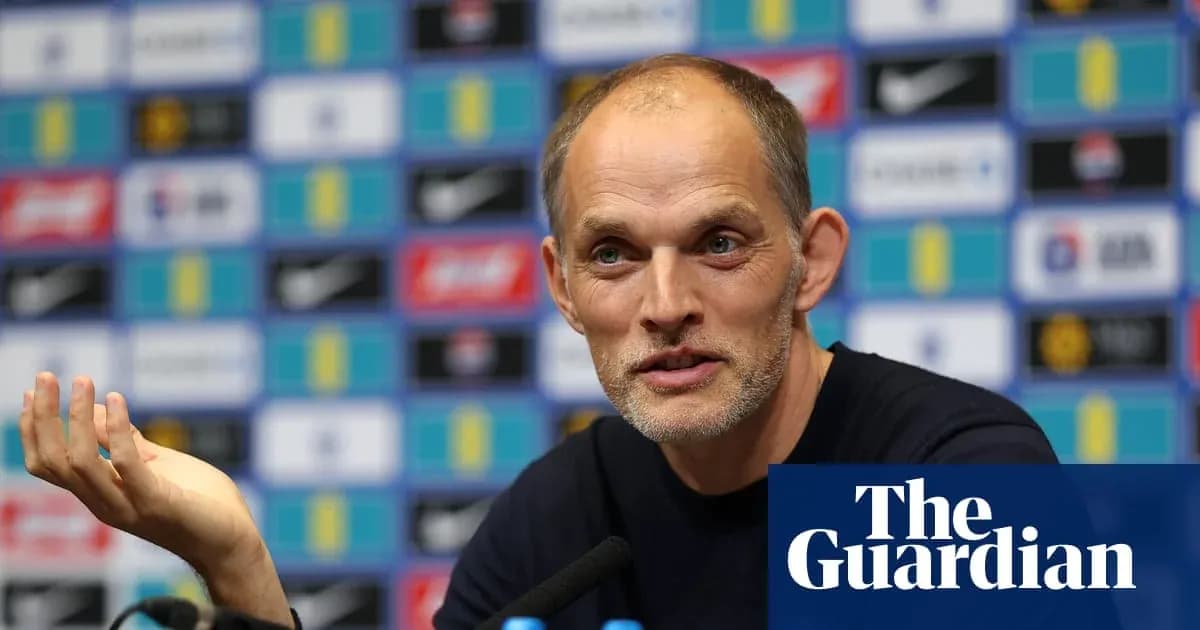
Tuchel tried to laugh it off at Wembley. He joked about the Football Association hierarchy ribbing him over those defensive substitutions. Then he snapped back into serious mode and pointed everyone towards the 6-4 win over France in the third-place play-off, the game he wants to define this team.
But the semi-final hangs there, heavy. England went 1-0 up early in the second half and then shrank. Tuchel insists he has not lost sleep over his World Cup decisions. The country has. The sense of opportunity wasted has not faded, no matter how many supporters tell him on the street they loved the ride.
Now comes the Nations League and a squad named for Spain, Czechia and Croatia that cannot be separated from what went wrong in the summer.
Continuity, then chaos
Tuchel’s original plan was continuity. Stick with the World Cup core, build on the “brotherhood” and spirit he keeps referencing. Injuries ripped that script up.
- Dean Henderson
- Dan Burn
- John Stones
- Reece James
- Djed Spence
- Jordan Henderson
Six senior players gone, six doors suddenly open. Out, too, go Noni Madueke, Ollie Watkins and Ivan Toney from the World Cup 26. In come faces that carry a whiff of renewal.
The most eye-catching is Trent Alexander-Arnold. Or, more accurately, the timing of his recall.
Trent returns, questions remain
Alexander-Arnold has been nowhere near an England squad since June 2025. He has never truly convinced a succession of national coaches. Now, with Spence and James injured and Ben White also absent, Tuchel hauls the Real Madrid defender “out of cold storage”, as the move already feels branded.
Why now? Is this trust or necessity?
Alexander-Arnold’s form in Madrid under José Mourinho has flickered rather than blazed. He remains a conundrum at international level: a world-class passer with a game that can unravel without the right structure around him.
Tuchel has at least been clear on one point. He does not see the 27-year-old as a midfielder. The England manager told all the newcomers that a call-up is only the first step; the real work starts when they pull on the shirt. Alexander-Arnold, more than most, knows how quickly the door can slam again.
Possession, chaos and a lingering quote
Tuchel bristled slightly when a reporter linked the inclusions of Alexander-Arnold, Alex Scott and Cole Palmer to England’s lack of forward passers at the World Cup. He paused. The room remembered.
This is the same coach who, after losing to Argentina, said ball possession was not part of England’s “DNA”. The line has stuck like a burr.
After taking the job, Tuchel talked about harnessing the Premier League’s pace and power. In Qatar, that ideal surfaced only once: the furious second half against Croatia in the opening game. For 45 minutes England ran wild, overwhelmed their opponents and looked like a side that could rip through anyone.
The rest of the tournament told a different story. England leaned on solid defending and on Harry Kane and Jude Bellingham to conjure big moments. They ended up in a no man’s land: not a Spanish-style passing machine, not a Premier League storm. Something in between, and not in a good way.
Tuchel says he wants more balance now. A team that can “rest with the ball” at times but still “embrace the chaos” when the game opens up. It sounds good. It also demands braver selections in midfield.
Midfield regrets
Against Argentina, Declan Rice faded. England needed fresh legs and fresh ideas next to Elliot Anderson. Tuchel had boxed himself in.
Jordan Henderson, 36 and playing with a broken wrist, was never a realistic solution at that stage. Kobbie Mainoo, nimble in tight spaces and picked for exactly those scenarios, stayed rooted to the bench. Tuchel has admitted he must look at the Manchester United midfielder properly this time. It felt like a glaring oversight.
Options did exist. Myles Lewis-Skelly finished last season impressing in Arsenal’s midfield. Alex Scott was knitting Bournemouth together with calm, progressive passing. Both are in this squad now. Adam Wharton, however, remains on the outside looking in, a reminder that Tuchel is not ready to embrace every fashionable pick.
The broader point is clear: if England are to avoid retreating into that grim 5-4-1 again, the manager has to trust technicians as much as tacklers.
Fine margins and hard calls
Contention comes with the job. Morgan Gibbs-White and Josh King can both feel hard done by. Liam Delap had a strong case to be Kane’s understudy ahead of Dominic Calvert-Lewin. The line between “unlucky” and “untrusted” is thin at this level.
Strip away the noise, though, and this is a strong squad. Quality in every line. Youth threaded through experience. Enough variety to change a game from the bench, which England notably failed to do in Atlanta.
Rio Ngumoha, Liverpool’s teenage winger, headlines the new wave. Jarrad Branthwaite looks every inch the new Burn, edging out Levi Colwill in central defence with his blend of size and composure. Lewis Hall has a real chance to establish himself at left-back.
Up front, one decision in particular hints at a shift in Tuchel’s thinking. Madueke out, Palmer in.
Palmer, not patterns
Madueke is direct, quick, predictable in a way managers often like: he runs straight, runs hard, runs wide. Palmer does not. Chelsea’s No 10 drifts, probes, finds pockets that do not exist on the tactics board.
Tuchel has chosen the better footballer over the clearer pattern. That matters. At the World Cup, England often looked like a team built on like-for-like replacements, every position a straight swap. It made them stable. It also made them easy to read.
With Palmer, Alexander-Arnold, Scott and Mainoo in the group, England suddenly have more players who see passes early and are comfortable taking the ball in tight spaces. The tools are there to move away from fear and into something more ambitious.
The supporters will not accept another tournament defined by caution. Not with this level of talent. Not after the way that semi-final slipped away.
Next Saturday, Spain come to Wembley to open England’s Nations League campaign. Tuchel says 99.9% of fans he meets are positive. When the team sheet goes up and the game turns, the real percentage will make itself heard.