U.S. Open's Influencer Culture Disrupts Tennis Matches
The lights were supposed to be on Naomi Osaka.
Instead, on Monday night at Arthur Ashe Stadium, a different kind of spotlight cut across the court — a harsh, handheld glow aimed not at the players, but at a group of influencers trying to capture their moment while Osaka played Anastasia Zakharova.
The umpire stopped. The crowd stirred. The cameras — not the broadcast ones, but phones held aloft — kept rolling.
Within hours, footage of the interruption had gone viral, pulling more than 1,500 comments from tennis fans who have had enough of what they see as a creeping takeover of the U.S. Open by ring lights, TikTok dances, and people who seem more interested in content than in tennis.
A match, a flash, and a fed‑up crowd
Katherine, a lifelong tennis fan in the stands that night, filmed the now-notorious clip and posted it online. Her video shows what many in the sport have been grumbling about for the past few years finally bursting into the open.
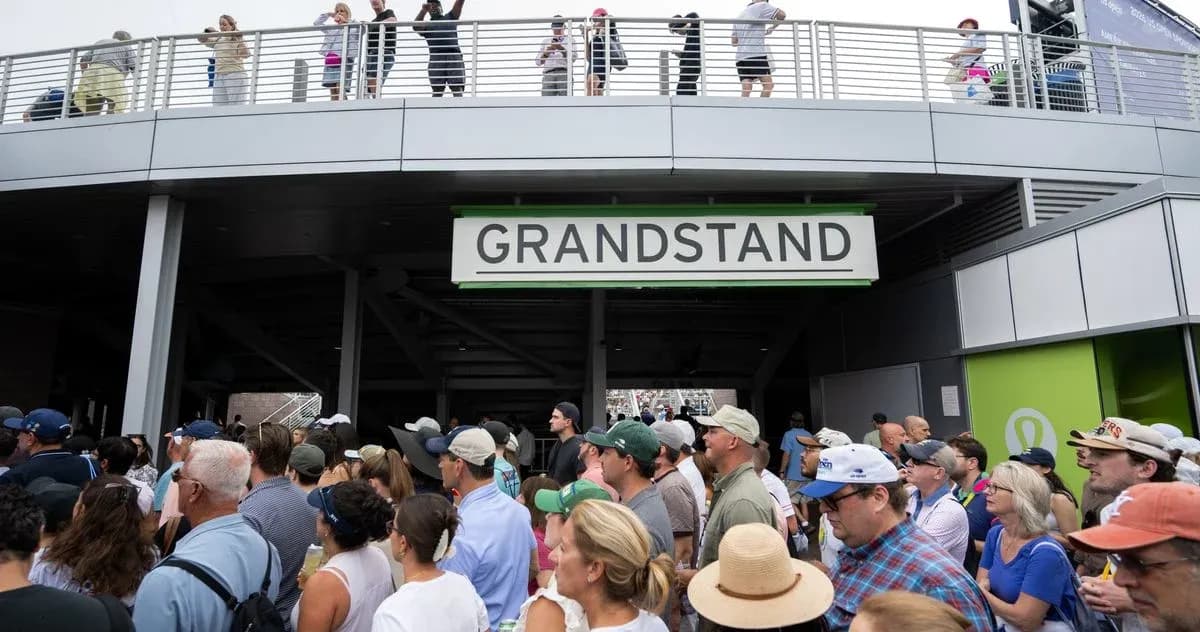
“All around the stadium, there were people — in the middle of serves and in the middle of points — getting up, walking through the crowd down to the closest they could get to the court in their section, and taking pictures, taking videos, using ring lights,” she said.
At most tournaments, that sort of movement is unthinkable. Spectators wait until changeovers or the end of a set. The U.S. Open, though, loosened its rules about walking during play in 2024. On Monday, that decision collided with the influencer era in a way that could not be ignored.
Katherine watched as the umpire repeatedly turned toward a particularly loud suite of about a dozen people and asked them to quiet down. They were being filmed by a U.S. Open usher holding what she described as a very bright light, roughly the size of a phone.
“It didn’t seem like they were aware that the umpire was talking to them because they weren’t really watching the match,” she said. “I’ve never seen that in the middle of a point. The flash was the craziest thing.”
The moment crystallized the tension that has been building since Honey Deuces, designer outfits, and tennis WAGs became as much a part of the Open’s visual identity as the blue courts and night sessions.
Caught in the crossfire
One of the people swept into the backlash was Mriganka Chawla, a fashion and lifestyle influencer who appears in Katherine’s video taking a selfie while Osaka plays.
Chawla insists she was not in the disruptive suite the umpire addressed, and she did not attend on any kind of influencer assignment. She was at the Open for the first time with her fiancé’s tennis-obsessed family, she said, and simply wanted a photo.
While out of her seat getting an ice-cream sandwich, she found a relatively empty section and asked an usher to take her picture “because my man can’t take a photo to save his life.” She said she believed she was far enough away not to bother anyone.
“I was seriously so far away,” she said. “I’m really sorry if I disrupted any playing.”
Once she identified herself in the comments under Katherine’s post — and initially denied that her flash was disturbing anyone — the internet did what it does. Chawla said she began receiving a bizarre mix of “death threats” and product questions about the selfie light she used, which she noted is the same one popular creator Alix Earle favors.
“This is such an influencer thing, and I understand that now, but everybody has really cute photos [from the Open]. I just wanted one cute photo,” she said. “I wish somebody had told me, ‘You can’t do that.’ This is also on me. I should have researched it. I wish there were some guidelines or something.”
The bitter irony? The photo that sparked the storm did not even deliver. “It looks like I’m mid-sneeze,” she said, laughing. “Hey, everyone knows I went to the U.S. Open now, so I guess I don’t have to post anything.”
Tennis Disneyland meets tennis etiquette
None of this is happening in a vacuum. The United States Tennis Association has been aggressively reshaping the Open’s identity, leaning into a description from its own CEO: “tennis Disneyland.”
Family-friendly events, sponsor activations, and Instagram-ready backdrops now ring the grounds. Inviting influencers is not a side effect of that strategy; it is a pillar of it. Sportico reported that the USTA handed out media credentials to 100 influencers and podcasters this year, double last year’s number. That does not include the many creators brought in by brands hosting suites.
For traditional fans, the numbers feel less like growth and more like an invasion. They are already staring at rising ticket prices and thicker crowds. Now they say they are also navigating newcomers who either do not know tennis etiquette or simply do not care.
The Mercer Edition, a culture magazine, recently labeled it the Open’s “influencer problem,” writing that tennis is “built around a level of concentration that can’t be understood until fully observed,” and warning brands to think twice before trading that focus for “vanity metrics and corporate satisfaction.”
Inside the stadium, that sentiment is hardening. Katherine said regulars have grown “really fatigued with influencer culture” at the Open over the past two years. The event has always embraced a louder, more raucous atmosphere than Wimbledon or Roland Garros. But there is a difference between a roaring night session and a sea of people filming themselves during points.
“Once it’s impacting the play of the game, that’s a breaking point,” she said.
The U.S. Open wanted a festival, a spectacle, a place where tennis and lifestyle could coexist. On Monday night, in the middle of Osaka’s match, the clash between those worlds lit up the court — literally. The question now is whether the tournament reins in the circus, or lets the ring lights keep dictating the show.