U.S. Women's Team Dominates Hungary to Reach FIBA Semifinals
BERLIN — The U.S. didn’t just advance. It stormed into the semifinals.
Napheesa Collier poured in 19 points as the Americans dismantled Hungary 108-56 on Thursday, a statement win that pushed the reigning powerhouse into yet another women’s FIBA World Cup medal round.
Next up: the winner of Spain vs. Australia on Saturday. Different opponent, same expectation.
A Machine in Motion
From the opening tip, this looked less like a quarterfinal and more like a showcase. The U.S. came out flying, ripping off a 36-12 first quarter that left Hungary chasing shadows. They hammered the ball inside, swarmed on defense, and turned loose passes into layups before Hungary could even organize.
Collier set the tone early, dropping 10 of her 19 points in the first 10 minutes. Around her, the U.S. offense hummed. Cuts, extra passes, wide-open threes. Hungary simply couldn’t keep up with the pace or the precision.
The numbers told the story. The Americans hit 20 of their first 26 shots — a blistering 77% — and buried five of their first six attempts from beyond the arc. With six minutes left in the second quarter, the scoreboard read 50-18. By halftime, it was 59-30, the highest-scoring first half in a knockout game in U.S. World Cup history, according to FIBA.
The pressure finally told in the record books as well. The 108 points marked the most ever scored by any team in a World Cup quarterfinal. The 31 assists? Also a quarterfinal record.
This was not just dominance. It was orchestration.
Sharing the Ball, Sharing the Load
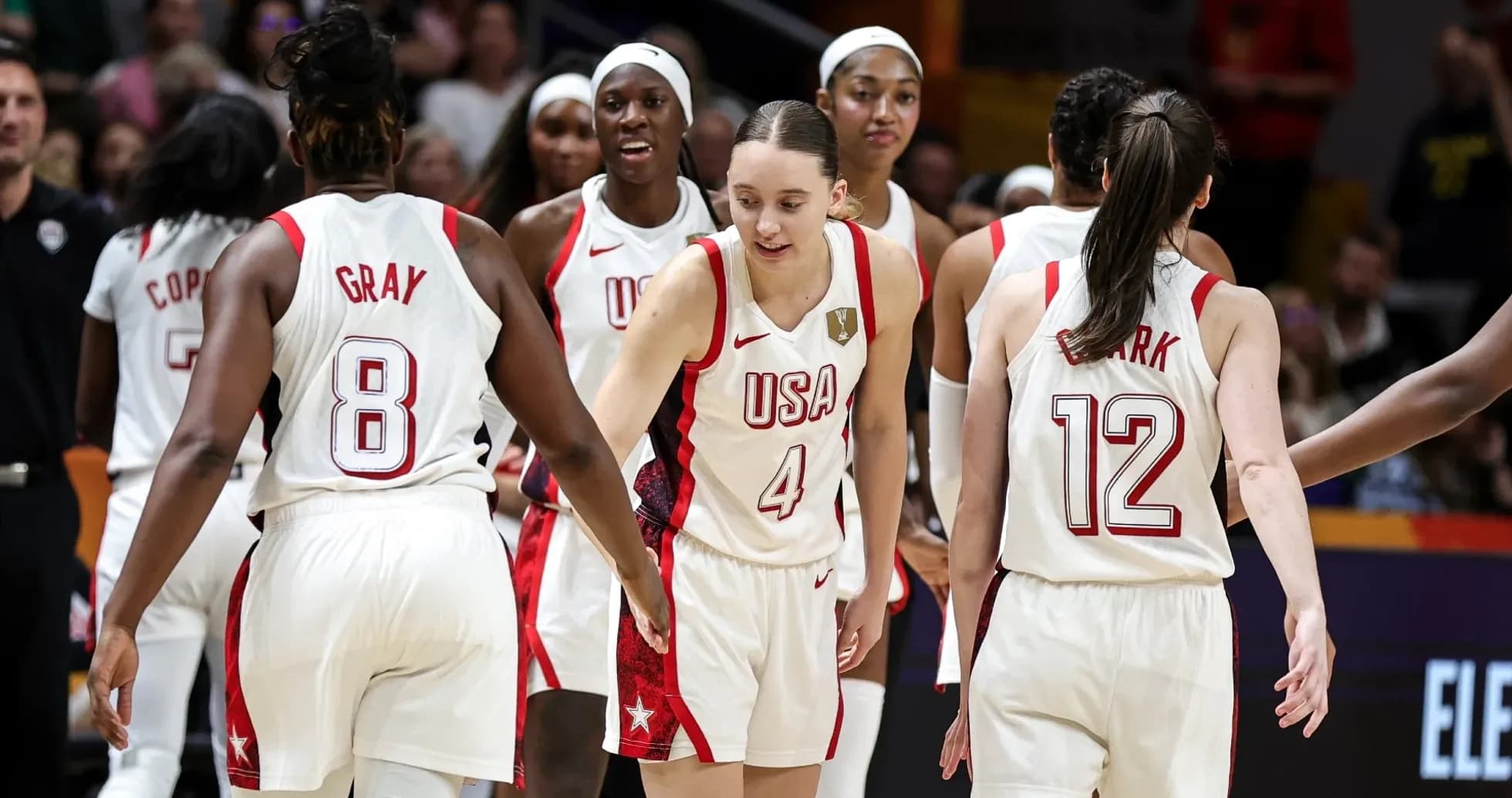
Kahleah Copper, who finished with 10 points, summed up the ethos of this U.S. team.
“When that ball is moving, we want to get the best possible shot,” she said. “We want to make sure everybody gets involved. Everyone here on this roster, we know what they’re doing on their respective (WNBA) teams. But you come here, you sacrifice a little bit of that.”
That sacrifice is showing up in the box scores. No one is hunting numbers; they’re hunting the right play. Copper talked about turning good looks into great ones. Possession after possession, the Americans did exactly that.
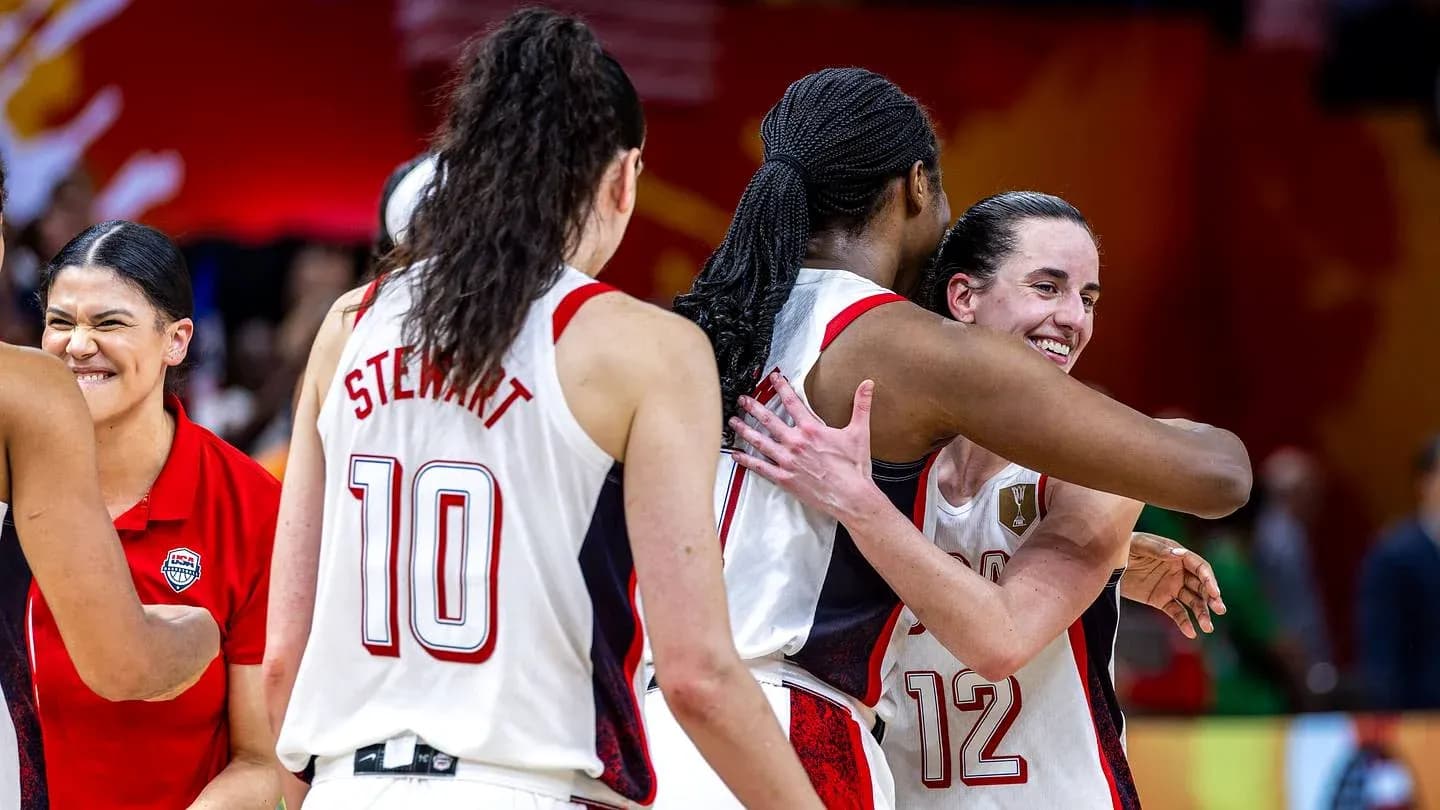
Caitlin Clark and Angel Reese offered a glimpse of just how dangerous that unselfishness can become. Late in the first quarter, they capped the period with a sharp, late-clock pick and roll, Clark threading the pass, Reese finishing just before the buzzer. It was a small moment in a blowout, but it crackled with promise — chemistry growing in real time on the World Cup stage.
Clark finished with 10 points and nine assists, coming up just shy of her second double-double of the tournament, but her fingerprints were everywhere. She controlled tempo, stretched the floor, and repeatedly found open teammates as Hungary’s defense unraveled.
Defense with Teeth
The offense will grab the headlines. The defense quietly strangled the game.
Hungary’s centerpiece, Dorka Juhasz of the Minnesota Lynx, arrived in Berlin averaging 15.3 points and 11 rebounds per game. She left with just two points on 1-of-12 shooting. The U.S. tracked her relentlessly, bumping her off spots, contesting every touch, and denying the easy catches she thrives on.
Juhasz missed her first seven shots and didn’t see the ball drop through the net until 2:26 remained in the first half. By then, the contest was effectively over.
Hungary, to its credit, kept competing. This run to the quarterfinals marked its best World Cup finish in the medal-round era. The country placed fifth in 1957, but that came in a round-robin format without knockout stages. Reaching this point in the modern structure is a milestone, even if the final step ended in a harsh lesson against the sport’s gold standard.
A Brief Scare, Then Back to Business
The only uneasy moment for the U.S. came in the third quarter. Sonia Citron took an accidental hand to the nose from a Hungary player and left the game, raising a flicker of concern on the American bench.
She returned to start the fourth quarter.
With the lead ballooning and the outcome long decided, the U.S. rotated freely, spreading minutes and responsibility. The intensity dipped only slightly. The standards did not.
History at Their Backs
This win stretched the Americans’ World Cup winning streak to 34 games, a run that dates back to a semifinal loss to Russia in 2006. They have reached every medal round since 1983, when the tournament shifted to its current format.
That history isn’t a backdrop. It’s a burden they’ve learned to carry — and often, to weaponize.
On Thursday in Berlin, that legacy looked as strong as ever. The records fell, the margin swelled, and the U.S. walked off the floor with the same question hanging over the rest of the field:
Who’s really ready to stop them now?