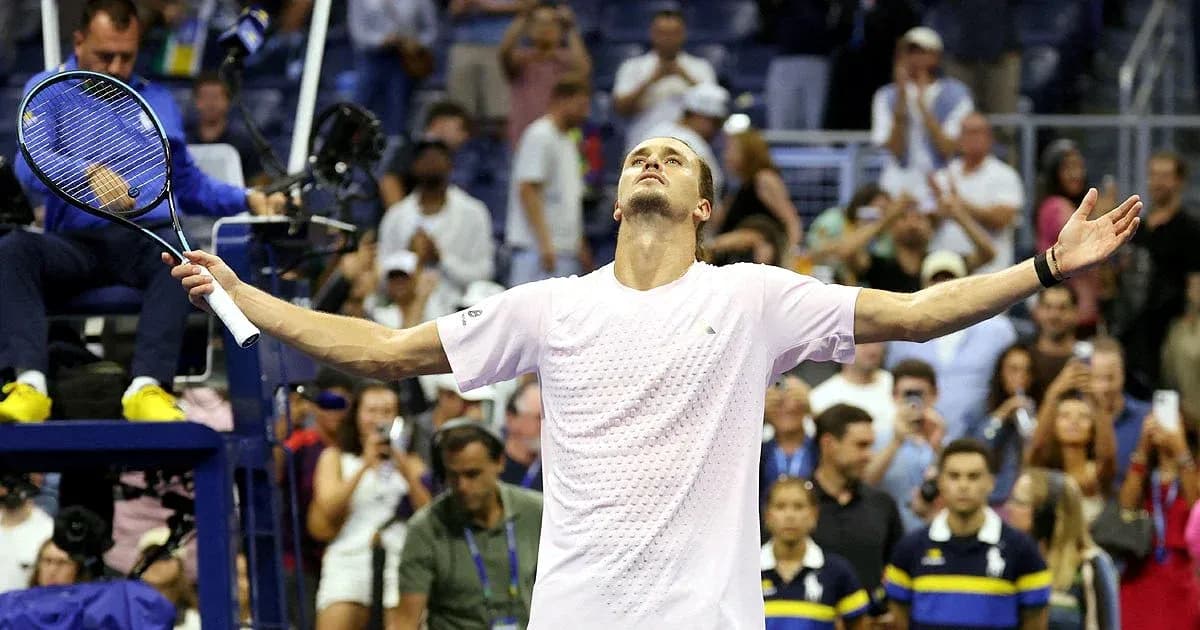
Alexander Zverev Survives a Thrilling First Round at US Open
Alexander Zverev walked off Arthur Ashe Stadium in the small hours of Wednesday looking less like a top seed cruising through a first round and more like a man who had just escaped. Because he had.
The new French Open champion, installed in New York as the favourite in the absence of world No. 1 Jannik Sinner and with Carlos Alcaraz only just back from injury, needed every ounce of resilience to fend off Lorenzo Sonego, edging a wild, punishing contest 6-4, 3-6, 6-7(7), 7-5, 6-4 in almost five hours.
It was supposed to be a statement start. It turned into survival.
A top seed on the brink
Zverev, playing his first Grand Slam as a major winner, opened like a man intent on underlining his new status. He dictated early, carving out seven break points in the first set. Only one landed, but it was enough: 6-4, scoreboard pressure applied, the script seemingly intact.
Sonego tore it up.
The world No. 89 stormed through the second set with a clean, fearless brand of first-strike tennis. He broke early, wrestled the rhythm away, and never let Zverev back in. Serving with authority, he closed the set to love and punctuated it with an ace, a flourish that said he was not here to make up the numbers.
The match tilted. The stadium sensed it.
Sonego seizes control
The third set became a tug-of-war. Zverev tried to reassert himself from the baseline, Sonego countered with bold returns and quick-fire points, and neither man blinked on serve. It felt destined for a tiebreak, and when it came, the Italian’s nerve held firmer.
At 7-7 in the breaker, Zverev flinched. A double fault – the kind of error that hangs in the air in a night session – gifted Sonego the opening he needed. The Italian stepped through it, took the tiebreak, and with it a 2-1 lead. Suddenly, the top seed stood one set from the exit, staring at the kind of upset that echoes for years.
Two points from disaster
The fourth set tightened like a vice. They traded breaks, each man clinging to the match with long, bruising rallies. Sonego kept attacking, sensing the finish line. Zverev, now playing under real scoreboard pressure, had to manage not just his opponent, but the weight of expectation that comes with being “the man to beat.”
Then came the brink: Zverev found himself just two points from defeat.
This is where his season as a Grand Slam champion showed. He dug in on serve, found first deliveries when he needed them most, and clawed his way to a crucial hold. The escape shifted the air. Sonego’s level dipped by a fraction; Zverev pounced, breaking to steal the set 7-5 and drag the contest into a decider.
The pressure had finally told – just not on the man most expected.
Zverev finishes the job
By the fifth, the toll on Sonego was visible. The Italian, who had pushed Zverev to the edge with relentless aggression and energy, began to fade. His legs were a touch slower, his shots a fraction shorter. Zverev, sensing a weary opponent, tightened his game, cut out the loose errors and leaned on his superior weight of shot.
The German secured the decisive break and guarded it with the focus of a player who knew exactly what was at stake. One slip, one loose service game, and he risked becoming the answer to an unwanted trivia question: the first top seed to fall in the opening round of a Grand Slam since Lleyton Hewitt at Wimbledon in 2003.
He did not slip. He closed.
When it was over, near five hours after they started, Zverev’s reaction stripped away any gloss. “I’m just happy I won, that’s it,” he said, summing up a night that had been more ordeal than exhibition. He called it “an incredible battle, lots of ups and downs, nearly five hours,” and noted it was his longest first-round match at a major.
“He would have beaten a lot of players,” Zverev added of Sonego, “but I’m happy to be through.”
The top seed survives, the favourite advances, but the message is clear: in New York, even for a newly crowned major champion, nothing comes easy under the lights.