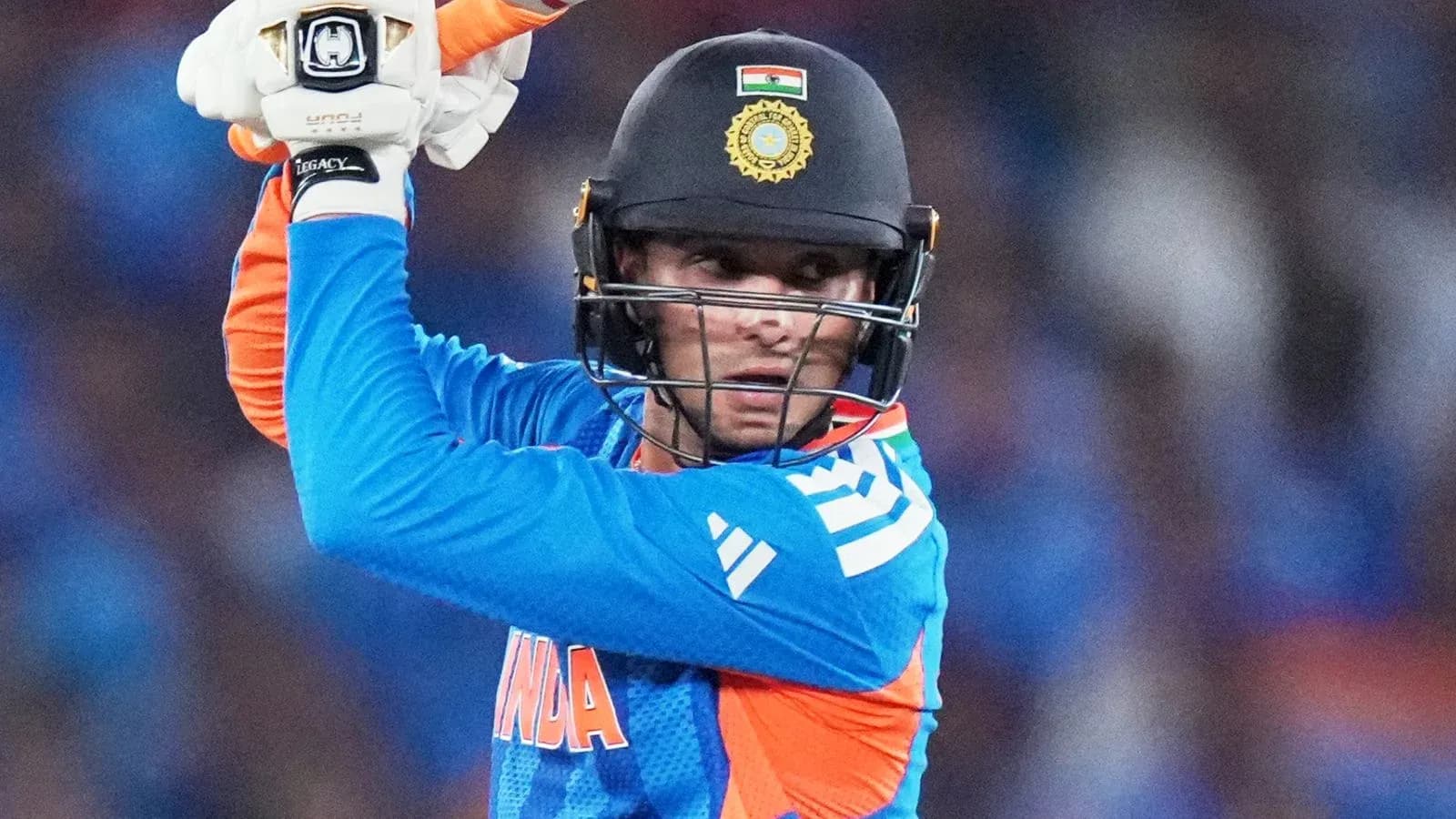
Abhishek Sharma's Record 30-Ball T20I Century Leads India to Victory
Delhi has seen its share of batting carnage. This was something else.
Abhishek Sharma needed only 30 balls to rip up the record books and Afghanistan’s attack in the third T20 international, launching the fastest T20I hundred by a batter from a Test-playing nation and powering India to a 3-0 series sweep.
By the time he walked off, Delhi was still echoing with the sound of leather disappearing into the stands.
A hundred in a blur
Thirty balls. That’s all it took.
Abhishek’s 108 from 34 deliveries was an innings played almost entirely in fast-forward: 11 sixes, nine fours, barely a dot ball in sight. He didn’t just reach a landmark; he smashed through a ceiling.
In the space of half an hour, he overhauled the 33-ball centuries of New Zealand’s Finn Allen and Zimbabwe’s Sikandar Raza, both set earlier this year. Allen had lit up a T20 World Cup semi-final against South Africa in Kolkata. Raza had brutalised Gambia in October 2024. Those efforts now sit a step behind Abhishek’s mayhem in Delhi.
This wasn’t just an Indian record either. Having gone past Allen, Abhishek now owns the quickest hundred in a T20 international contested between two Test-playing countries. Against a recognised attack, under international pressure, he made the format look almost unfair.
India surged to 221-7, the innings built almost entirely around the left-hander’s blaze at the top.
A growing list of milestones
The numbers around Abhishek are starting to stack up.
This was his third T20 international century, already placing him behind only Rohit Sharma (5) and Suryakumar Yadav (4) among Indians. That’s rare air for a player still shaping his international career.
He also pushed aside Rohit’s own mark for India’s fastest T20I hundred. The captain’s 35-ball effort against Sri Lanka in Indore back in 2017 had stood as the benchmark. Not anymore. Abhishek shaved five balls off that standard and did it with an ease that felt almost casual.
This is not even his quickest ton in the format. In domestic T20 cricket he has already gone faster, hammering a 28-ball hundred for Punjab against Meghalaya in 2024. Thursday in Delhi simply confirmed what those who follow India’s domestic game already suspected: this is a hitter built for extremes.
Where it sits in the global game
On the global stage, Abhishek’s 30-ball landmark now sits just behind the outer edge of T20I history.
The fastest men’s T20I hundred remains with Estonia’s Sahil Chauhan, who reached three figures in 27 balls against Cyprus in 2024. Turkey’s Muhammad Fahad sits between Chauhan and Abhishek with a 29-ball ton against Bulgaria a year later.
In the women’s game, West Indies star Deandra Dottin still holds the mark with her 38-ball hundred against South Africa in St Kitts back in 2010.
Abhishek’s innings in Delhi doesn’t erase those feats. It joins them. A new reference point, especially because it came in a clash between two Test nations, where depth of bowling and scrutiny are both higher.
Afghanistan swept aside
Once the fireworks ended, the gulf between the sides quickly showed.
Chasing 222, Afghanistan never got close. They folded for 94, bowled out in 14.1 overs as India’s attack hunted in packs and the scoreboard pressure squeezed every shot.
Abhishek still found a way to leave a mark in the field, pouching a catch, while Nitish Kumar Reddy ripped through the middle order with three wickets in the 12th over to slam the door on any faint resistance.
The series finished 3-0, emphatic and ruthless.
India will play bigger series and face sterner tests, but nights like this linger. Records fall, scorecards fade, but the memory of a 30-ball hundred in front of a roaring Delhi crowd tends to stay. The real question now is simple: how far, and how fast, can Abhishek Sharma go from here?