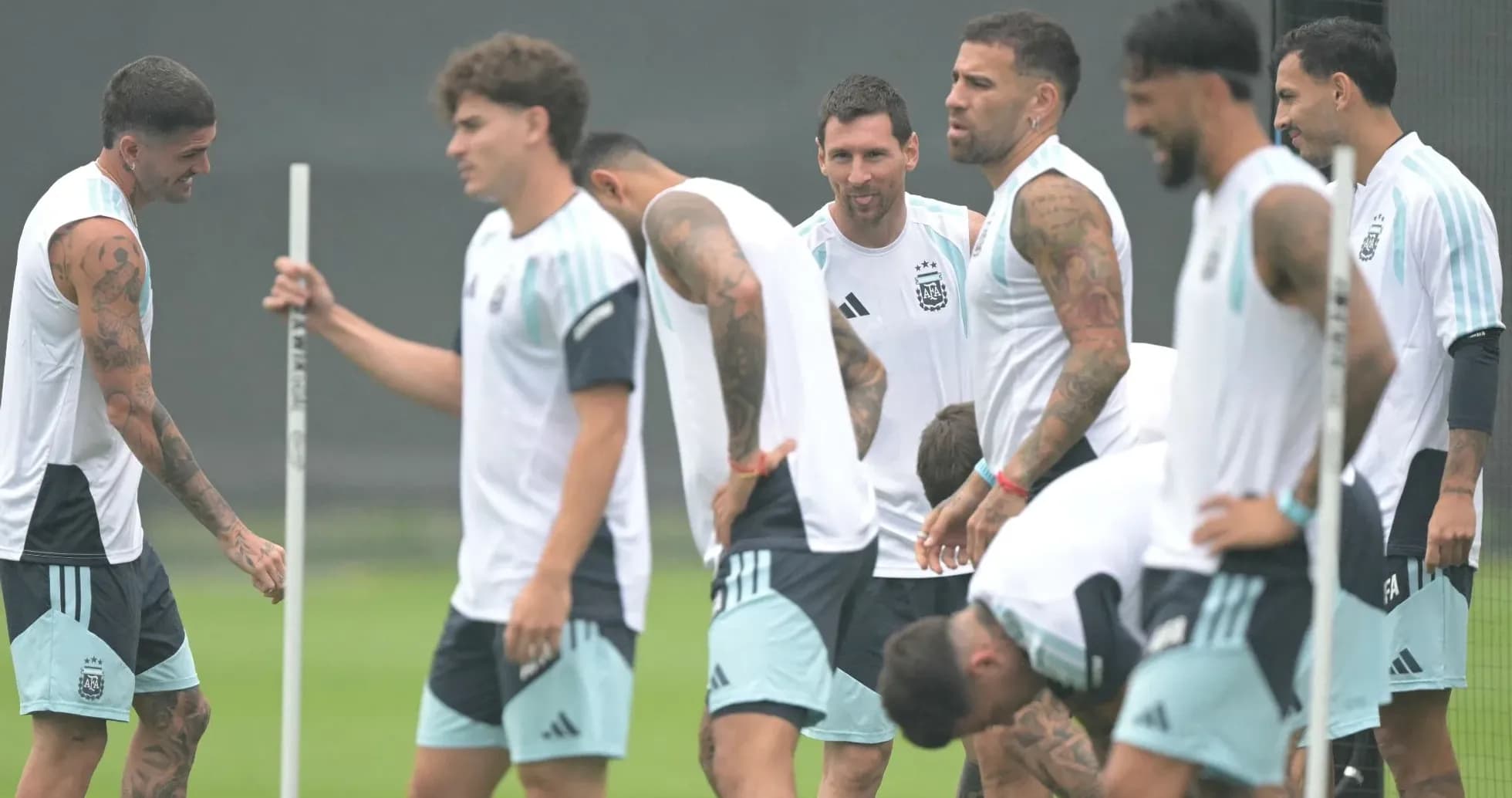
AFA Crisis Threatens Scaloni Era and Messi Farewell
Two months after losing the World Cup final to Spain, Argentina should be regrouping, reloading, and plotting another assault on world football. Instead, the Argentine Football Association is sinking into a storm that now threatens to spill directly onto the pitch.
Administrative chaos, financial strain, and a president under legal fire: the AFA is lurching from one crisis to the next, and the national team can no longer pretend it’s business as usual.
AFA Under Fire, Tapia Under Suspicion
French outlet RMC did not mince words, describing the association as being in “chaos.” At the centre stands Claudio “Chiqui” Tapia, the AFA president, facing accusations of money laundering involving figures both inside and outside Argentina.
What began as a legal and political battle is now bleeding into football’s most sacred space in the country: the national team setup. Decisions that once revolved around tactics, call-ups, and preparations for major tournaments are now entangled with court cases, financial disputes, and broken trust.
The timing could hardly be worse.
Scaloni Nearing the Exit
Lionel Scaloni’s contract runs out on 31 December. On paper, that’s just a date. In reality, it feels like a countdown.
The 48-year-old, the coach who delivered the 2022 World Cup and then took Argentina back to the final of the latest edition, is widely believed to be approaching the end of his cycle with the Albiceleste. According to La Gazzetta dello Sport, Scaloni is “heading for the exit,” and he is not alone: several members of his backroom staff are also ready to walk away.
That prospect rips open the door to sweeping changes. A team that built its identity on continuity, unity, and a shared sense of mission could soon be starting again from near zero. For a football nation that has just re-established itself at the very top of the game, the sense of instability is jarring.
Messi Tribute Stalled by Tension
On the pitch, the next chapter was supposed to be emotional, almost ceremonial. Argentina’s three upcoming friendlies — against Burkina Faso, Bolivia and Benin — were expected to carry a special weight. They will be the first matches since Lionel Messi announced his retirement from international football.
The October international break had been earmarked for a grand tribute to the captain who dragged his country back to the summit. A farewell worthy of his legacy.
That plan is now stuck in the same fog that surrounds the AFA.
La Gazzetta dello Sport reports that “there is also a big tribute to Messi on the table, but Leo is not entirely convinced about it. Relations with the Association are tense. Messi feels he has given the Association a great deal, not only on the pitch but also off it, on the economic level.”
It is a striking image: the greatest player in Argentina’s history, unconvinced about attending his own tribute because of the institution that should be honouring him.
Unpaid Bonuses and Growing Resentment
Money lies at the heart of the rift. The Italian newspaper highlights another fault line: the bonuses due to the players for their recent achievements. Inside Argentina, influential voices insist the World Cup finalists are effectively creditors of the AFA, with significant sums still owed to members of the national team.
For a group that delivered back-to-back deep runs on the biggest stage, the idea of chasing overdue payments from their own federation only deepens the sense of betrayal.
Against that backdrop, the idea of flying halfway across the world for three friendlies loses its appeal very quickly.
La Gazzetta dello Sport put it bluntly: when you add everything up, “one understands why the national team stars who play in Europe are not enthusiastic in the first place about the idea of travelling to Argentina, to face three national teams whose names begin with the letter B, and it is not Brazil.”
The line is sharp, almost mocking, but it captures the mood. These are not prestige fixtures. They are low-stakes games in a high-stress environment.
Stars Ready to Stay Away
The consequence is clear: Argentina may head into the next international window stripped of several of its European-based regulars.
Names like Lautaro Martinez, Julian Alvarez and Alexis Mac Allister are already being mentioned as potential absentees. Not through injury. Not through rotation. Through disillusionment.
What should have been a gentle reset — a chance to test new players, to celebrate Messi, to prepare calmly for the next competitive cycle — now risks turning into a public display of how far the relationship between the AFA and its stars has frayed.
The World Cup brought unity, clarity and pride. Two months after losing the final to Spain, Argentina finds itself staring at a different kind of test: can its institutions match the standards set by its players, or will the cracks at the top drag a golden generation into a needless decline?