Alexander Zverev: From Nearly Man to World Number One
Alexander Zverev used to be the cautionary tale. The prodigy who couldn’t quite crack the code when it mattered most. The best male player never to have won a Grand Slam.
He will close 2026 as something very different: a two-time major champion and a world number one who, at 29, has finally bent the sport to his will.
Late arrival at the summit
In an era obsessed with precocity, Zverev has climbed to the top of the rankings the old-fashioned way: late, scarred, and battle-hardened. He is the oldest man in more than half a century to become world number one for the first time. His titles at Roland Garros and the US Open this year provided the launchpad, but the story behind them is longer and far more complicated.
Diagnosed with type 1 diabetes at four, he has spent his entire career balancing elite sport with a chronic condition that demands relentless discipline. His long-awaited breakthrough in Paris, and the hard-court crown in New York that followed, felt less like a sudden explosion and more like a dam finally bursting.
Yet the new standard-bearer for men’s tennis arrives with a heavy asterisk. Zverev has been accused of physical abuse by two former partners and has stood at the centre of one of the sport’s most high-profile safeguarding cases. His ascent is both a tennis triumph and a moral minefield for the game.
From nearly man to major winner
By January, Zverev’s CV already belonged to a star. Olympic champion. Two-time ATP Finals winner. Former world number two. Three Grand Slam finals reached.
One of them still hangs over him like a ghost: the 2020 US Open final. Two sets up on Dominic Thiem, seemingly in control, Zverev tightened. A fifth-set tie-break, two double faults, an opponent cramping across the net, and still he could not close. It was the night his reputation hardened – brilliant on the ATP Tour, brittle on the sport’s biggest stages.
The pattern repeated often. The serve would flicker. The forehand would grow conservative. The freedom he showed week in, week out on tour courts somehow evaporated when a major trophy sat on the line.
This year, he decided, had to be different. He vowed to hit harder, play braver, live with the errors and push for the winners. More speed through the ball. More risk. More variety. Less fear.
The turning point came away from the spotlight, on the clay of Mallorca.
Ten days with the Nadals
In July 2025, Zverev spent 10 days in Mallorca with Rafael Nadal and his uncle and long-time coach Toni Nadal. It was part tennis camp, part intervention.
"I wanted to see and then hear a new vision of what tennis in their mind looks like – and how my tennis, in their mind, looks like," Zverev said. Nadal had faced him for a decade, felt his game from the other side of the net, and now could dissect it from the stands.
That perspective mattered. Nadal knew exactly where Zverev hurt opponents and where he let them off the hook. The sessions on the island gave the German a blueprint: trust the first strike, step inside the baseline, accept that big matches are won by those willing to live with the consequences of aggression.
The shift was not seamless. At this year’s French Open, Zverev cramped in the final against Flavio Cobolli, the nightmare of New York 2020 threatening to replay itself. The tension in Philippe-Chatrier was thick; everyone in the stadium had seen him falter before.
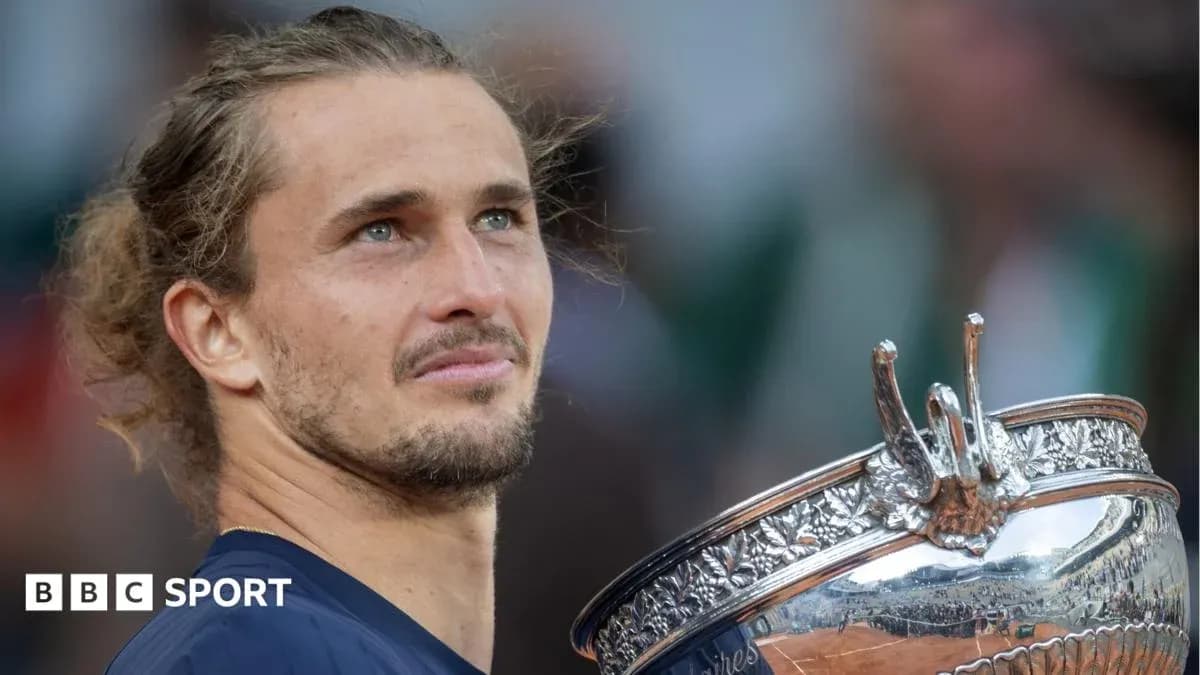
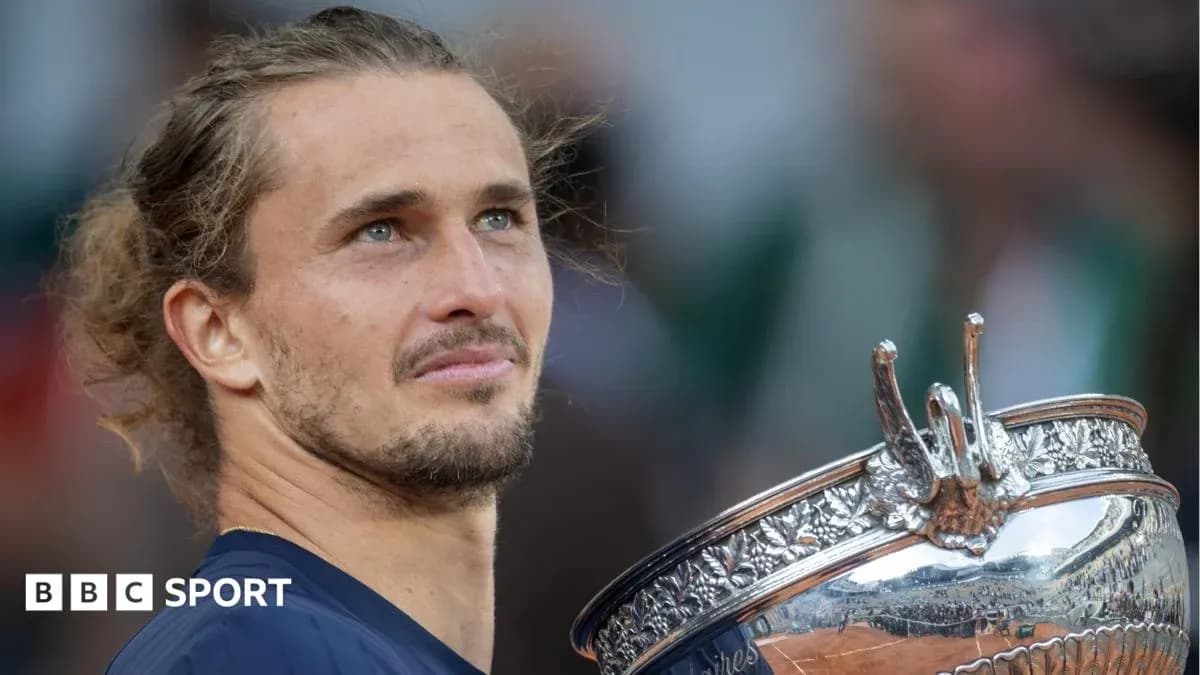
This time he didn’t. He tore through the deciding set 6-1, swinging freely, finally clutching the trophy that had eluded him for so long. The overdue first major was his.
A family project
Zverev’s success has always carried a family imprint. His father, Alex Zverev Sr, has been a constant presence in his coaching box, guiding him from prodigy to professional. His older brother Mischa, once a tour player himself, joined the team after retiring, adding another familiar voice to the corner.
The roles have flipped over the years. The boy who once sat by the side of the court as Mischa practised with Andy Murray is now the one filling stadiums, with his brother watching from the player’s box.
Zverev has often said the partnership with his father works precisely because they keep their distance away from the court. "Zero time together" off it, he has joked. His parents, both former tennis players, tried to nudge him into other sports – football, field hockey, anything that didn’t require them to coach their own son. They knew the grind. They knew the cost.
They did not succeed. Tennis claimed him, and now the family project has produced the French Open and US Open champion, and a Wimbledon finalist in the same season.
Grass, rivals and a looming three-way fight
Wimbledon may have brought only a runners-up plate, but it delivered some of Zverev’s finest tennis of the year. On Centre Court he went toe-to-toe with Jannik Sinner, attacking, bold, unafraid of the scoreboard. He lost in four sets, but not in spirit.
He will need that version of himself often. The numbers are stark: Zverev has lost 10 matches in a row to Sinner. Carlos Alcaraz, the other pillar of men’s tennis’ new order, has also found ways to stretch him to the limit. If all three arrive healthy at the start of 2027, the German’s task is clear – turn a two-man conversation into a three-way rivalry for the biggest prizes in the sport.
For a player who once seemed destined to watch others lift the trophies he craved, that challenge now looks like a privilege.
Allegations, investigations and a sport under scrutiny
Away from the court, the picture is far more fraught.
In October 2020, Zverev’s former partner Olga Sharypova accused him of physical violence and controlling behaviour. He denied the allegations and called them baseless. There were no criminal proceedings, but the ATP launched a major independent investigation, handled by third-party investigators.
In January 2023, the ATP announced that it had found "insufficient evidence to substantiate published allegations of abuse". The governing body cited a lack of reliable evidence and eyewitness reports, and pointed to conflicting statements from Sharypova, Zverev and other interviewees. The case did not lead to sanctions against the player.
The fallout changed the sport, though. The ATP appointed a director of safeguarding and, this year, rolled out a new safeguarding programme – a global framework designed to prevent and respond to abuse, from harassment and bullying to domestic violence and other forms of misconduct.
The controversy did not end there. In October 2023, a German court issued Zverev with a penalty order and a €450,000 fine for bodily harm against another ex-girlfriend, Brenda Patea. Zverev denied the claims and contested the order, triggering a public trial in Berlin in May 2024.
A week into the hearings, the court halted the proceedings before any verdict. It told the BBC that there had been a settlement between Zverev and Patea. "The decision is not a verdict and it is not a decision about guilt or innocence," the court stressed, noting that one decisive factor was the witness’s wish to end the trial. Patea has not commented publicly on the settlement.
The timing was striking. Zverev reached the French Open final on the same day the settlement was announced. Earlier in the tournament he had spoken of the trial as a chance to prove his innocence. Asked afterwards whether he regretted settling before a verdict, he was blunt.
"That's what dropping the case is. That is innocence," he said. "They're not going to drop the case if you're guilty at the end of the day. I don't know what translations you have, but that's what it means. Done. We move on. I never ever want to hear another question about the subject again. That goes out to everybody."
Crowds have not always obliged. He was heckled at the 2025 Australian Open and in Munich, the allegations shouted back at him from the stands as he tried to serve.
Flashpoints and temper
Zverev’s disciplinary record on court has also drawn headlines. In 2022, at the Mexican Open in Acapulco, he smashed his racquet repeatedly against the umpire’s chair after a doubles defeat, one swing coming perilously close to umpire Alessandro Germani’s foot.
He had been incensed by a line call in the deciding tie-break and let rip, swearing at the official and accusing him of "destroying the whole match". Tournament officials disqualified him for unsportsmanlike conduct. The ATP later handed him an eight-week suspended ban, to be activated if he committed another major offence – defined as disrespectful or aggressive behaviour, or verbal or physical abuse – within 12 months.
Zverev apologised, saying it was "difficult to put into words" how much he regretted his actions. He stayed within the rules over the next year, so the suspension was never enforced.
A complicated number one
So here he stands: French Open champion. US Open champion. Wimbledon finalist. Olympic gold medallist. World number one at 29, the oldest first-time occupant of the summit in more than 50 years.
He is also a player whose name has been bound up with allegations of abuse, court proceedings, settlements and a sport’s attempt to modernise its safeguarding structures. For some, his success is a testament to resilience and relentless work. For others, it is a troubling symbol of how elite performance can overshadow unresolved questions away from the court.
The numbers say Alexander Zverev is the man to beat in 2027. The noise around him suggests his reign will be judged on more than forehands, trophies and ranking points.