Alexander Zverev: From Nearly Man to World Number One
Alexander Zverev used to be the warning. The cautionary tale. The gifted prodigy who could conquer Masters events, win the ATP Finals, even stand on an Olympic podium, but freeze when a major title loomed into view.
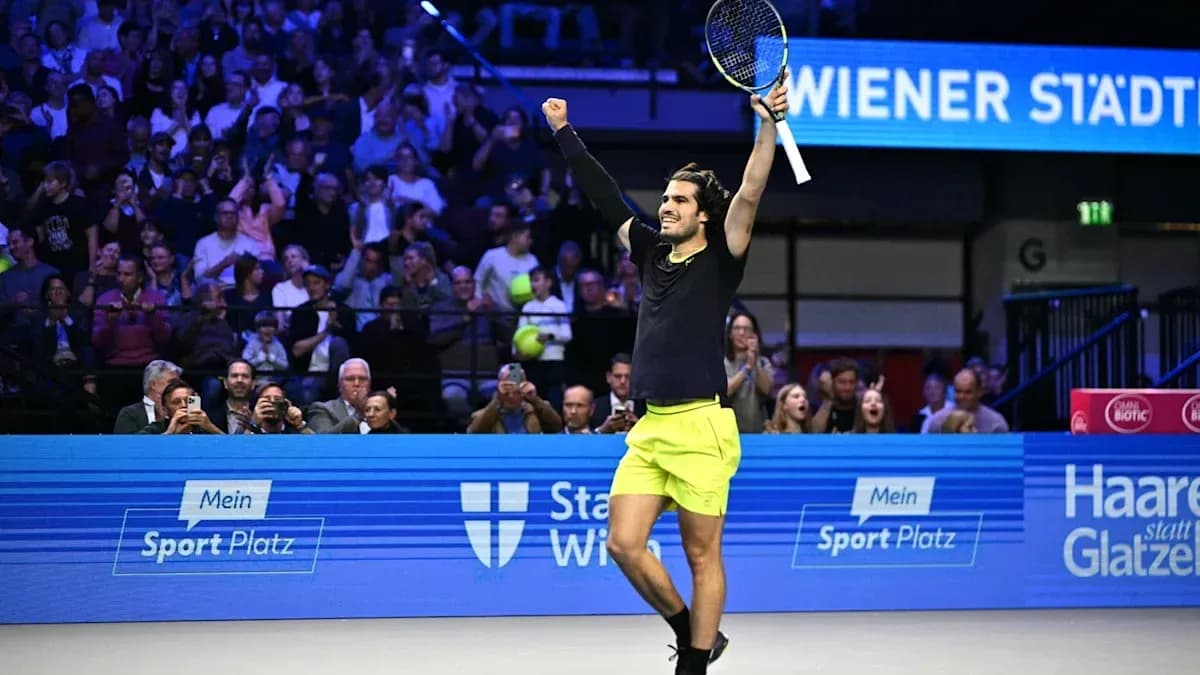
He ends 2026 as something very different: a two-time Grand Slam champion and the world number one. At 29, he has become the oldest man in more than half a century to climb to the top of the rankings for the first time, his French Open and US Open titles finally forcing the door that had refused to budge.
The journey has not been simple, nor clean. On court, it has been about risk, reinvention and a late-career surge. Off it, his rise has unfolded under the shadow of serious allegations and a sport grappling with how to respond.
From nearly man to major winner
For years, Zverev was the best player of his generation without a Slam. He had been world number two, a two-time ATP Finals champion, an Olympic gold medallist. He had played three Grand Slam finals. None had delivered the release he craved.
The most brutal wound came in New York in 2020. Two sets up on Dominic Thiem in the US Open final, he tightened, retreated, and watched the match slip away in a fifth-set tie-break, double faults puncturing his composure as Thiem cramped and somehow survived. That night hardened a narrative: Zverev could not play with the same freedom on the biggest stages that he showed on the ATP Tour.
He decided 2026 would not follow that script. The serve would be hit harder. The forehand would be taken earlier. He would live with the errors, chase winners, bring more variety into rallies. Safe tennis had got him to the door; it had not taken him through it.
The turning point, he believes, came long before the trophies. Ten days in Mallorca in July 2025 with Rafael Nadal and Toni Nadal altered his outlook. Zverev wanted not just drills, but perspective.
"I wanted to see and then hear a new vision of what tennis in their mind looks like – and how my tennis, in their mind, looks like," he said. Nadal had faced him for a decade. Now, from the other side of the net and the stands, he could tell Zverev exactly what it felt like to play him, where the fear lay, and where it didn’t.
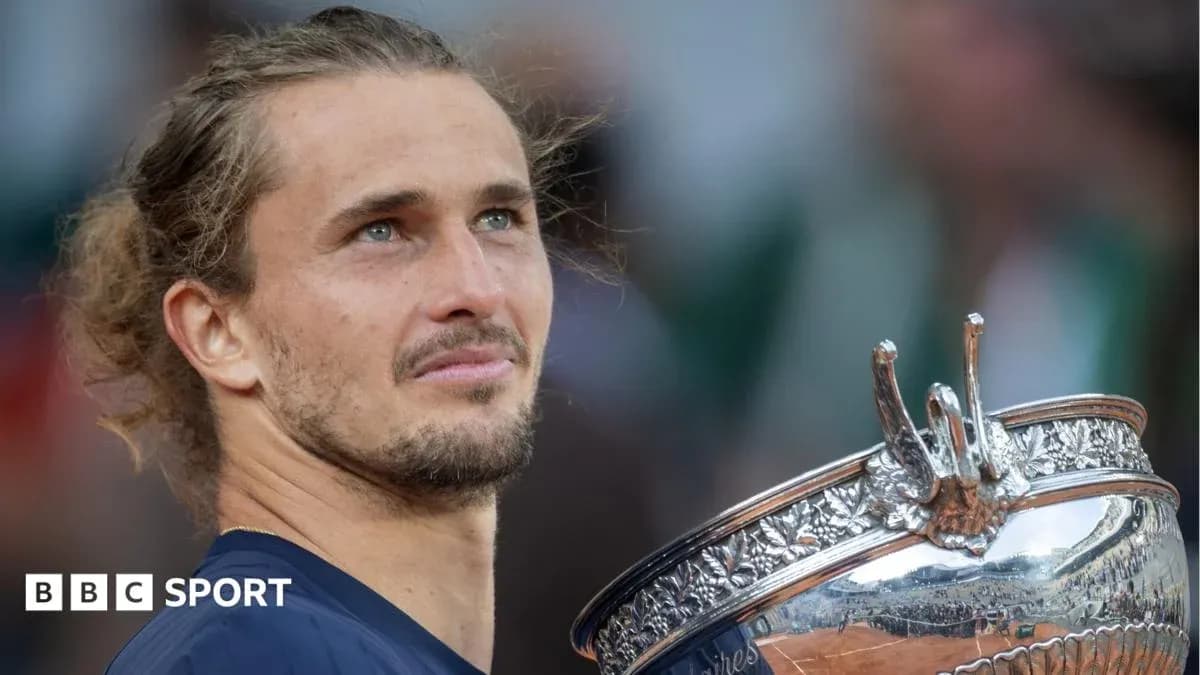
The new approach did not erase the nerves. In the French Open final against Flavio Cobolli this June, the familiar spectre appeared: cramp, tension, the body threatening to betray him again. This time he did not drift. He tore through the deciding set 6-1, finally clutching the Coupe des Mousquetaires that had long seemed destined for others.
That first major broke the dam. The US Open followed, confirming a season that turned a perennial question mark into a statistical certainty at the top of the sport.
A family game, a complicated man
Zverev’s ascent has always been a family project. His father, Alex Sr, has rarely been absent from the coaching box, a constant figure through the wild swings of his son’s career. Mischa Zverev, the older brother who once shared junior courts with Andy Murray while a toddler Alexander watched from the sidelines, is now part of the team after his own retirement.
The dynamic is unusual, and Zverev is frank about it. He has said his relationship with his father works because they spend "zero time together" away from the court. The boundaries are strict, the roles clearly defined.
"The big difference with my parents is that they never forced me to do anything," he has recalled. They pushed him towards other sports – football, field hockey – anything that meant they did not have to coach him themselves. Both parents had played professionally. They knew the grind. They knew the cost.
Layered on top of that family story is another, quieter thread: Zverev was diagnosed with type 1 diabetes at the age of four. Managing a chronic condition while building a career at the top of a physically brutal sport has demanded meticulous discipline and relentless work. His long-awaited breakthrough at Roland Garros felt, to many, like a reward for that stubborn persistence as much as for tactical tweaks or coaching changes.
Sinner, Alcaraz and the next fight
The numbers say Zverev is now the man to beat. The eye test at Wimbledon offered a more nuanced picture. On the grass, he played his best tennis of the year and still fell short.
He reached the final at the All England Club and went toe-to-toe with Jannik Sinner on Centre Court, attacking, stepping inside the baseline, taking chances in a way that would have been unthinkable in his more cautious years. It still wasn’t enough. Sinner beat him in four sets and extended a remarkable run: Zverev has now lost 10 straight matches to the Italian.
That streak hangs over the new number one. So does the presence of Carlos Alcaraz. If both Sinner and Alcaraz are fit at the start of 2027, Zverev’s task is clear. He must turn this season’s surge into a three-way rivalry at the majors, not a one-year peak.
He has the French and US titles, the Wimbledon runner-up plate, the ranking. What he does not yet have is consistent control over the two younger men who many still see as the sport’s long-term axis.
Allegations, investigations and a sport under scrutiny
Zverev’s status as the new standard-bearer for men’s tennis sits uneasily alongside the accusations that have followed him for much of the past decade.
In October 2020, his former partner Olga Sharypova accused him of physical violence and controlling behaviour. Zverev denied the allegations from the outset, calling them baseless. No legal case followed, but the ATP Tour launched a major independent investigation, handled by third-party investigators.
In January 2023, the ATP announced its conclusion: there was "insufficient evidence to substantiate published allegations of abuse". The governing body said that, based on a lack of reliable evidence and eyewitness reports, and conflicting statements from Sharypova, Zverev and others, it could not substantiate the claims.
The case forced the tour to look at its own structures. A director of safeguarding was appointed, and this year a new safeguarding programme came into force, promising a clear global framework to prevent and respond to abuse, including harassment, bullying, domestic violence and other forms of misconduct.
The scrutiny did not end there. In October 2023, a German court issued Zverev with a penalty order and a €450,000 fine for bodily harm against another ex-partner, Brenda Patea. Zverev denied the allegations and challenged the order, triggering a public trial in Berlin in May 2024.
A week into proceedings, the court halted the trial before any verdict. Officials told the BBC there had been a settlement between Zverev and Patea. "The decision is not a verdict and it is not a decision about guilt or innocence," the court said, adding that one decisive factor was the witness’s wish to end the trial. Patea has not publicly commented on the settlement.
The timing was striking. News of the settlement broke on the day Zverev reached the French Open final. Earlier in the tournament he had spoken of the trial as a chance to prove his innocence. Asked afterwards whether he regretted settling, he was adamant.
"That's what dropping the case is. That is innocence," he argued. "They're not going to drop the case if you're guilty at the end of the day. I don't know what translations you have, but that's what it means. Done. We move on. I never ever want to hear another question about the subject again. That goes out to everybody."
Crowds have not always obliged. He was heckled at the 2025 Australian Open and in Munich, reminders that public opinion does not follow legal definitions or governing-body reports.
Flashpoints and fault lines
Zverev’s relationship with the sport’s authorities has been strained in other ways. In Acapulco in 2022, after losing a doubles match at the Mexican Open, he smashed his racquet into the umpire’s chair four times, one swing coming close to the official’s foot. He swore at umpire Alessandro Germani, accused him of ruining the match, and was thrown out of the tournament for unsportsmanlike conduct.
The ATP later found him guilty of a "major offence" and handed down an eight-week suspended ban. The punishment would only be activated if he committed another offence of disrespectful or aggressive behaviour, or verbal or physical abuse, within the following 12 months. He did not, and the ban remained suspended. Zverev apologised, saying it was "difficult to put into words" how much he regretted the outburst.
All of this sits alongside the image of the disciplined professional who has managed diabetes since childhood, rebuilt his game after heartbreak, and now stands at the top of men’s tennis.
That contrast will not disappear. It will frame every big match he plays, every trophy he lifts, every rivalry he builds with Sinner and Alcaraz in the coming years.
He is no longer the nearly man. He is the world number one, the French and US Open champion, the player everyone has to go through. The question now is whether the sport – and the fans who fill its biggest stadiums – are willing to let him be only that.