Afghanistan Premier League: A New T20 Showcase for Afghan Talent
Afghanistan’s cricketers have lit up almost every major T20 league on the planet. IPL, CPL, PSL, ILT20, SA20, BBL – you name it, they’ve been there, often as game-changers. Now, at last, they are getting a global stage of their own.
The Afghanistan Cricket Board (ACB) will launch the Afghanistan Premier League (APL) on December 27, a fully franchised T20 tournament built on the IPL model and designed to be both a showcase and a springboard for Afghan talent.
A Home League, Built Abroad – For Now
There is one immediate twist. The inaugural edition will not be played in Afghanistan.
“The inaugural edition of the APL shall be hosted in the United Arab Emirates at ICC-approved venues,” the ACB has confirmed. The board has deliberately left the door open for change, stating that future editions “may be hosted at alternative venues outside of the UAE,” depending on how the league evolves and what is feasible.
For now, the UAE’s established infrastructure and familiarity with hosting major cricket events will provide the backdrop as Afghanistan’s own T20 brand takes shape.
Three Franchises Locked In, Two More to Come
Five franchises will contest the first season. Three are already signed, and their ownership tells its own story of how far Afghan cricket has travelled.
Two teams are in the hands of Indian-origin investors. Amit Kaushal, founder and chairman of AKCEL Group, has taken charge of the Kabul franchise, named Akcel United Kabul. From Dubai, Pankaj Chadha and Ashish Mehta of the Bullfrog business group – already involved in the Nepal Premier League with Pokhara Avengers – have secured the Kandahar side, Kandahar Warriors.
The third franchise has a distinctly personal Afghan connection. Afghan-American entrepreneur Shakaib Rahimi, a long-time backer of Afghan cricket, has bought the Balakh team, Balakh Zwanan, adding a diaspora dimension to the ownership group.
Talks for the remaining two franchises are ongoing. The ACB is in discussions with billionaire business figures from the United States and several Indian corporates, targeting deep-pocketed partners who can commit for the long haul. The plan is clear: start with five, but build with stability.
A Long-Term Play, Not a Quick Hit
To run and promote the league, the ACB has handed long-term rights to Cricket Ventures LLC-FZ, a UAE-based company working in joint venture with the MENA subsidiary of ITW Universe.
“When we signed the long-term partnership with the ACB, the brief was simple and ambitious: rebuild the APL as a professionally run, internationally visible T20 property that develops Afghan talent and gives investors a decade-long runway,” said Bhairav Shanth, Co Founder, ITW Universe.
This is not a pop-up tournament chasing a single lucrative season. It is being framed as an asset that must stand alongside established global leagues, with Afghan players at its heart.
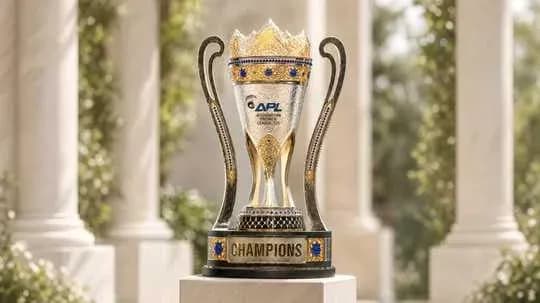
Shanth pointed to the week’s announcements in Dubai – the unveiling of the first three franchises, their identities, and the Koh-E-Zafar trophy – as the moment the project moved from concept to concrete.
“The trophy’s mountain motif is not decoration; it is the right metaphor for a cricket nation that has climbed through extraordinary circumstances,” he said, capturing the symbolism behind the league’s visual identity.
The Clock Is Ticking
The vision is bold. Now comes the hard part.
“What matters now is execution. Player registration opens 30 August. The inaugural draft is 27 September. The first ball is scheduled for 27 December,” Shanth outlined.
The timeline is tight. In less than four months, the organisers must finalise the remaining franchises, secure commercial partners, and lock in broadcast arrangements. On top of that sits the modern, non-negotiable demand: a fan experience that feels big-league, on-site and on-screen.
Between those dates, as Shanth put it, they must “lock remaining franchises, commercial partners, broadcast quality and a fan experience that matches the standard we are already applying to other Afghanistan-linked properties.”
The criteria are blunt and unforgiving. “Leagues succeed when owners see a real asset, players see a real pathway, and brands see a clean, high-attention platform. That is the standard we are holding the APL to.”
Afghanistan’s players have already proved they belong on the world’s biggest T20 stages. The question now is whether their own league can climb to the same height as the Koh-E-Zafar trophy’s mountain peak – and stay there.