Alex de Minaur's US Open Exit: A Call for Change
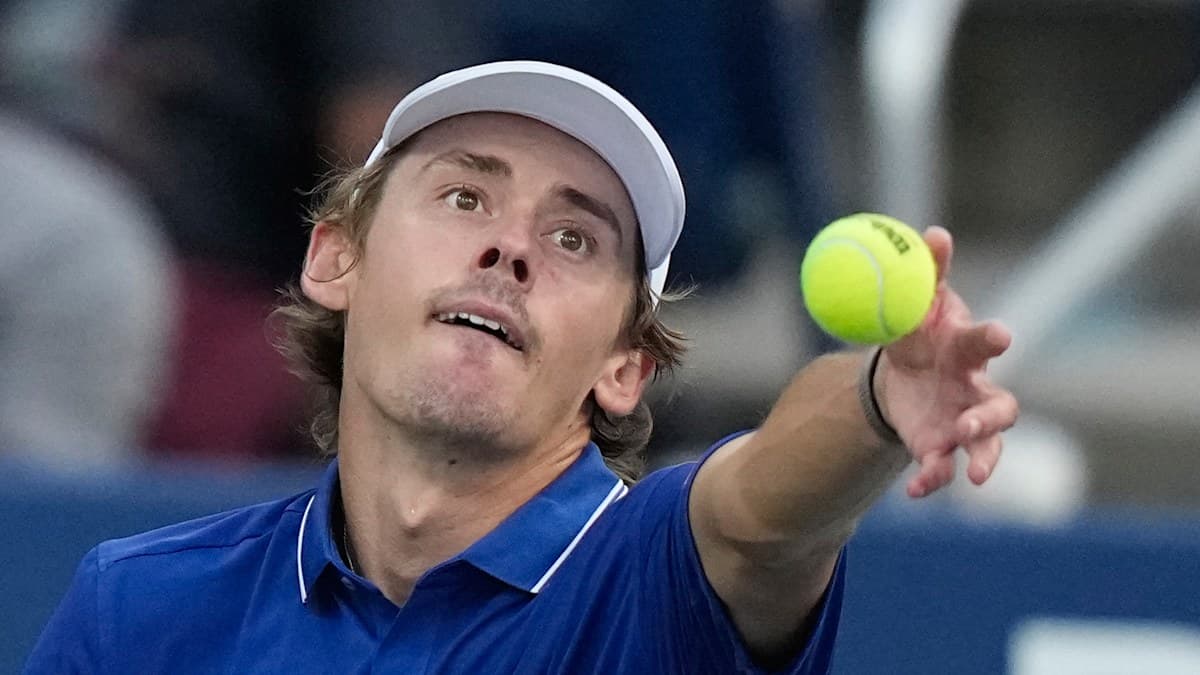
Alex de Minaur doesn’t reach for excuses. Not on this night, not after this loss.
The Australian world No.5 walked off Louis Armstrong Stadium looking more bewildered than broken, undone by a ragged performance and a sharp Botic van de Zandschulp, who swept him aside 6-4, 7-5, 6-2 in the US Open second round.
The head-to-head said de Minaur should have had this under control. Four wins from four against the Dutchman. Not once beaten. On paper, this was a match he handles. On court, he never really arrived.
A day late, a step slow
Backing up barely a day after his delayed first-round win over Italian qualifier Andrea Guerrieri, de Minaur looked like a man still stuck in yesterday. His timing deserted him. His usually relentless baseline game frayed at the edges.
The forehand, the shot that has underpinned his rise into the game’s elite, went missing in action. Routine balls flew long. Put-away chances died in the net or drifted metres beyond the baseline. The more he tried to hit through the court, the more the errors piled up.
“My level today wasn’t good enough. It’s pretty straightforward,” he said, speaking to AAP after the defeat.
“I gave myself every chance by being competitive, having a good mindset, a good attitude, but it was just one of those days where just the feeling of the ball on the strings wasn’t there.
“I was making a lot of errors, which is not really my normal game style. I can't really explain the reasoning of it, but just it felt like the more I tried, the more intensity, the more fired up I was getting, I just kept on making unforced errors.
“When those sort of things happen and the odd chance that you have, he comes out with some good tennis – it's just a recipe for a tough day at the office.”
The pressure finally told in the key moments. Van de Zandschulp didn’t dominate every rally, but he didn’t need to. He just had to be solid, to ask the question one more time. De Minaur kept answering with a misfire.
A season stuck in the middle
This wasn’t a one-off blip. It’s the latest chapter in a year that began with promise and has slowly tightened around de Minaur’s shoulders.
He reached a seventh grand slam quarterfinal at the Australian Open, a breakthrough that seemed to confirm his place among the sport’s heavyweights. Since then, the majors have told a different story: third-round exit at Roland-Garros, fourth round at Wimbledon, now out in the second round in New York.
Outside the slams, the pattern has been just as troubling. Early exits on the ATP Tour, tournaments slipping by before he can settle into a rhythm. For a player who built his reputation on consistency and grit, the inconsistency stings.
That form line has sparked a louder question in the background: is it time for a change in his coaching box?
De Minaur has worked with Adolfo Gutierrez for nearly two decades, dating back to his move to Spain as a nine-year-old. In a sport where coaching partnerships often burn fast and bright, theirs has been unusually enduring.
During commentary for Nine, Jelena Dokic acknowledged the whispers.
She said she wasn’t surprised some were calling for the pair to split, but pointed out how rare such a long, successful partnership is in modern tennis.
“Only Alex knows what he needs … a lot of players will change coaches quickly, especially if they feel like the results are not there,” she said.
“That’s up to him to make those decisions and what he wants to do. Let’s not forget Adolfo has gotten him to such a high point in his career – to the top five in the world.”
The weight of perfection
The tactical questions are one thing. The mental toll is another.
De Minaur’s anguish after his Wimbledon exit was hard to miss. Eyes glassy, voice tight, he looked like a player wrestling with more than just a bad day at the office. Dokic believes his perfectionism is starting to cut both ways.
“We know his mindset, we know what a perfectionist he is. He wants to get to the top and maybe not doing that in the last two years has affected him,” she said.
“For him, wins have become almost a relief and not so much satisfaction and joy, and that's hard. Losses have almost been end-of-the-world type things. He's been really, really hard on himself. I think he has to give himself a bit more of a pat on the back and a bit more credit.”
“Whatever he decides to do with coaching, the way that he goes about things and the mindset around it is going to have to change. It's very hard to keep this up, to constantly expect from yourself to win. That's been an issue for him.”
“When you've got the constant pressure of feeling like you want to win and get to the top, and maybe that's not quite happening the way you want to, you can start to lose motivation, you can get really flat.”
I think that that’s what’s happened – he’s lost a little bit of that mojo to be out there.
The schedule may be part of the problem too. Dokic suggested he might need to reassess his playing load, to give himself more space to reset rather than grinding week after week in search of form that refuses to stick.
Calm words, storm underneath
For now, de Minaur is trying to keep the noise at arm’s length. His message after the loss was measured, almost dispassionate.
“Obviously would have loved to do better, as any competitor would, but it’s what happens in this sort of sport. Everyone loses matches,” he said.
“Everyone is losing matches that maybe they would love to have back.
“… It’s one I would love to have back, but we move forward and it’s not the end of the world.”
He’s right, of course. One bad night in New York does not define a career. But context matters. The defeats are starting to link together, forming a pattern he can’t ignore forever.
As he packs his bags, one Australian remains standing in the singles draws: Dane Sweeny, who earlier stunned Italian No.13 seed Lorenzo Musetti to reach the third round. For once, de Minaur isn’t the last Aussie hope at a slam.
The question now isn’t whether Alex de Minaur can fight. He’s built an entire career on that. The question is whether he’s ready to change – coach, schedule, mindset – to make sure nights like this don’t become his new normal.