Angel Reese and Caitlin Clark: A Rivalry Transformed
For a moment, it looked like the rivalry might walk right into the shot.
Angel Reese was mid-interview, cameras rolling, when Caitlin Clark accidentally drifted into frame, cutting between Reese and the reporter. Clark realized it instantly. “Sorry,” she said, moving out of the way. Reese didn’t flinch. No eye roll, no glare. Just a quiet extension of her hand. Clark slapped it with a quick, easy high five, and kept going.
It lasted a couple of seconds. It said everything about where this is headed.
From AAU gyms to a national flashpoint
Long before sold-out WNBA arenas, primetime tipoffs and breathless TV debate shows, Clark and Reese were just two teenagers trying to own the same court.
They ran into each other on the AAU circuit, most notably in the 2019 Nike EYBL championship game. Reese powered Team Takeover with 18 points and 11 rebounds. Clark answered for All Iowa Attack with 22 points and seven assists. It was raw, high-level, competitive basketball — the kind of game that usually disappears into the memory of those in the gym.
This one didn’t. It became the first chapter.
College turned their matchup into must-see television. Reese at Maryland. Clark at Iowa. Then came the night that blew everything wide open: the 2023 NCAA championship game.
LSU 102, Iowa 85. A title for Reese. A stage big enough to turn a gesture into a cultural lightning rod.
As the clock wound down, Reese followed Clark across the floor, flashing the “you can’t see me” hand wave and pointing to her ring finger. Cameras caught it from every angle. The clip ricocheted across social media and sports talk. Reese was painted as the villain, Clark the wronged star, their battle twisted into a referendum on trash talk, race, gender and how America consumes women’s sports.
Clark wanted no part of that framing.
“I don’t think Angel should be criticized at all,” she said afterward, reminding everyone she had used the same gesture earlier in the tournament. She called it what players knew it to be: part of the game, part of the show, part of what makes basketball fun.
The rivalry didn’t cool. It just waited.
One apiece on college basketball’s biggest stage
A year later, in the 2024 Elite Eight, they met again with a Final Four berth on the line. This time, Clark detonated.
Forty-one points. Twelve assists. Iowa 94, LSU 87.
Reese didn’t shrink. She pounded out 17 points and 20 rebounds, fighting on the glass until the final seconds. When it ended, their college ledger on the sport’s biggest stage stood even: Reese with the national title win, Clark with the revenge performance that sent Iowa through.
Two games, two different winners, one shared truth: when they’re on opposite sides, everything feels bigger.
Rivalry goes pro
The WNBA only amplified it.
Clark went No. 1 overall to the Indiana Fever in the 2024 draft. Reese landed at No. 7. Every meeting between their teams instantly became appointment viewing. Every foul, every stare, every clipped reaction was slowed down, zoomed in and dissected as supposed proof that they couldn’t stand each other.
In their second pro matchup, Reese caught Clark in the head while trying to block a shot. Officials ruled it a flagrant foul. The clip looped across platforms, fed into talk shows and timelines.
Clark refused to pour gasoline on it, calling it “just part of basketball.” Reese echoed the sentiment, labeling it a basketball play and noting, accurately, that people would replay it again and again.
Soon enough, the script flipped.
At the 2024 WNBA All-Star Game, they finally shared a jersey. Clark, the rookie guard with the limitless range and passing vision. Reese, the rookie forward who devours rebounds and lives in the paint. Together on Team WNBA, they helped take down the U.S. Olympic squad 117-109.
Clark handed out 10 assists. Reese became the first rookie ever to post an All-Star double-double with 12 points and 11 rebounds. At one point, Clark slipped a pass to Reese for a layup. Another high five followed. This time, it wasn’t a fleeting moment in the background. It was a glimpse of what they might look like on the same side when the stakes were real.
The truce didn’t last long.
Opening night of the 2025 WNBA season, Clark hammered Reese with a hard foul that was upgraded to a flagrant 1. Reese got up quickly and went straight at her before Aliyah Boston stepped in. The video blew up, again. The commentary machine roared, again.
And again, both tried to pull the temperature down. Clark insisted there was nothing malicious in it. Reese summed it up with two familiar words: “Basketball play.”
That contradiction sits at the heart of their story. On the floor, they attack each other like enemies. Off it, they keep repeating the same message: it’s not personal. Reese has said she loves that they can go at each other and “still be cool after.” Clark has been clear they’re not best friends, but just as clear that there is real respect.
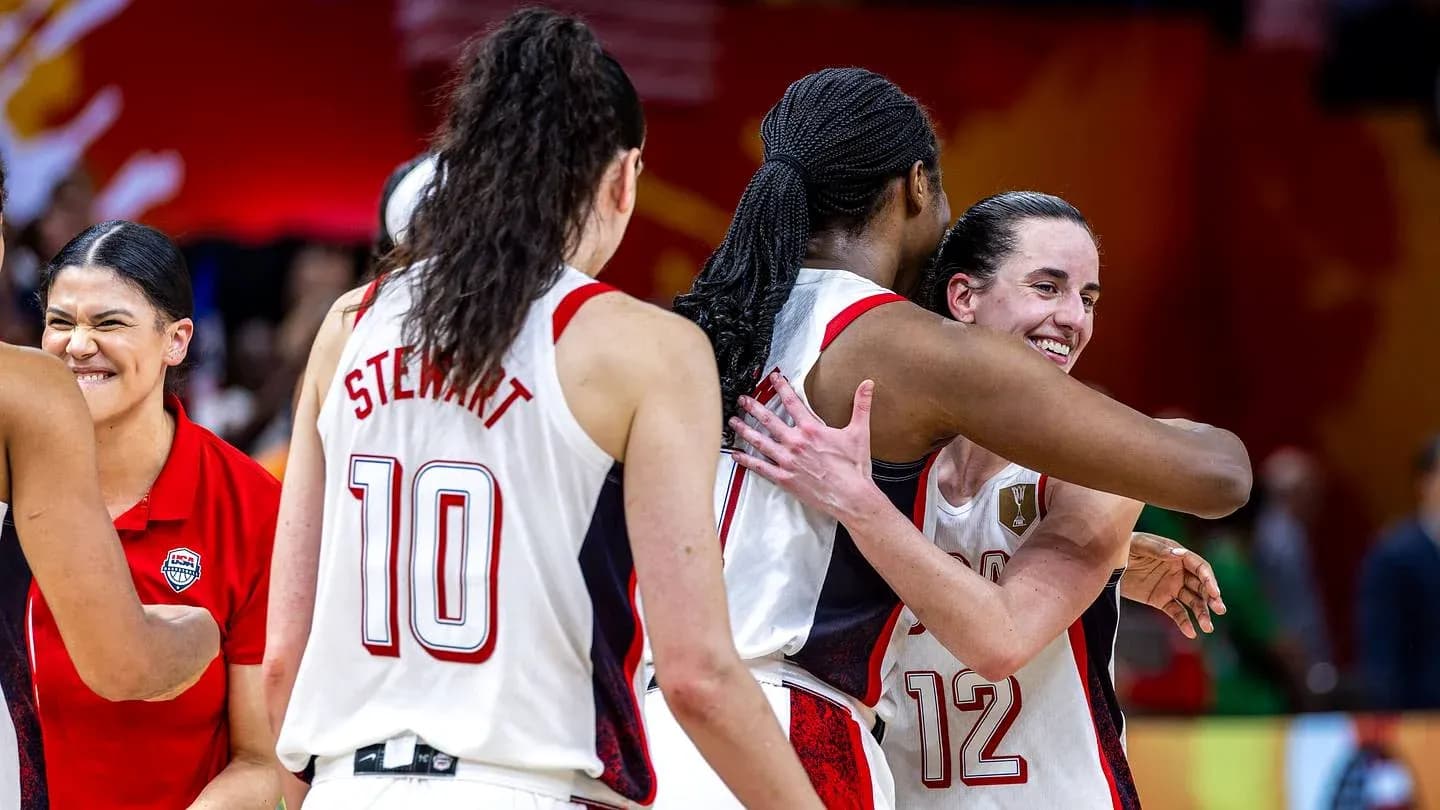
Now, with USA across their chests, that respect has space to breathe.
Learning how to win together
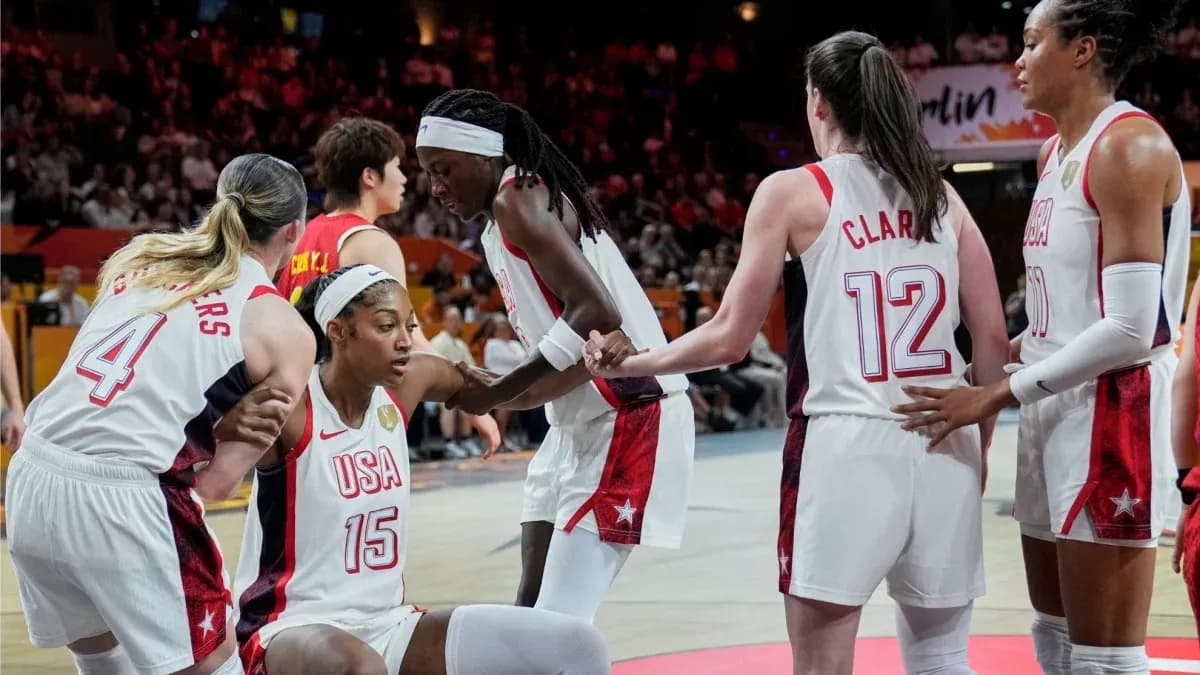
Their joint arrival on the senior national team has turned a combustible rivalry into a fascinating partnership.
At the World Cup qualifying tournament in Puerto Rico, Clark fed Reese at the rim for a basket, a small but telling sequence. The guard who stretches defenses to the logo. The forward who punishes them inside. Two very different games starting to click into one.
In Berlin, at the World Cup, that blend is helping keep Team USA perfect.
Clark opened the tournament by carving up China with 14 points and 11 assists, running the offense with the same audacity she showed in college. Reese, undersized against a bigger frontcourt, dug in and ripped down nine rebounds, doing the dirty work that doesn’t always make highlight reels but wins tournaments.
Against Czechia, the roles shifted slightly, the impact didn’t. Reese poured in 13 points. Clark added nine points and seven assists in a 105-64 rout that looked exactly like what USA Basketball has always demanded: stars willing to fit into something larger, even when the cameras are trained on them.
That’s the quiet evolution here. Not just two rivals sharing a court, but two careers bending toward a shared goal — gold — without losing the edge that made their clashes unmissable.
The viral clips will keep coming. So will the hard fouls, the staredowns, the debates about who owns the moment. But as Clark and Reese keep stacking assists and rebounds instead of storylines, a different question starts to form.
If this is what their rivalry looks like when it finally pulls in the same direction, how far can it carry Team USA?