Argentina Football Association Faces Crisis Amid Legal Turmoil
The Argentine Football Association is living through the kind of crisis that usually belongs to its rivals. This time, the chaos is entirely self‑inflicted.
At the centre of it all stands Claudio Tapia. The AFA president is fighting serious money-laundering allegations in a legal battle that has spilled out of the courts and into every corridor of the federation. What began as a case against a man has become a cloud over an institution, paralysing basic operations and dragging the national team into the storm.
You can see the impact in the smallest details. Argentina’s upcoming friendlies against Burkina Faso, Bolivia and Benin were only confirmed yesterday, after weeks of hesitation and delay. For the world champions, used to meticulous planning and global demand, that kind of last‑minute scramble is a jarring sign of how disorganised things have become.
The money row cuts even deeper. According to La Gazzetta dello Sport, the World Cup bonuses promised to the players still have not been paid. Not months late. Still unpaid. For a group that delivered a World Cup, back-to-back Copa América titles and another run to a World Cup final, the delay feels less like an administrative hiccup and more like a betrayal.
Inside the dressing room, that failure has left scars. Senior players, the faces of this golden era, are said to feel disrespected by a federation that has cashed in on their success but dragged its feet when it came time to honour its word. Trust, once broken at this level, is hard to repair.
Then comes the Messi question, which never really goes away in Argentina. Lionel Messi has already stepped away from international football, but the AFA is pushing to stage a grand farewell, a final act worthy of the greatest player in the country’s history. For now, he is not convinced. The proposals on the table have not persuaded him to sign off on a goodbye that would instantly become part of national folklore.
That hesitation matters. It reflects a wider mood around the Selección. The atmosphere is heavy, the joy that defined Argentina’s recent run has thinned, and the incentive for established stars to cross the Atlantic for low-profile friendlies has plummeted. With Burkina Faso, Bolivia and Benin on the schedule, the sense of occasion is missing, replaced by a feeling that this window may be more obligation than opportunity.
Inside the technical area, the uncertainty is even more profound.
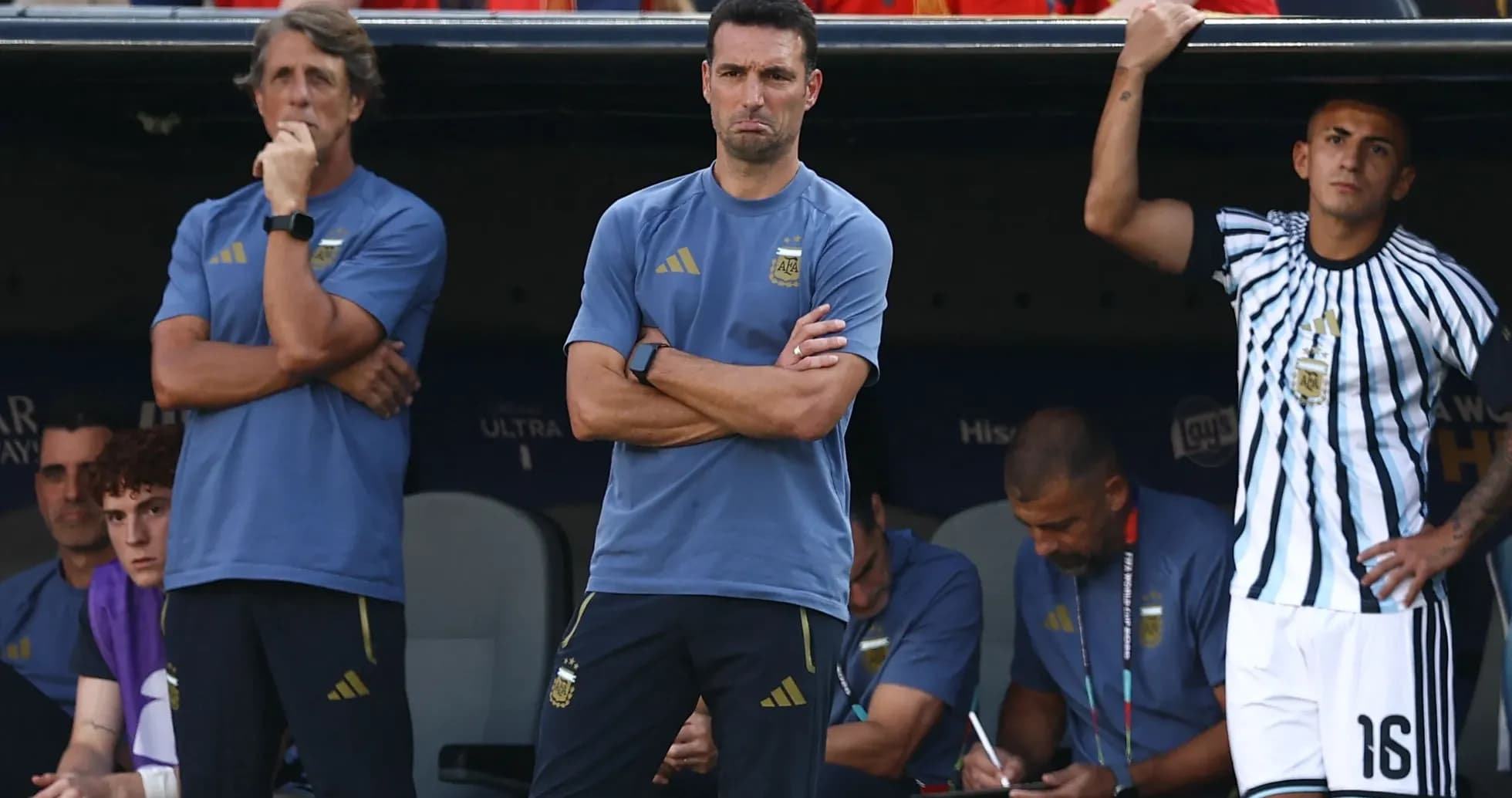
Lionel Scaloni, the architect of Argentina’s modern renaissance, is widely believed to be approaching the end of his cycle. The coach who delivered Copa América glory, a World Cup, another Copa América, and a place in this summer’s World Cup final now reportedly feels his time with the national team is effectively over. He has no intention of extending his contract beyond December 2026. In practical terms, Argentina know the expiry date of their most successful modern era.
That belief is not his alone. Much of Scaloni’s trusted staff are thought to share his outlook. Walter Samuel, the former Inter and Roma defender who has become a key figure in the backroom team, is among those expected to follow him out when the curtain finally falls. The continuity that underpinned Argentina’s resurgence suddenly looks fragile.
All of this seeps into the players’ thinking. The marquee names are said to be far from enthusiastic about flying to South America for the upcoming break, especially given the modest stature of the opposition and the noise surrounding the federation. For veterans who have won everything, the idea of stepping into an unsettled camp, with bonuses unpaid and leadership under legal scrutiny, is hardly appealing.
Scaloni may be left with little choice. Confronted with a frustrated squad, a fractured relationship with the federation and a calendar that offers more risk than reward, he could rest several of his biggest stars and hand minutes to fringe players instead. That would buy time for the AFA to try to restore order, but it would also underline how far this once-united project has drifted from its peak.
Argentina remain world champions on paper. On the ground, they are a team trying to defend a legacy while the institution around them threatens to unravel. The next international break may not define their future, but it will offer a stark glimpse of what this era looks like when the glow of victory no longer hides the cracks.