Arsenal Weigh William Pacho Move Amid Wage Constraints
Arsenal’s summer business was supposed to close the book on defensive uncertainty. Illan Meslier on a free. Piero Hincapie for £34.5m. Christos Tzolis at £34.12m. Bruno Guimaraes for £75m. Ezri Konsa at £51m. Big fees, targeted upgrades, a squad pushed closer to Mikel Arteta’s ideal.
Yet the market never really sleeps. And William Pacho’s name refuses to leave the margins of Arsenal’s plans.
Arsenal stacked at the back – on paper
On the face of it, centre-back is the last place Arsenal need to spend. Arteta can already turn to William Saliba, Gabriel Magalhaes, Ben White, Jurrien Timber, Riccardo Calafiori, Piero Hincapie, Ezri Konsa, Cristhian Mosquera and even Myles Lewis-Skelly if needed. It is a defensive group built for a 60-game season and multiple competitions.
That depth did not stop Arsenal from keeping tabs on Pacho.
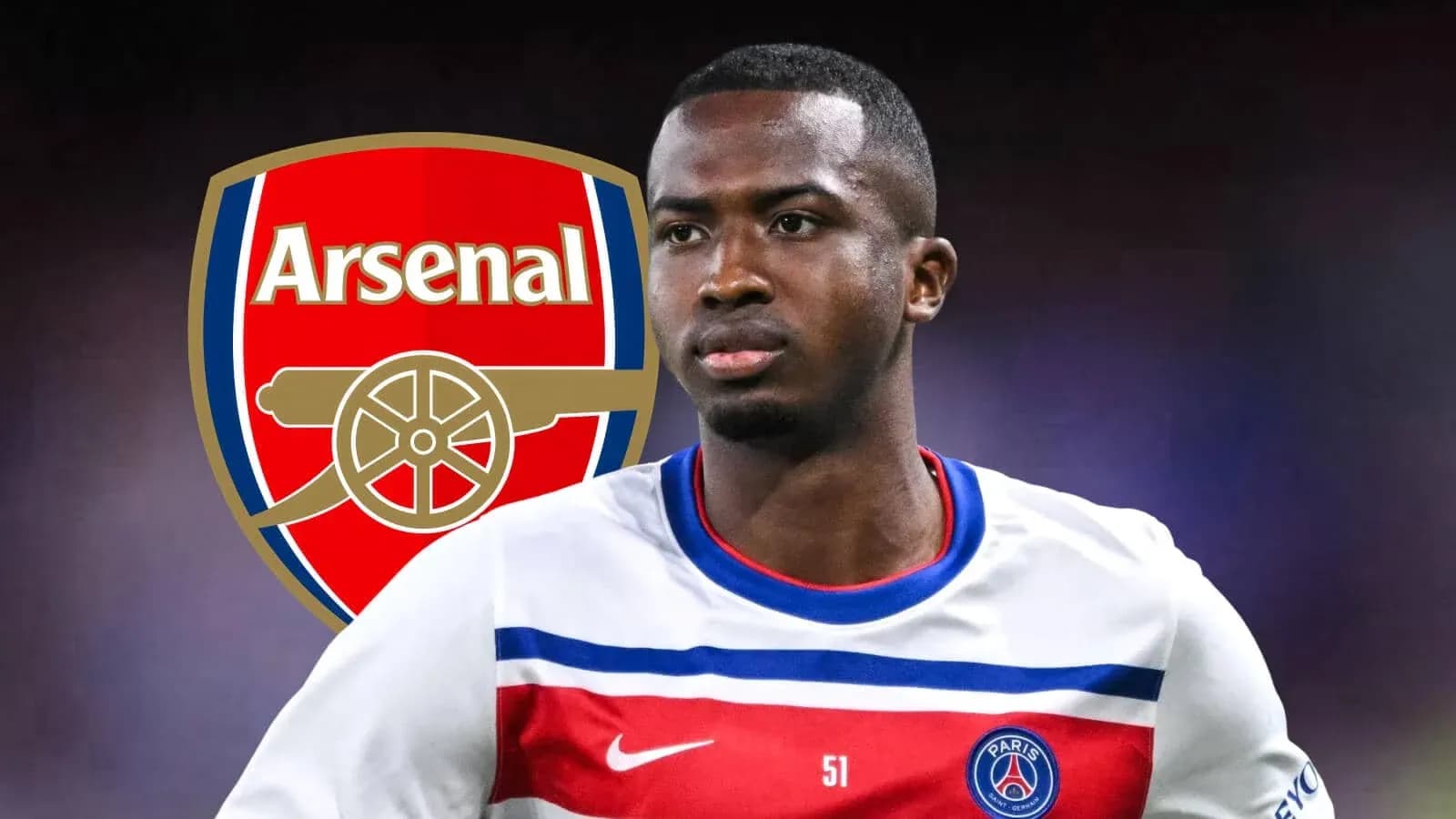
The PSG defender, who recently renewed his contract at the Parc des Princes, is still firmly on the radar, according to Bolavip. The report claims “the Ecuadorian player still has a market and has entered the plans of teams like Arsenal and Manchester City”.
In other words, this is not a dead file. It is an open one.
The salary wall
The sticking point is not the fee. It is the wage structure.
Pacho earns around €11m per year in Paris. Any move to the Emirates would require Arsenal to go above that number to tempt him away from a club that can pay almost without blinking.
Bolavip reports that Arsenal are “open to making a move” and that “the two giants in England would offer him a very lucrative salary” to persuade the former Eintracht Frankfurt defender to switch. For Manchester City, those figures “wouldn’t be a problem”.
For Arsenal, they would be a test of principle.
The club’s internal ceiling in defence is clear: Saliba sits at the top on €14m per year, and only five players in the entire squad earn more than €11m. To bring Pacho in above, or even level with, that tier would mean bending a wage structure that has been carefully rebuilt after the post-Wenger drift.
So Arsenal’s interest is real, but complicated. City’s is real, and far simpler.
Missed chance on Barcola still stings
While Arsenal weigh whether Pacho is worth pushing their limits, another decision from the summer continues to echo around the Premier League.
Jamie Carragher cannot quite believe Arsenal let Bradley Barcola slip away.
The PSG winger ended up at Liverpool, and on The Overlap, the former Liverpool defender admitted he was stunned Arsenal did not go harder for him.
“For me with Arsenal, left wing has always felt like where the drop is compared to [Bukayo] Saka, [Martin] Odegaard, [Kai] Havertz,” Carragher said. He acknowledged that “the new kid [Christos] Tzolis has made a decent start”, but as the Barcola saga dragged on and Arsenal failed to land Vinicius Junior or Julian Alvarez, he kept coming back to the same thought: was Barcola not the obvious move?
Inside the club, that position had already been under scrutiny. Arsenal chased attacking options all summer. Morgan Rogers, Vinicius Junior and Alvarez were all seriously considered, but in the end Arteta and sporting director Andrea Berta chose not to overpay for what they viewed as second-choice solutions.
They backed what they had. They backed Tzolis. They backed internal growth.
Ian Wright, though, sided with Carragher on Barcola.
“That is the player Arsenal need to sign,” the club legend argued. Barcola, he said, arrives from “a brilliant PSG side” and steps into a Liverpool team where “he is that superstar and will bring them [his teammates] up there”.
“That’s what we needed,” Wright continued. Morgan Rogers, he felt, could also have offered something, and he “would have been happy with that”. But Barcola was available. Arsenal watched. Liverpool moved.
A club at a crossroads
So Arsenal stand in a familiar modern place: ambitious, wealthy, but still selective to the point of self-restraint.
They have built a squad that can contend, with quality over quantity as the guiding line. They refused to be dragged into auctions for forwards they did not fully believe in. They may now refuse to shatter their wage structure for a centre-back they admire but do not urgently need.
City, by contrast, can go to €11m and beyond for Pacho without blinking. Liverpool have already taken the plunge on Barcola.
Arsenal’s choices are more nuanced, more calculated, and increasingly high-stakes. If Pacho ends up in Manchester and Barcola explodes at Anfield, how long can Arsenal keep walking this tightrope between financial discipline and the ruthless opportunism that defines champions?