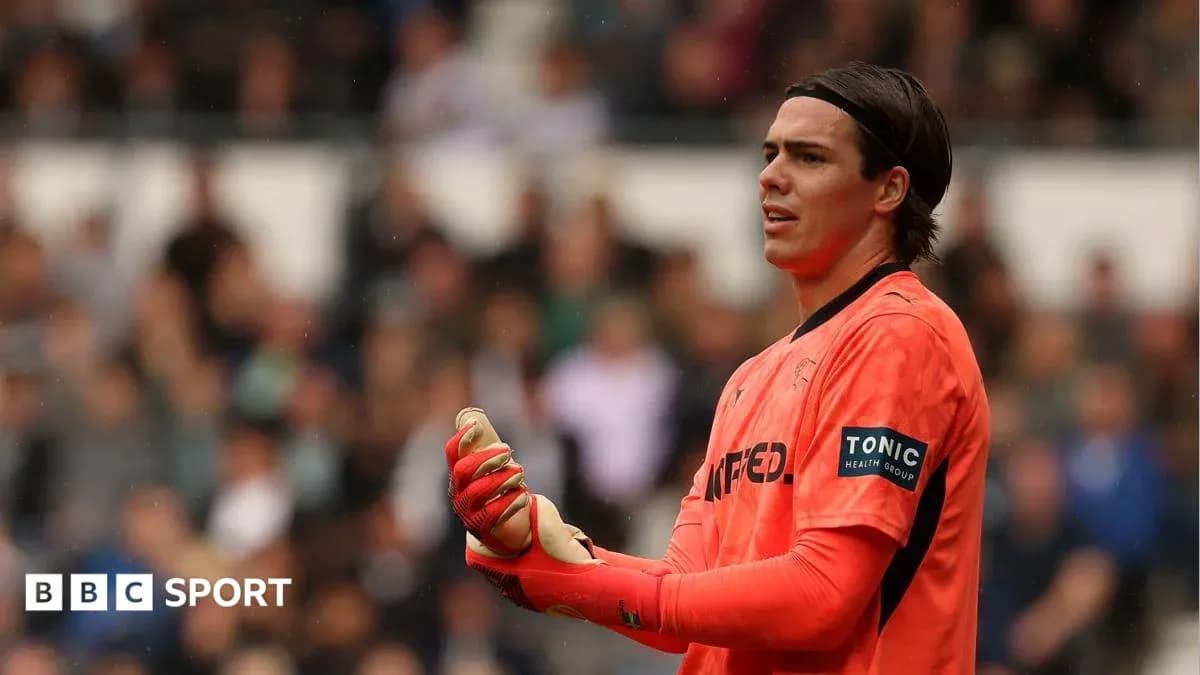

Barcelona vs Real Madrid: The Carlos Espí Transfer Dilemma
Barcelona weighed the numbers. Real Madrid took the risk.
In a summer obsessed with goals and balance sheets, Carlos Espí became the latest fault line between Spain’s two giants. Barcelona studied him, discussed him, parked him. Madrid moved.
A €25m question Barcelona wouldn’t answer
Inside Barcelona’s offices, the brief was clear: replace the 39 goals lost with the departures of Robert Lewandowski and Ferran Torres. They wanted a decisive striker, someone to bridge the gap until a longer-term structure settled under Hansi Flick.
Carlos Espí was on the table.
The former Valencia forward, then at Levante, had been tracked during the window. Sporting director Deco liked what he saw: a promising striker, room to grow, a profile that fit. On a purely footballing level, he ticked boxes.
Then the release clause landed on the desk. €25 million.
For a player who would not start ahead of the current pecking order, it became a financial decision rather than a sporting one. As journalist Siqui Rodríguez revealed on “Què T’hi Jugues”, Barça’s verdict was blunt: good player, wrong price, wrong role.
“Carlos Espí was offered to Barcelona, who consider him a good player. But they rejected him, for reasons including their unwillingness to pay 25 million euros for a player who would not be a starter,” Rodríguez explained.
The club, boxed in by their own economic limits, refused to make what they saw as a luxury bet on a backup.
From Julián Álvarez dream to internal patchwork
The rejection of Espí didn’t come in isolation. It came after the collapse of Plan A.
Barcelona had set their sights high. Julián Álvarez was the marquee target, with the idea of pairing him with another effective striker to cover Lewandowski and Torres’ combined 39 goals from last season. It was an ambitious rebuild of the frontline.
Atlético Madrid slammed that door shut. No deal. No marquee.
With the market short on pure No 9s and prices spiralling, Flick and Deco changed course. They stepped away from the big-money roll of the dice and turned inward.
Raphinha, a winger by trade, became a makeshift centre-forward option. Gordon, Adeyemi and Dani Olmo were all floated as flexible solutions in the same central role, at least until January. It was less about finding a star and more about surviving with what they had.
The real gamble, as it turned out, came from a different shelf.
The €1.5m punt: Hamza Abdelkarim
If Espí at €25m felt too dangerous, Barça looked for a risk they could stomach.
They found it in Hamza Abdelkarim.
Rodríguez summed up the thinking: “The gamble is on Hamza Abdelkarim, he cost 1.5 million euros, he is young, and they believe he can be an alternative option, a decisive striker. A gamble worth 1.5 million euros is reasonable, whereas a gamble worth 25 million euros is more dangerous.”
Sixteen times cheaper than Espí. Young. Potentially decisive. Crucially, a mistake the club could afford if it went wrong.
Barcelona bet on the smaller number, trusting that structure, coaching and internal versatility would cover the rest until the winter window. On paper, the logic holds. On the pitch, time will judge it.
Madrid smell hesitation – and strike
Across the divide, Real Madrid saw something else: opportunity.
With Gonzalo heading to the Premier League, the champions needed a replacement striker. Not a long-term project, not a theoretical option. A real body, right now, who could impact games from the bench.
While Barcelona hesitated over price and role, Madrid acted. They moved for Espí in a swift operation, meeting the clause and closing the deal with minimal fuss. The same player Barça had deemed too expensive for a non-starter became exactly what Madrid wanted: a decisive squad striker.
The response from Espí was immediate.
He came off the bench in his first two matches, easing into the rhythm of the team. Then came Espanyol. Ten minutes after coming on, in the 90th minute, he struck the winner. A classic Madrid script: late drama, new signing, three points.
A player Barcelona had passed on for €25m was now delivering decisive moments in white.
A gamble lost before it was taken?
Barcelona’s stance remains understandable on one level. Under financial pressure, they chose caution. They refused to sink €25m into a player Flick would not start. They spread the responsibility for goals across Raphinha, Gordon, Adeyemi, Dani Olmo, and a €1.5m flyer on Hamza Abdelkarim.
Madrid, with a clearer runway and a more flexible financial landscape, did the opposite. They paid the clause, accepted Espí’s role as an impact option, and trusted that decisive cameos would justify the outlay.
Early signs suggest they may have stolen a march. Espí is already deciding games. Barcelona are still stitching together a temporary attack.
The numbers will be revisited at season’s end. Was €25m for Espí really too steep, or did Barcelona talk themselves out of a striker who could have tilted tight matches their way?