BCCI's Dilemma at Asian Games: To Stay or Not to Stay
In Aichi-Nagoya this September, India’s cricketers may find themselves living a very different Games life from the rest of the country’s athletes.
If the BCCI decides its men’s and women’s teams will not stay in the official Asian Games hotels, the board will have to run its own mini-operations centre in Japan – booking rooms, arranging meals, sorting local transport and guaranteeing players reach the ground on time. Every last detail, from breakfast to bus timings, would be on the BCCI’s tab and conscience.
The Indian Olympic Association will not step in to create a parallel system for cricket.
IOA draws a clear line
IOA CEO Raghuram Iyer has left the choice squarely with the board. Speaking to TOI, he underlined that the BCCI is free to opt out of the organisers’ hotels if it believes those arrangements don’t suit its cricketers, but any such move comes with full logistical responsibility.
His priority, he stressed, is the entire Indian contingent across 36 sports, not a bespoke bubble for one discipline.
“BCCI CEO Hemang Amin got in touch with us, and we had a fruitful discussion. They are contemplating sending an advance team to Japan to assess the facilities. The IOA is completely fine with that,” Iyer said. Once that reconnaissance is done, the BCCI can either accept the official accommodation or build its own cocoon.
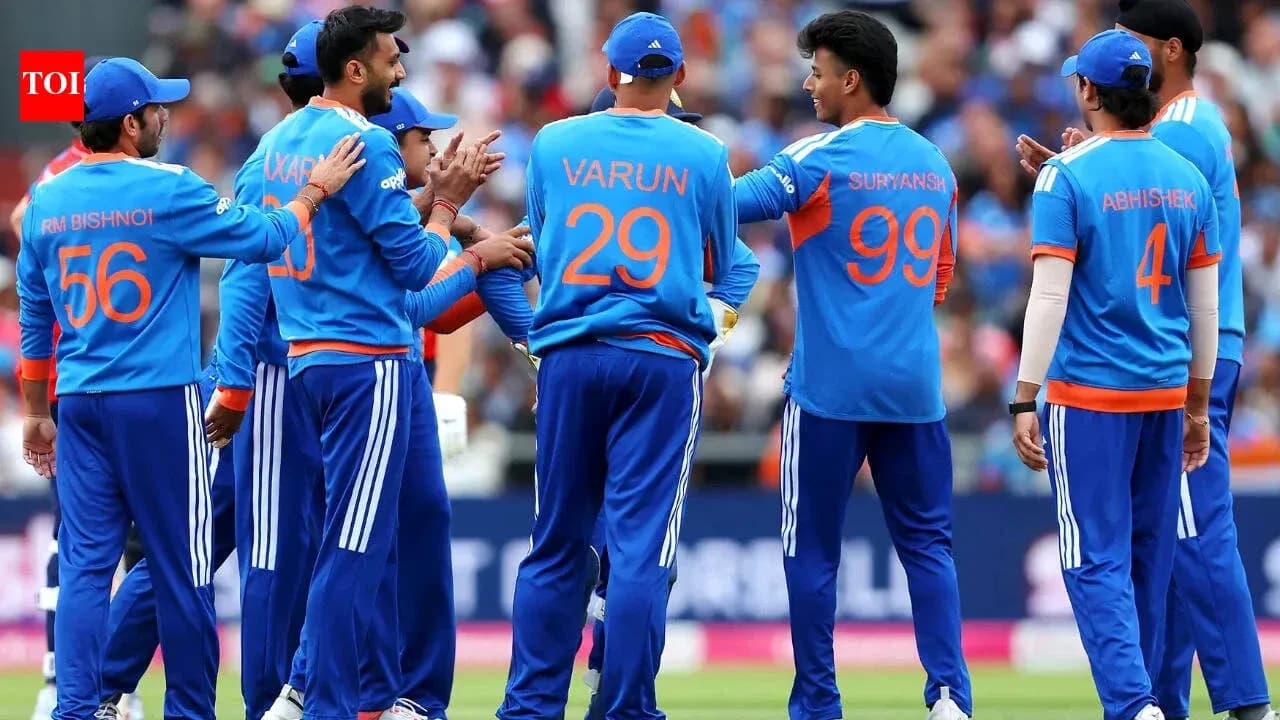
For now, the organisers have a clear plan. The men’s team has been allotted the three-star APA Hotel Nagoya Ekimae. The women’s side, led by Harmanpreet Kaur, is down to stay at the four-star Meitetsu Grand Hotel. Both properties meet the event’s standards, but they sit a tier below the five-star comfort India’s cricketers usually enjoy on tour.
Rooms will be on a twin-sharing basis. That, as much as the star rating, is understood to be a sticking point.
Tight turnarounds, tighter logistics
The women’s team faces the first real test of this arrangement. They fly back from the Asia Cup in Dubai on September 13 and are due to leave for Nagoya the very next day. There is no easing in. India enter the Asian Games women’s cricket event directly at the quarterfinal stage on September 18, with their campaign set to finish by September 22.
The men, captained by Shreyas Iyer, have a slightly later window. They are scheduled to depart for Japan on September 21, also straight into a quarterfinal berth. Their competition runs from September 28, with a return planned for October 4.
Two squads, different arrival dates, one question: do they accept the Games’ one-size-fits-all model, or does the BCCI carve out something closer to the comfort and control of a bilateral tour?
An advance BCCI team will travel to Japan early next week to walk through the hotels, inspect the cricket venue and check the surrounding facilities before the board takes a final call, according to sources. The decision will hinge not only on standards but on what is practically available.
A city near capacity
Aichi-Nagoya is already straining to house the Games. The athlete and coach count is expected to climb to around 17,000, up from an original projection of 15,000. To cope, organisers are bolting on mobile accommodation and even using the Costa Serena cruise ship as an overflow village.
In that context, “suitable alternatives” is not just a matter of taste. It is a question of what rooms exist at all.
If the BCCI rejects the official hotels and secures separate properties, it must then run the entire off-field operation. That means handling bookings, designing menus, arranging local transport and guaranteeing punctual arrival at the cricket venue for every training session and match.
The cricketers would still remain inside the formal Games ecosystem. The BCCI would need to communicate its plans through the IOA to the organisers so that security, accreditation and access protocols remain intact. Only accredited personnel would be allowed into the team hotels, regardless of who pays the bill.
There is another layer: anti-doping.
A separate stay would require WADA and the International Testing Agency to be formally notified of the players’ exact locations so that random testing can continue at the same intensity. Dope-control officers would have to visit the chosen hotels, not just the official village sites.
Iyer insists the IOA is comfortable with the BCCI weighing all of this before it decides.
“The BCCI is taking care of its athletes, and sending an advance team is the right way to assess the facilities before making a decision. We are completely for the well-being of the athletes. Our objective is that the entire Indian delegation has a comfortable stay and a wonderful experience in Japan,” he said.
Japan’s present, LA’s future
Even as Japan’s arrangements draw scrutiny, cricket’s next global chapter is already taking shape on the other side of the world.
Cricket returns to the Olympic programme at Los Angeles 2028, and planning is well under way. Iyer was part of a joint IOA–Sports Authority of India delegation that spent nearly a week in Los Angeles, meeting stakeholders and walking through venues across sports, cricket included.
“The objective is to ensure athletes can focus only on their performance and do not face logistical issues. We are thinking well in advance about their welfare, comfort and acclimatisation, and this is something which is happening for the first time,” he said.
Cricket’s LA28 home, the newly built Knight Riders Cricket Ground at the Fairplex complex in Pomona, sits next to the Sheraton Fairplex Suites & Conference Center. That hotel is expected to house the cricket teams, offering the kind of integrated venue-and-accommodation set-up teams crave. Major League Cricket fixtures are also slated to give the ground and its surface a proper competitive workout well before the Olympics.
Before all that, there is a different kind of landmark in store.
On September 22, India’s men will meet Japan in a T20I for the Suzuki Cup, marking 75 years of diplomatic relations between the two countries and handing India valuable match practice before the Asian Games.
By then, the BCCI will have made its call: embrace the Games village life, or build its own bubble in Nagoya and live with everything that comes with it.