Bernie Ecclestone Questioned by Police Over Shotgun Incident
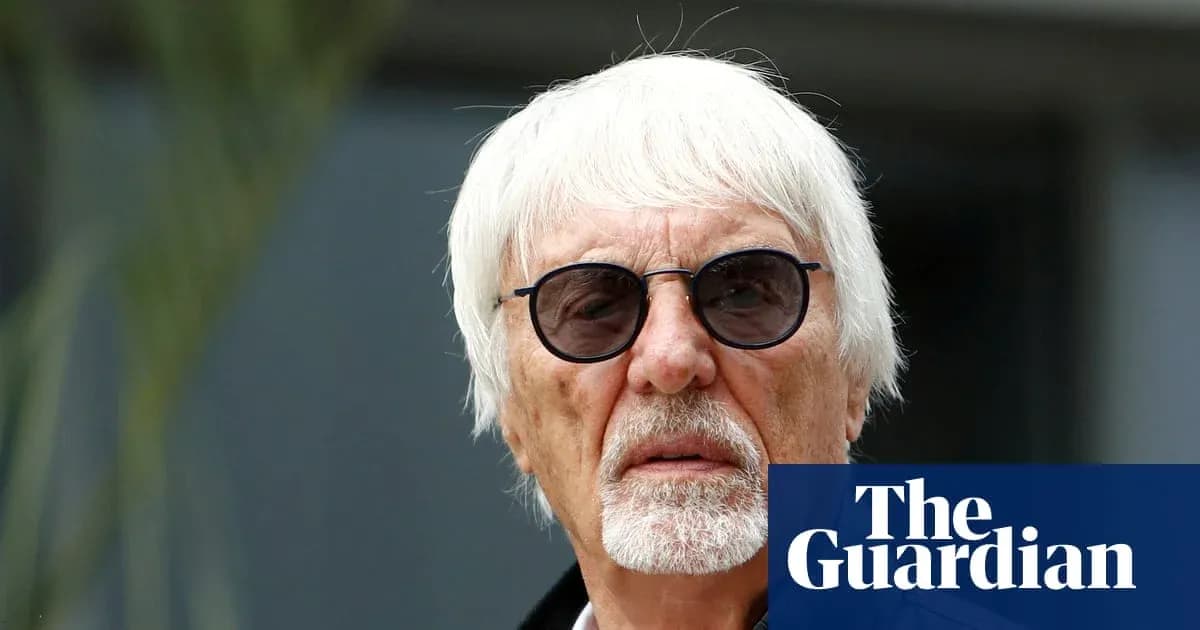
Bernie Ecclestone, the man who once dictated the pace of Formula One from the paddock to the boardroom, spent part of his Monday being questioned by police at a small airfield outside Lisbon – this time over an undocumented shotgun.
The 95-year-old was detained at Tires Aerodrome in Cascais after customs officers carried out a routine inspection of his private jet and discovered a shotgun in his possession. Multiple Portuguese authorities have confirmed the incident.
Under Portuguese procedure, the firearm was seized and Ecclestone was formally made a defendant in criminal proceedings. What happens next remains unclear, with the case now moving into the hands of the legal system.
Ecclestone, speaking to PA Media, rejected suggestions that he had been arrested. “No,” he said. “The police were very helpful and doing all they could to stop us from having to do what we had to do.”
He then laid out, in detail, how a trip meant for clay pigeon shooting turned into another brush with the law over a weapon.
Ecclestone said he had travelled to Portugal to take part in a clay pigeon shooting competition, an invitation that came at short notice after his wife, Fabiana, met someone on a flight from Brazil to Portugal who mentioned he was entering the event. She called her husband, suggested he join, and Ecclestone agreed.
With that, he reached for a familiar solution. He already owns guns in Switzerland, he explained, legally imported for clay pigeon shooting there. So he brought one of those shotguns with him.
According to Ecclestone, he passed through customs as usual. Staff knew him, he said. When asked if he had anything to declare, he replied: “No, nothing really, just all the usual personal things,” and walked out.
Then the day turned.
“As I got out,” he recalled, one of his entourage told him the police wanted to see him. Ecclestone went to speak to them and was told officers wanted information about the gun he had brought in.
He said he never even opened the case. He told them it was a shotgun and explained why he had it. The officers then asked for the “blue book” – the documentation that should accompany such a firearm, effectively a passport for the gun. Ecclestone said he had never heard of it.
The officers insisted anyone carrying such a weapon should have that book. They also took his passport. Ecclestone said he explained he had bought the gun in England and taken it into Switzerland through the proper channels, but the same question came back: where was the blue book?
With about four officers now involved, Ecclestone said they accused him of trying to import a gun into Portugal. He rejected that, pointing out that he had walked through customs openly and was now standing in front of them.
The standoff dragged on. Eventually, the group returned to customs, where, according to Ecclestone, officials told him he would need to surrender the gun in Lisbon. Only then could they consider whether he wanted to import it, pay duty and request a temporary import permit. Ecclestone said he agreed to that plan.
For Ecclestone, this is a familiar and uncomfortable storyline. In May 2022, Brazilian authorities arrested him at Viracopos Airport in Campinas after an X-ray scan of his luggage reportedly revealed an undeclared LW Seecamp .32-calibre pistol as he prepared to board a private plane to Switzerland.
He admitted owning that firearm but said he did not know it was in his luggage. He was taken to a facility at the airport, posted bail and was released to continue his journey.
Portugal has become a significant backdrop in Ecclestone’s later life. His wife, Fabiana Flosi, has been linked to a property purchase about 15 miles west of Lisbon, reported to be the most expensive private house sale in the country at around £35m.
For decades, Ecclestone operated at the heart of Formula One, first as a driver and businessman in the 1950s, then as a team owner and finally as the master negotiator who reshaped the sport’s commercial landscape. He drove television deals, sponsorships and circuit agreements that turned F1 from a niche racing championship into a global spectacle.
His formal role ended in 2017 when Liberty Media bought the commercial rights to the championship and moved him aside. His influence, though, never quite left the grid. His name still hangs over the sport’s modern history.
Now, instead of contracts and race calendars, it is firearms paperwork and import rules that dictate his next move.