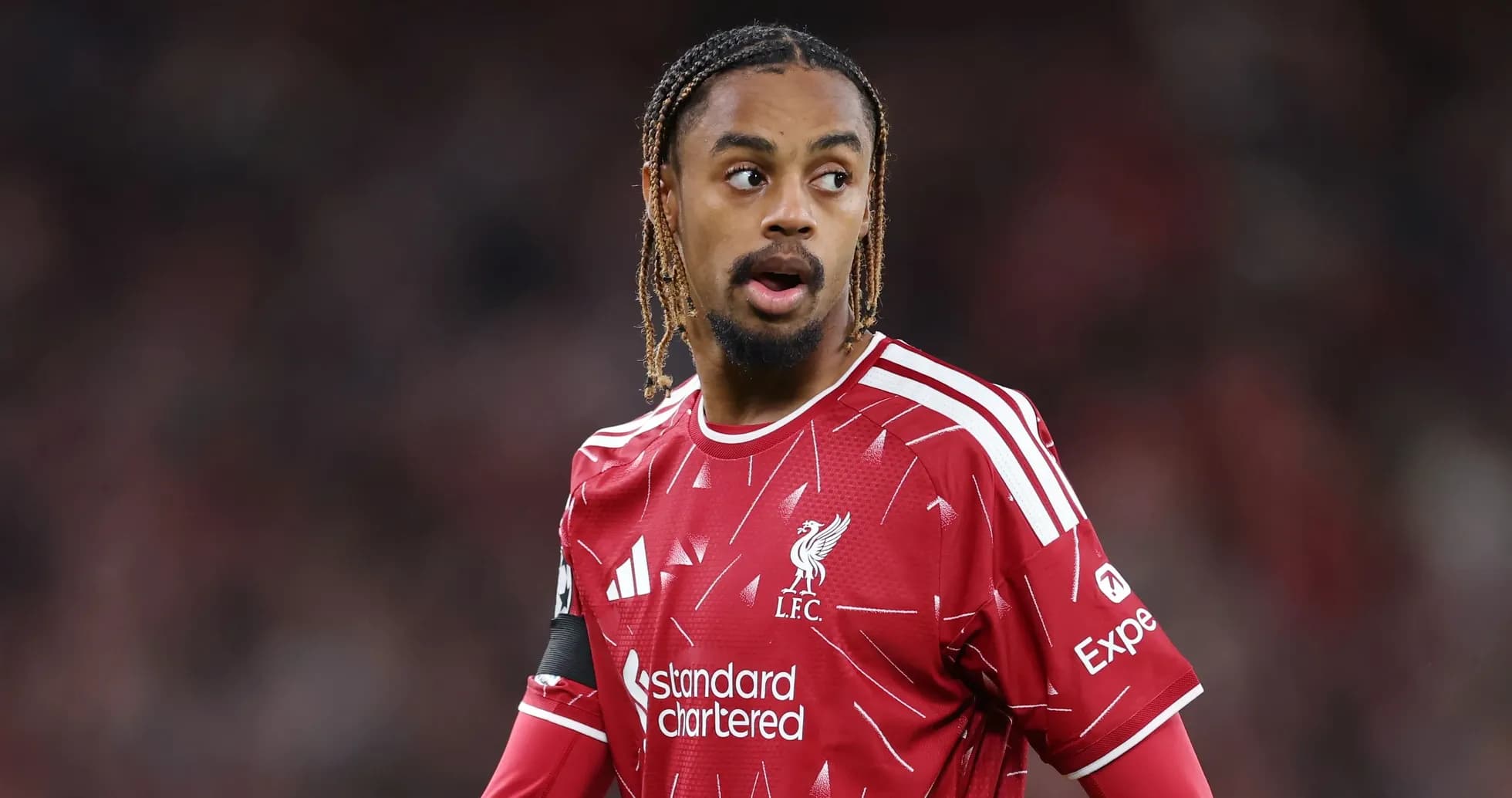
Bradley Barcola: A New Challenge for Liverpool
Bradley Barcola stepped into Anfield carrying both promise and burden. A reputation forged in Ligue 1, a fee that could soar to £123 million, and the status of Liverpool’s second most expensive signing. The numbers alone demand an instant headline act. The reality, as Emmanuel Petit sees it, will be far more complex.
“He needs to learn a different way”
Petit, never one to dress up an opinion, believes Barcola is walking into a very different footballing universe.
“Bradley Barcola needs to learn a different way of playing,” the former France international told Boyle Sports, drawing a hard line between the rhythm of Paris and the relentlessness of England. At Paris Saint-Germain, he said, everything is built on patterns. “It’s in their DNA, how they respond to the position of the ball, everything is like an automation.”
Liverpool do not live by that script. Their game breathes chaos and intensity, pressing in waves, transitions fired like counter-punches. The structure is there, but it’s wrapped in speed and aggression rather than the choreographed control Barcola knew at PSG.
Yet this is exactly why Liverpool went all in.
Petit believes the 21-year-old brings something Jürgen Klopp’s side have sorely lacked over the last two seasons: a winger who can rip open space on his own. A runner who stretches the pitch, drives into the final third, and demands constant one-on-ones.
“Barcola will bring them something they have been missing for the last two seasons: a man capable of running with the ball, taking the space behind the defenders, trying to break through into the final third and get one on one at all times. That kind of player can be dangerous every time they touch the ball.”
At Anfield, that sort of threat changes games. It also changes expectations.
Talent is not the question
Barcola has already offered a glimpse of his ceiling. In the midweek Champions League win over Atletico Madrid, he flashed the qualities that persuaded Liverpool to bet nine figures on him: direct running, close control at speed, the courage to take defenders on rather than recycle possession.
The challenge now is not whether he can do it once, or in moments. It is whether he can live in that space every three days in a league that hits harder, runs faster, and rarely forgives.
Petit is convinced the style adjustment is manageable. The real test, he argues, sits between the ears.
“Is Barcola going to play the same way he played for Paris Saint-Germain? No, because Liverpool don’t play the same way, but he will play with that same ability,” he said. “The only question is whether he has the mental strength to cope with the price tag of his transfer. We will have to see on that.”
That fee follows him into every stadium. Every heavy touch, every missed chance, every quiet afternoon will be weighed against £123 million. Some players grow under that weight. Others shrink.
Petit is clear: there is no time for a slow burn.
“He now has the chance to do that for Liverpool, and he needs to make an impact straight away. They cannot wait on him like Florian Wirtz or Alexander Isak.”
Liverpool’s rebuild is not theoretical. It is happening in real time, on the pitch, under scrutiny. Barcola is not a luxury project. He is supposed to be a solution.
“He will adapt very quickly”
Despite the sharp warning, Petit does not doubt Barcola’s capacity to adjust. He points to the winger’s move from Lyon to PSG as evidence that he can handle a step up in demands and expectation.
“I think Barcola is a player who will adapt very quickly to Liverpool. That’s what happened at Paris Saint-Germain when he left Lyon. It took him a couple of weeks but then he was showing his great ability.”
The pattern is encouraging. New club, new pressure, brief adaptation, then impact. Liverpool would gladly take a repeat.
The difference now is the context. PSG’s dressing room is built to absorb transition. Liverpool, by contrast, are still trying to rediscover their own identity after a fifth-place finish and a stuttering start to the new Premier League campaign.
They have already dropped points in three of their opening four league fixtures. For a side that once chased perfection, that is not a wobble. It is a warning.
A bleak verdict on Liverpool’s prospects
Petit does not sugar-coat Liverpool’s broader situation. His assessment of their season prospects, and those of Manchester United, is brutal.
“Liverpool and Manchester United have no hope this season,” he said. “They are conceding too many goals just like Chelsea but I was even less convinced about both clubs and what they did in the transfer market.”
The criticism cuts deep. Defensive fragility, incomplete squads, and a transfer window that, in his eyes, failed to address the core problems. For two clubs built on the idea of competing at the very top, Petit sees them scrambling just to stay in the Champions League conversation.
“They are both missing players and it’s hard to see how they can be favoured to finish in the top four, especially together. They may fight over that last place after Arsenal, Manchester City and Chelsea, but that place may go to another team.”
It is a stark recalibration of the Premier League’s hierarchy. Arsenal and Manchester City as the standard. Chelsea, despite their own chaos, backed to climb. Liverpool and United, the old giants, reduced to outsiders in the race they once controlled.
A new dimension, old problems
Barcola’s arrival was meant to jolt Liverpool’s attack out of predictability. A new angle, a new profile, a winger who does not just fit the pattern but breaks it. On that front, the signing makes sense.
Yet Petit's wider point lingers. One electric winger cannot fix structural imbalance. The gaps in Liverpool’s squad, the defensive uncertainty, the lack of cohesion in key areas – those issues sit far beyond Barcola’s remit, no matter how many defenders he beats.
For now, all eyes rest on how quickly he can shed his PSG habits and plug into the high-octane demands of the Premier League. The physical duels, the tempo, the scrutiny – they will arrive every weekend.
The raw tools are not in doubt. Pace. Dribbling. A willingness to attack space and take responsibility on the ball. If he matches that with the mental resilience Petit demands, Liverpool might just have found the kind of winger who can tilt tight games back in their favour.
If he doesn’t, the price tag will not be the only thing under the microscope.