British Tennis Faces Challenges Despite Rising Talent
British tennis will once again watch the second week of a Grand Slam from the outside looking in.
For the fourth time in five majors, there is no British singles player left standing as the US Open moves into its business end. Twelve months of early exits at the Australian Open, French Open, Wimbledon and now New York would usually trigger the familiar cycle of soul-searching and blame.
This time, the mood is more complicated.
“There’s things that British tennis could do better. So yes, definitely,” said British women’s number three Francesca Jones. “Do I think it’s something that’s concerning? No, not at all. The level is getting better and everyone is dangerous on their day.”
That tension – between hard numbers and quiet optimism – defines where British tennis finds itself at the end of this Grand Slam season.
Fery’s breakout and a rare bright light
One story towers above the rest.
Arthur Fery’s audacious charge to the Wimbledon semi-finals is the standout moment of the year. Ranked 114 in the world, in on a wildcard, he walked through the gates of the All England Club as a promising outsider and walked out as the face of a new wave.
No other British player reached the second week of a major in 2024. Fery did it on the sport’s most pressurised grass court, and in doing so handed British tennis bosses a powerful argument that their development pathway can, at its best, deliver.
He is not alone in hinting at progress. Nine Britons made the US Open main-draw singles this year, the highest number since 1981. That tally did not even include 2021 US Open champion Emma Raducanu or Jack Draper, both sidelined with long-term injuries.
For the Lawn Tennis Association, these are not isolated quirks. They are data points.
“We obviously want more and more competitors in the second week of Slams – just like the British public,” said LTA chief executive Scott Lloyd. “But the fact we’ve had four different British players make Grand Slam semi-finals since 2021 – you have to go back 30 years before Andy Murray to have four – shows there is no question that the direction of travel has improved.
“We’ve just got to keep driving for more – and that’s what we’re trying to do day in and day out.”
Numbers that impress – and numbers that don’t
Strip away the emotion and the rankings paint a mixed picture.
On the men’s side, five Britons – Fery, Cameron Norrie, Jan Choinski, Toby Samuel and Jacob Fearnley – are set to sit inside the world’s top 100 after the US Open. That will be the highest British male presence since February 2024.
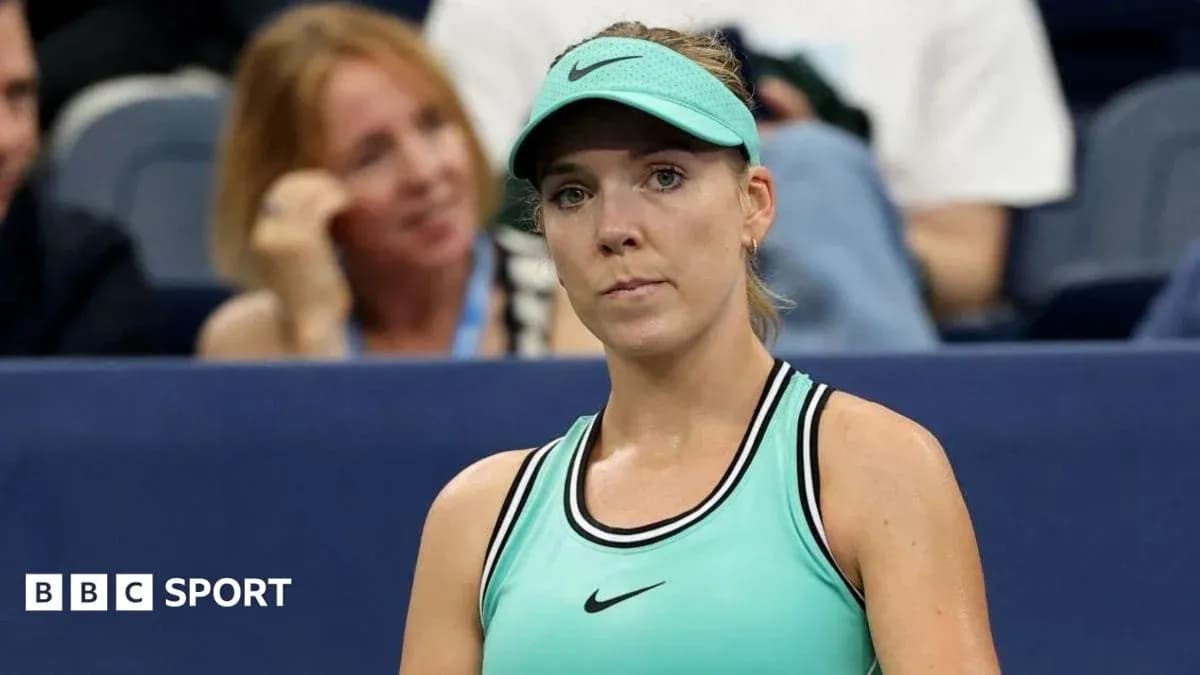
The women’s rankings are thinner. Only Katie Boulter and Raducanu will be in the top 100, with Jones and Harriet Dart hovering just outside after both reached the second round at Flushing Meadows.
“We’ve sent 12 players to the world’s top 100 over the past eight years and four of those have played Grand Slam semi-finals,” said LTA performance director Michael Bourne. “I’m not sure what other period in the modern era where we’ve had that level of productivity. Hopefully the number in the top 100 will rise over the next year.”
Those are the positives. The counter-argument is blunt.
For a Grand Slam nation with a deep tennis heritage and the financial muscle that comes with hosting Wimbledon, Britain still trails too many rivals. It has fewer top-100 players than the United States, Australia and France – all fellow Slam hosts – and sits behind Spain, Italy, the Czech Republic and Argentina, countries regularly held up as models of talent production.
Injuries have muddied the waters. Draper, once tipped as a future top-10 player and a former world number four, has barely stepped on court in the past year because of an arm problem. Sonay Kartal, who broke into the top 50 last year, has slipped out of the top 100 after a long-term back issue.
Even so, the broader comparison remains uncomfortable.
Bourne argues that copying the blueprints of Spain or the US is not as simple as it sounds. Every nation, he says, has its own “tennis ecosystem” – its own geography, culture, facilities and funding structure – which shapes what is possible.
Lloyd sees a sport transformed from the days when Britain’s underachievement felt almost structural.
“We’re competing in one of the most internationally elite sports out there and the landscape is vastly different to 40 or 50 years ago in terms of the number of countries which have representation at the top,” he said. “We’re ambitious, we want to drive for more, but we honestly believe the indicators are positive. We’re moving in the right direction and stronger than where we have been historically.”
A booming base – and a broken ladder
If the top end of the game is under constant scrutiny, the bottom of the pyramid tells another story.
Participation is booming. According to Lloyd, 4.3 million juniors play tennis annually in Britain, with 1.9 million picking up a racquet every month. Both are all-time records.
Draper, Raducanu and Fery all came through the LTA system from a young age. They are the proof of concept, the ideal pathway from first lesson to show court.
Yet beneath those headline figures sits a nagging fear: the country is producing players, but not giving enough of them the tools to turn promise into a profession.
Bourne concedes that Britain needs a “higher base” of coaches and says one of the LTA’s core strategies is to pour more time and effort into developing them. Without a broader, better-trained coaching workforce, the risk is obvious – too many talented juniors, not enough expert guidance.
Cost then slams into the conversation.
Chris Marshall, a senior performance coach with more than 25 years’ experience and founder of the Young Champs programme, sees the financial strain up close.
“To fund a 12-year-old at county level right now requires anywhere from £500 to £1,000 a month for coaching, travel, and tournament fees,” he told BBC Sport. “It is a massive, stressful financial barrier that makes the sport a non-starter for the vast majority of British families.
“We can’t sit around lamenting the lack of British interest in the second week when we are restricting the pipeline that feeds it.”
That is the heart of the argument. Britain wants more players deep into the second week of majors, more Fery-style runs, more Raducanu-like shocks. The infrastructure is richer than ever, participation is at record levels, and the governing body insists the trend lines are pointing up.
But until the ladder from park court to pro tour feels less fragile – less expensive, less dependent on a handful of success stories – the question will linger over every empty second week: is this a blip on an upward curve, or a warning that the sport still hasn’t cracked its own code?