Carlos Alcaraz's Shift Away from Grand Slam Revenue Movement
Carlos Alcaraz walked back into New York this year looking like a threat again, but the real shift in his career might be happening far from the bright lights of Arthur Ashe.
While his forehand is back to tearing through the US Open draw, his role in one of tennis’ most ambitious player movements has quietly been rewritten.
Stepping away from the revenue fight
According to The Times, Alcaraz’s long-time representative Albert Molina recently informed the group behind the Grand Slam revenue campaign that the Spaniard would no longer be part of it. The decision came shortly before the US Open, and it landed with weight.
This was not just any WhatsApp group of disgruntled pros. The campaign had drawn in some of the sport’s heaviest hitters: Aryna Sabalenka, Jannik Sinner, Coco Gauff and others, united behind a simple, pointed idea — players should receive a bigger slice of Grand Slam revenue, enjoy better welfare, and have more say in how the tour is run.
Launched in March 2025, the movement set a clear target: lift the players’ share of Grand Slam income to 22% by 2030. As the 2026 season wore on, the frustration stopped simmering in the background and started spilling into public view.
Sinner spelled out the feeling driving it.
“It’s more about respect, you know?” he said. “Because I think we give much more than what we are getting back.”
The message didn’t stay in meeting rooms. At the French Open, players cut down their pre-tournament media duties, a visible, calculated gesture aimed at the percentage of Grand Slam revenue they believed they were missing out on.
The pressure worked, at least in part. Wimbledon pushed its prize fund up to £64.2 million. The US Open bumped total player compensation by 20% to $108 million and introduced a $2 million Player Support Program. The four majors also agreed to form a Grand Slam Player Council, a formal platform for voices that had long complained of being shut out.
Through all of this, the presence of Alcaraz — a generational talent, a multiple major champion, a player who will define the next decade — mattered. His name gave the campaign star power and a sense of inevitability.
Now he’s out. His reported withdrawal doesn’t mean he suddenly opposes higher revenue shares or better welfare. It does something else: it strips the movement of one of its most influential faces and chips away at the image of total unity that had become one of its strongest weapons.
A body that forced a rethink
The timing of Alcaraz’s decision is no coincidence. His last few months have been dictated not by boardrooms, but by a wrist that refused to cooperate.
That injury cost him Roland Garros and Wimbledon, a brutal absence for a player who had grown used to living at the heart of every big fortnight. For four and a half months, there were no five-set epics, no night sessions, just rehab and the slow grind of recovery.
When he finally returned at the US Open, there were fair questions. How sharp could he be after so long out? How quickly would his timing and confidence return?
The answers came fast.
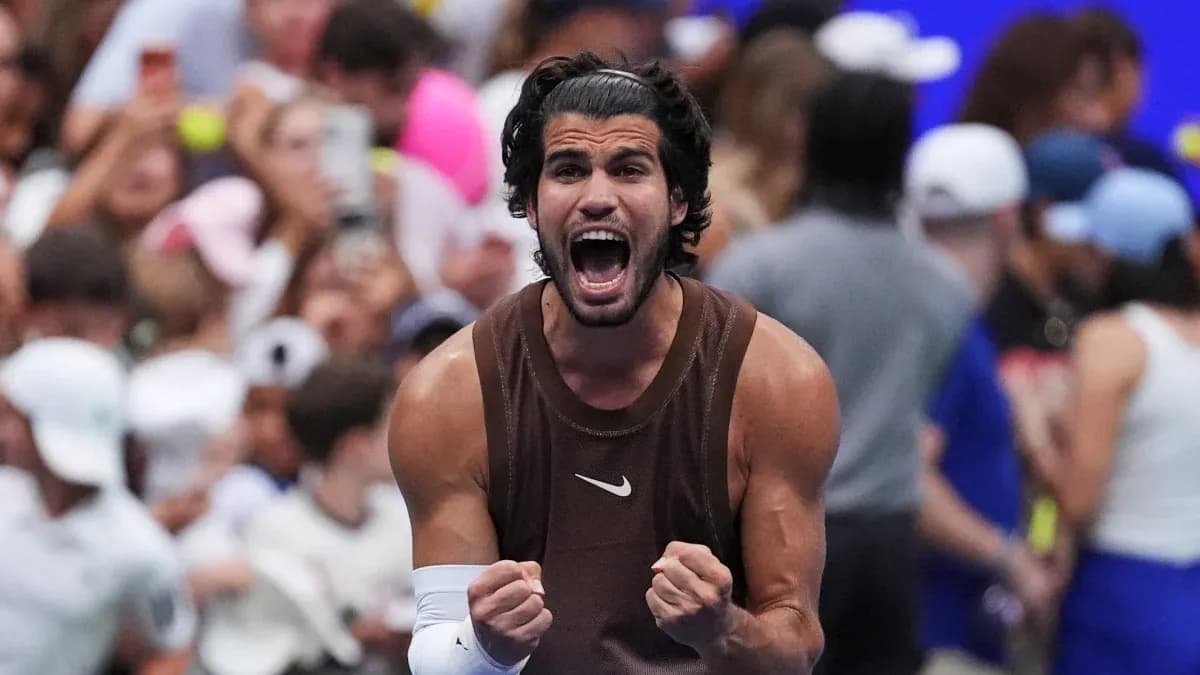
Alcaraz powered into the quarterfinals, brushing past Roman Safiullin, Jaime Faria, Wu Yibing and Tommy Paul. The Paul match, on paper a test, turned into something more one-sided than expected.
“It felt like he’s playing at a completely different level than me,” Paul admitted.
The Spaniard’s own words carried the tone of someone who had rediscovered his edge.
“So it probably doesn’t matter that I was out for four months and a half,” he said. “Every time that I come here, I play my best.”
That swagger sits alongside a very different kind of realism. The injury layoff has clearly altered his view of what a modern schedule demands from a body, even one as gifted as his.
“In the future, I’m going to take some breaks, some long breaks,” Alcaraz said. “Maybe not four months, but one month, two months, missing some tournaments, because it’s impossible to play them all.”
There it is. Not a throwaway line, but a philosophy shift.
For years, the sport has leaned on its biggest names to be everywhere, all the time — chasing ranking points, appearance fees, storylines. Alcaraz is still chasing the biggest trophies, still very much a contender in New York, but he is no longer pretending he can carry the full load of a packed calendar.
The movement he stepped away from is fighting for a bigger share of the money and more respect for what players give. His own battle, at least for now, is with the clock, the calendar, and the limits of his body.
The campaign will roll on without him, still armed with big names and a louder voice than it had two years ago. The question is whether the sport’s new standard-bearer, choosing carefully when and where he plays, is sketching out the future shape of a champion’s career — and whether tennis is ready to adjust around that reality.