Casper Ruud Withdraws from U.S. Open Due to Back Injury
Casper Ruud arrived in New York already walking a tightrope. On Sunday, it snapped.
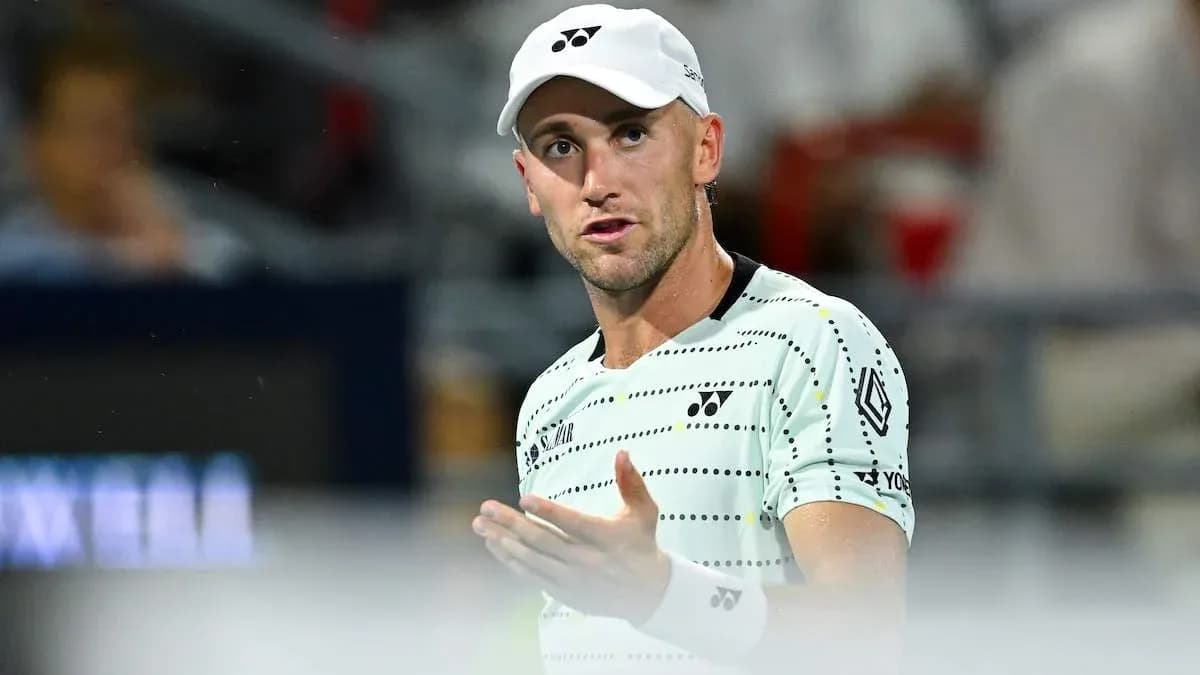
World No. 20 and former U.S. Open finalist, Ruud pulled out of the tournament before striking a ball in singles, withdrawing from his first-round match against Juan Manuel Cerúndolo with a stubborn lower-back injury that simply would not let go. The decision, confirmed by the U.S. Open, hands a lifeline to lucky loser Arthur Gea, who steps into Ruud’s slot in the men’s draw.
For Ruud, it feels like the end of a troubled road that started in Cincinnati and never straightened out.
A Back That Wouldn’t Behave
The story of this withdrawal runs back to Aug. 16 in Cincinnati. Facing Christopher O’Connell, Ruud looked in control, up 5-2 in the opening set. Then his body turned on him.
According to L’Équipe, lower-back pain forced a medical timeout. Ruud tried to continue, but at 7-5, 1-2, he stopped. Match over. Tournament over. And, as it turns out, his hard-court summer effectively over.
“I tweaked my back in practice the day before,” he wrote on Instagram at the time, explaining that he couldn’t move freely. The tweak never really left.
Norwegian broadcaster NRK reported that the back issue first flared in mid-August, and the signs in New York were hardly reassuring. On Aug. 27, cameras caught Ruud cutting short a practice session with Tomás Martín Etcheverry after roughly 50 minutes. He “couldn’t serve,” and even routine groundstrokes caused “considerable pain,” according to a social media post cited by Tennis365 reporter Richie Mills.
The pressure finally told on Sunday morning. Ruud’s name disappeared from the official order of play, and the U.S. Open confirmed the withdrawal soon after.
Fighting Through Doubles, But Not Singles
What made the decision more jarring is that Ruud had been competing at Flushing Meadows — just not in singles.
He managed to finish his mixed doubles campaign, partnering Diana Shnaider after Iga Swiatek pulled out of the event to rest. Ruud and Shnaider produced a quality run, beating Jessica Pegula and Taylor Fritz in the first round and pushing through to the quarterfinals, where they lost a tight match to Mirra Andreeva and Andrey Rublev.
The back held up long enough for that. It would not hold for best-of-five.
The contrast was stark: a player still capable of threading winners and constructing points in doubles, yet unable to trust his body to handle the load that defines Grand Slam singles. By Sunday, the risk was too great, the pain too persistent.
From World No. 2 to an Uncertain Road
Ruud entered the U.S. Open as the No. 19 seed, lodged in the same quarter as Alexander Zverev, according to injury tracker RotoWire. His ranking at No. 20, per ESPN, already represented a steep drop from the heights he scaled not long ago.
On Sept. 12, 2022, the day after reaching the U.S. Open final, Ruud climbed to No. 2 in the world. He spent 113 consecutive weeks in the top 10 between September 2021 and November 2023, the kind of sustained presence that usually signals a long-term fixture at the sport’s top table.
His résumé backs it up. Born Dec. 22, 1998, in Oslo and coached by his father, former pro Christian Ruud, he has rewritten Norwegian tennis history. First Norwegian man to win an ATP title. First to reach a Grand Slam final. First to qualify for the ATP Finals. Highest-ranked Norwegian ever.
The signature wins are there too. In Monte-Carlo in 2024, he finally broke through against Novak Djokovic, winning 6-4, 1-6, 6-4 in the semifinals — his first victory over a world No. 1 and the first time any Norwegian had beaten a No. 1 in ATP rankings history. At the ATP Finals 2024, he overpowered Carlos Alcaraz 6-1, 7-5 in the group stage, his lone win in six meetings with the Spaniard.
Fourteen ATP singles titles, 12 of them on clay, including last year’s Madrid Masters. A player built on repetition, endurance and discipline, suddenly betrayed by the very body that made his grinding style possible.
A Season Already Under Strain
This latest setback doesn’t stand alone. Ruud’s injury file is not extensive by tour standards, but when issues arrive, they tend to bite hard.
An ankle problem forced him to miss the 2022 Australian Open. A painful left knee hampered him in a 2025 French Open loss to Nuno Borges. Now, the back — a far more ominous area for a player who leans so heavily on heavy topspin and long rallies — has barged into the foreground.
His form coming into New York hinted that something was off. Ruud’s 2026 record stood at 25-16 with no titles. On hard courts, his level had dipped sharply, punctuated by a third-round loss to João Fonseca in Toronto. Since that 2022 U.S. Open final run, his best results in New York have been a fourth-round appearance and a second-round exit.
A deep push this fortnight already looked unlikely. The withdrawal only confirms how fragile his campaign really was.
What Comes Next?
The immediate beneficiary is Arthur Gea, who now steps into a main-draw slot he didn’t expect to own. For Ruud, the picture is far less simple.
The back injury has already wiped out his U.S. Open singles hopes and cast a shadow over the rest of 2026. The question is no longer just when he will return, but how much of his peak level his body will still allow him to reach.
For a player who climbed to No. 2 in the world through relentless work and unshakeable consistency, the next few months will test something deeper: whether that same relentlessness can outlast a back that keeps saying no.